You Didn’t Build This
The danger of inherited kedushah in a comfortable generation

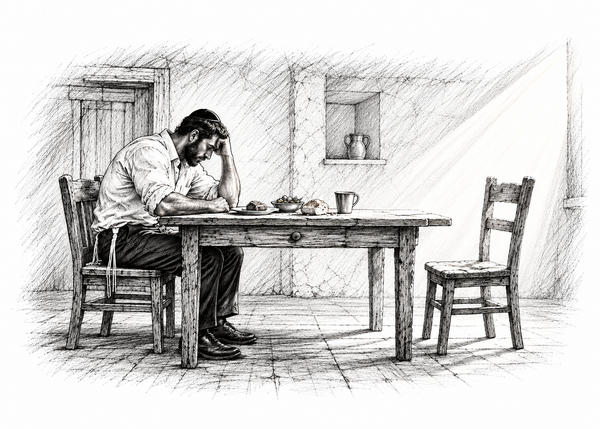
He sits there long after the room has emptied.
The lights hum.
A faint buzz overhead.
The kind you don’t notice unless everything else is quiet.
He’s lost in thought.
Things went off the rails, but he can’t figure out why.
He did everything right.
Stayed in the system.
Learned what he was supposed to learn.
Married who he was supposed to marry.
Built the life he was supposed to build.
From the outside, it looks like it all holds together.
Inside, it’s falling apart.
It’s not a dramatic collapse.
No crisis that forces a reckoning.
It’s worse.
It’s a slow, spreading realization he says out loud.
“I never built anything.”
After all the davening, learning, and all the ביטחון work.
It all feels empty.
Because he realizes, maybe for the first time, that he inherited a rhythm.
A set of expectations.
But he never fought for it.
And now he can feel there’s nothing underneath.
We all know the rich kid trope.
Money never scarce.
Effort never required.
The machinery of life hummed along before he even understood how it worked.
He spends differently.
Thinks differently.
Carries himself like the world owes him something.
Never challenged with anything meaningful
Then one day, the system stutters.
Something happens.
It dawns on him that he has no idea how to make anything happen.
It’s not every rich kid.
But it’s a story common enough that we all get it.
We shake our heads at that kid.
First-world problems.
But you need to know we live it ourselves.
In our comfortable cocoon of religious life.
See, many of us were born into this.
A home that knew תורה.
A community that structured life around it.
A system that handed us meaning before we ever asked for it.
We didn’t need to fight to keep שבת.
We didn’t discover תפילה as a last-resort ditch effort.
Just k’nased for coming ten minutes late.
We didn’t forge אמונה in the foxhole of this no-man's-land we call life.
We were just taught how to say the words with the right accent.
We assumed everything was fine.
You said, “I’m good.”
It’s a stable life.
But there’s a rot that grows in that comfort.
You stop checking yourself.
And then strange things start showing up in a community that feels so perfect.
No amount of derashos is saving us from this.
There’s more anxiety and shame and hidden addictions.
More men who look put together but are hollow underneath.
Do you think it was because תורה failed?
Chas v’chas.
The תורה was never the problem.
The problem is the life that eliminates effort.
The Noam Elimelech walks us through this concept.
On the opening of Parshas Emor, Hashem says, “אמור אל הכהנים בני אהרן… ואמרת אליהם”
Why the double language?
He says there are two kinds of צדיקים.
There are those who built themselves, who separated, struggled, and carved out their own דרך.
They have nothing to lean on, so they watch themselves carefully.
They don’t fall easily.
And then there are the sons of אהרן.
Holy. Elevated. Surrounded by קדושה from the beginning.
And precisely because of that, they are in danger.
They think they have something to rely on.
Their pedigree.
And that reliance breeds a subtle גסות הרוח.
An ego boost rooted in frumkeit.
They may tell themselves, “I’m already something."
The Noam Elimelech says the warning must be doubled. “אמור… ואמרת…”
Say it again. And again.
Because they won’t hear it the first time.
Because it sounds like it doesn’t apply to them.
Because they look fine.
He anchors it in the famous line from Mishlei, “תועבת ה׳ כל גבה לב”
Not just someone who boasts.
Someone who stands in a place they did not build and calls it their own.
That is תועבה.
Life collapses and זכות אבות becomes comfort.
Comfort then becomes blindness.
Blindness becomes drift.
And drift doesn’t feel like failure.
It feels normal.
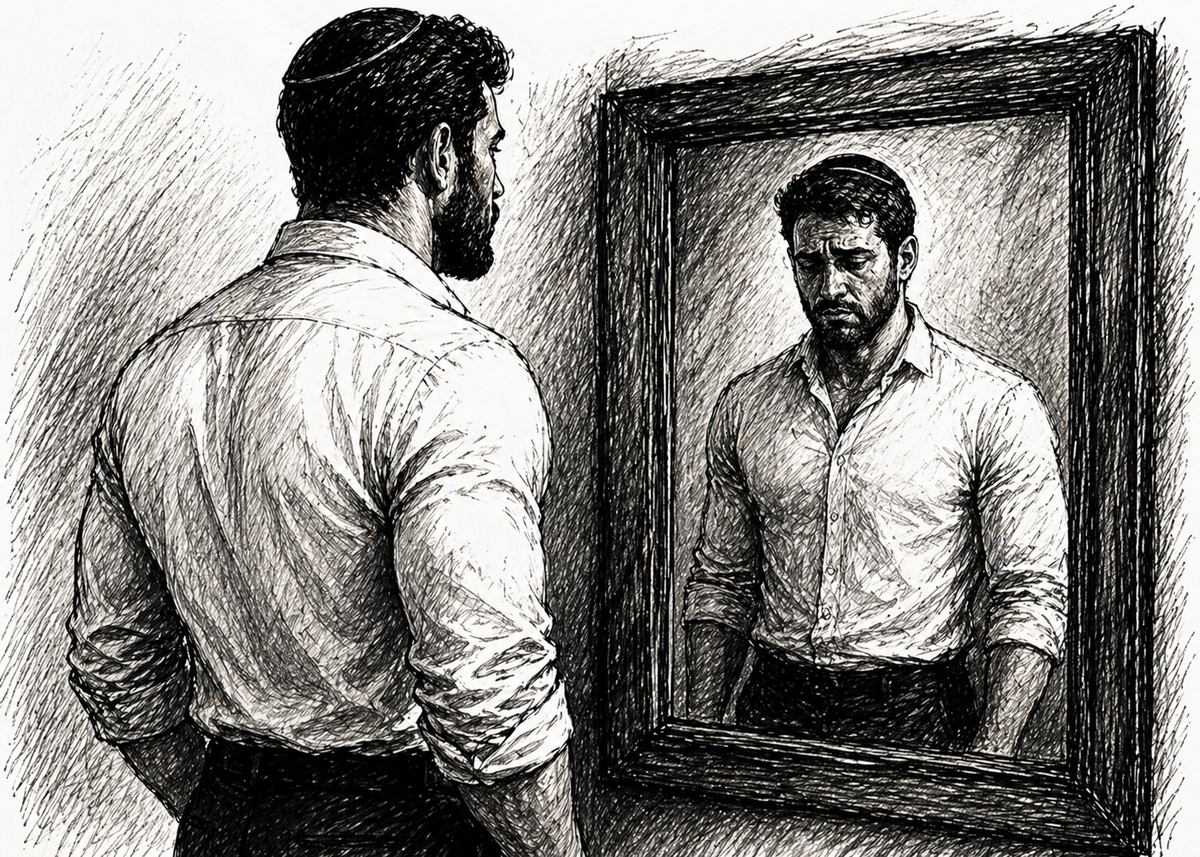
Until one day you sit in a quiet room and realize there's nothing inside that actually belongs to you.
The Noam Elimelech adds the pasuk of “וינזרו מקדשי בני ישראל”
This is a warning to the kohanim to be careful with the kodshim the Bnei Yisroel bring.
But the Rebbe Reb Meilech takes it deeper.
Even the holy and special kohanim must become like נזירים.
Separate themselves from their יחוס.
Act as if they have nothing.
Watch themselves, they who are born kadosh among the Bnei Yisroel, with constant awareness.
Without that, they will fall faster than anyone else.
They are more susceptible because they have a title they can lean on.
A rich dad and his credit card ready to always bail out his son.
It’s an avodah for all of us.
Not just kohanim.
I don’t stand outside this.
I have this entitlement in spades.
I know what it is to sit in a room, say the right words, nod at the right times and feel nothing moving inside.
To lean on ביטחון like it’s a cushion.
As if Hashem were a glorified ATM.
Put in the card, get stability, get clarity, get outcome.
No עבודה. No effort.
That’s not ביטחון.
It’s entitlement wearing the costume of בטחון.
No, this doesn’t mean there is something wrong with frum living.
It means that you need the right perspective about it.
You thought you were standing strong and secure.
You aren’t.
You are leaning on your father, your yeshiva, your past.
And now your legs don’t work.
Good.
Because this is the moment the Torah was talking about.
“וינזרו מקדשי בני ישראל.”
Separate yourself.
Start again.
Hashem doesn’t ask you to preserve what כבוד you think you inherited.
Use it to get yourself going.
But be wary.
Remember He’s commanding you to become something on your own.
With your own two hands and the תורה He gave to you.
Strip away the entitlement.
Stand like a man with nothing.
And build.
Stop living off their fire. Build your own.