Bamidbar: The Wilderness Has No Audience
Torah enters the man who stops performing

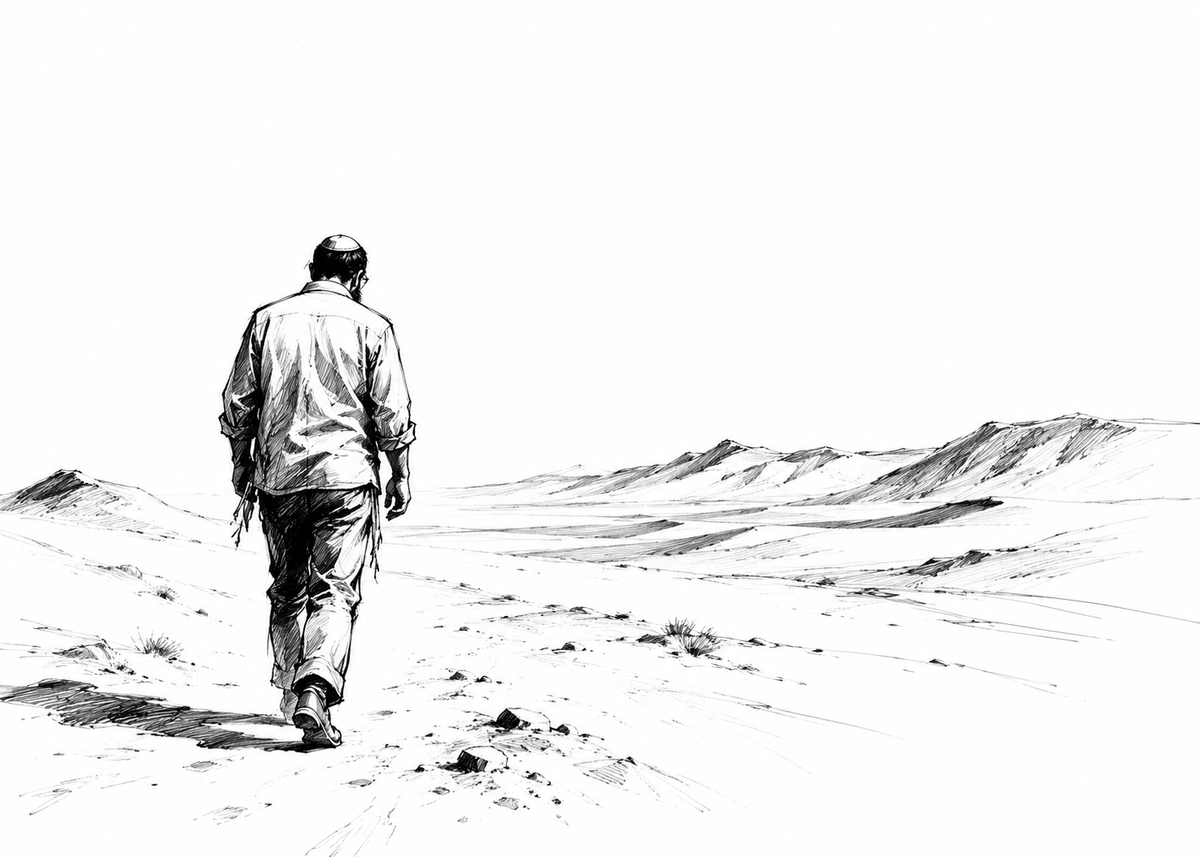
A man can spend his entire life becoming someone for other people and never once be himself.
That sentence frightens me because I know how easily it can happen.
A boy grows up and learns the rules of survival.
Be this kind of frum.
Dress this way.
Speak this way.
Learn this way.
Hide your weaknesses, flaws, or what someone else told you are flaws.
Fake your confidence even when your insides feel like cracked plaster.
Then adulthood comes and the masks multiply.
Provider. Father. Ben Torah. Professional. Calm one. Strong one. Productive one. Put-together one.
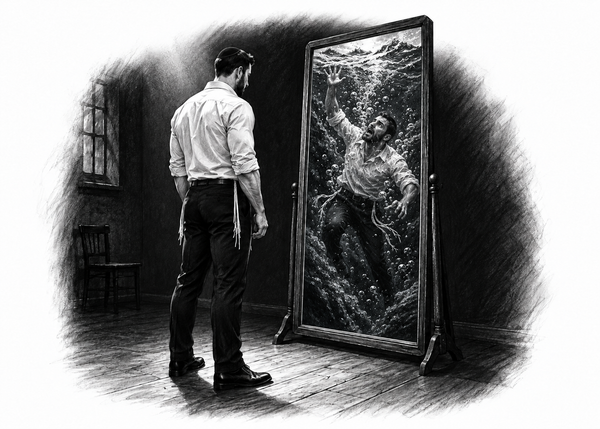
Meanwhile, his real self sits somewhere deep beneath the noise like a man buried alive under his own house.
It's not that these titles, these ways of living, are wrong in and of themselves, but they can easily become masks.
The modern world is obsessed with identity.
Everything demands one from you.
Politics. Advertisements. Communities. Algorithms.
Even toothpaste commercials whisper the same message.
Choose your tribe.
Choose your style.
Choose your outrage.
Choose your label.
And the final coffin nail, that even our penimiyus became chitzoniyus.
Our inner world now is a vibe and some meat boards and music videos.
The Pri Tzadik opens Sefer Bamidbar and asks why the Torah was given in a wilderness.
The Midbar has no owner. It does not care who you pretend to be.
It is egoless.
That is why Torah was given there.
Reb Tzadok explains that a person cannot truly acquire Torah unless he makes himself hefker like the desert itself.
Not worthless, but ownerless.
A man no longer gripping his self-made identity with white knuckles.
That may be the hardest avodah of our generation.
Because we are drowning in performance.
People now perform wealth. Perform suffering. Perform authenticity. Perform spirituality.
Even vulnerability became a costume people tailored carefully for public consumption.
A person can spend years building a polished religious identity while his actual soul starves quietly in the corner.
The frum man today feels this in his bones.
He was told if he worked hard enough, learned enough, controlled himself enough, and succeeded enough, eventually he would become the person he was supposed to be.
Instead, many men reach adulthood battered and exhausted, secretly terrified that they missed the doorway somewhere.
They look at themselves and feel counterfeit.
Too distracted.
Too weak.
Too late.
I know that feeling more than I care to admit.
There are moments I look at my own life and feel the distance between who I am and who I imagined I would become.
And for years it was easier to blame the world for that distance.
The system.
The distractions.
The pressures of modern life.
The endless superficiality swallowing everything whole.
Some of that criticism is true.
We live in a generation addicted to chitzoniyus.
But the desert strips away that excuse.
Ownerlessness.
The Pri Tzadik continues and teaches that the deeper Torah emerges after the sin of the Eigel.
Not before.
After.
The first luchos descend into a world of perfection.
Fire splitting the heavens.
Absolute clarity.
A nation standing untouched beneath Har Sinai.
Then comes collapse.
And specifically there, Torah Shebe’al Peh begins unfolding into the world.
The Torah of arguments, wrestling, and sleepless nights trying again after failure.
The Torah that enters real life instead of hovering above it.
The first luchos belonged to angels.
The second luchos belongs to the exhausted men.
Rav Hutner writes in Pachad Yitzchak, Iggeres 128, that people imagine gedolim emerged through uninterrupted greatness, while the real story of a tzaddik is the hidden war itself.
It's the falls and the rebuilding.
Most of us never hear that.
I feel like the the modern biographers of our time stole this heritage from us.
Each book written about a gadol is only half as large as it was supposed to be.
The other half, the ugly half, the struggle half, the actual derech half, hidden out of a twisted desire to pretend that these were not people but angels.
And for the rest of us?
We hear the looping tape in our minds, “If I were truly worthy, I would not struggle like this.”
But Reb Tzadok Hakohen teaches the opposite.
The wilderness is not where Torah disappears.
The wilderness is where the deeper Torah begins.
Every Yid has a root in Torah. A letter. Or even part of a letter.
Not every soul is a giant shining aleph standing proudly at the center of the scroll.
Some are hidden strokes. Bent fragments. Small pieces tucked inside larger forms.
Still indispensable.
A Sefer Torah missing one tiny letter is pasul.
One.
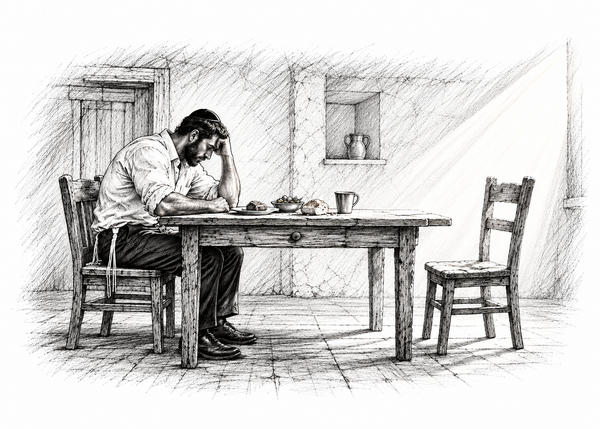
That means the broken man sitting silently in the back of shul, convinced he failed at becoming himself, may still carry a letter no one else in creation can reveal.
But he will never hear it while performing endlessly for the crowd.
The wilderness has no audience.
That is why Torah was given there.
Not because the desert is empty.
But because it is stripped of illusion.
And maybe that is the terrifying mercy of the Midbar.
Our false identities finally die of thirst there.
For the first time in years, in the Midbar, a man can feel the sand beneath his feet and realize he does not need to become someone else before approaching Hashem.
He only needs the courage to stop running from the letter already carved into his soul.
Wake up, brother.
Walk into the wilderness.
“Torah begins where the performance dies.”