Behar-Bechukosai: What Owns You
How you become a slave without the chains

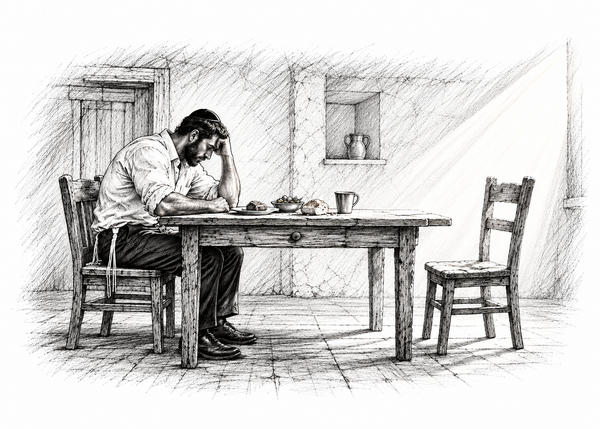
A man wakes up at 2:13 in the morning for no reason he can explain.
The house is quiet except for the stale hum of the refrigerator downstairs.
His wife is asleep.
He makes his way downstairs through the hall and towards the kitchen.
One child coughed twenty minutes ago and settled back down.
Another left a school paper on the kitchen table.
He enters his office.
There’s a half-finished coffee still sitting on the desk from earlier tonight.
He reaches for his phone before he’s even fully awake.
Bank account.
Email.
Market futures.
Calendar.
Tuition payment.
Work messages.
Refresh.
Refresh again.
Nothing changed.
Still he scrolls.
Only the kosher stuff, relax.
He’s, B'etzem, a good guy, our character here in this story.
He’s reading the news, CBN, and catching up on his statuses.
Somewhere deep inside him is the animal belief that if he checks enough, plans enough, and controls enough, he can finally outrun the feeling chewing through his chest.
A few minutes later he puts the phone down and stares at the ceiling in the dark like a man listening for footsteps outside in the gloom.
Like the answer to his sense of existential doom will apparate right out of the ether in front of him.
This is what slavery looks like now.
Notifications instead of chains.
A nervous system that can’t stop clenching, instead of a taskmaster beating you for not gathering enough straw.
We look fat today. Well fed. Rotund.
We don't have the enslaved look.
We look successful.
We got the pressed shirts, nice houses, and busy calendars.
Our frum schedules, packed so tight there’s barely room to breathe.
But look closer.
Look at how we react when the market dips.
When business slows.
When the wrong email arrives at 4:47 PM on a Thursday.
Look how quickly the soul starts shaking.
Because today’s frum man says he trusts Hashem, but his body tells the truth.
His body trusts numbers and systems.
He expects control and predictability.
The tighter he grips them, the narrower he becomes.
The Mei HaShiloach asks, "Why are these three mitzvos grouped together?”
Shmitta. Yovel. Ribis.
At first glance they seem unrelated.
One is about agriculture.
One is about slaves.
One is about loans.
What binds them together?
The Mei HaShiloach says they are all attacking the same disease.
False trust.
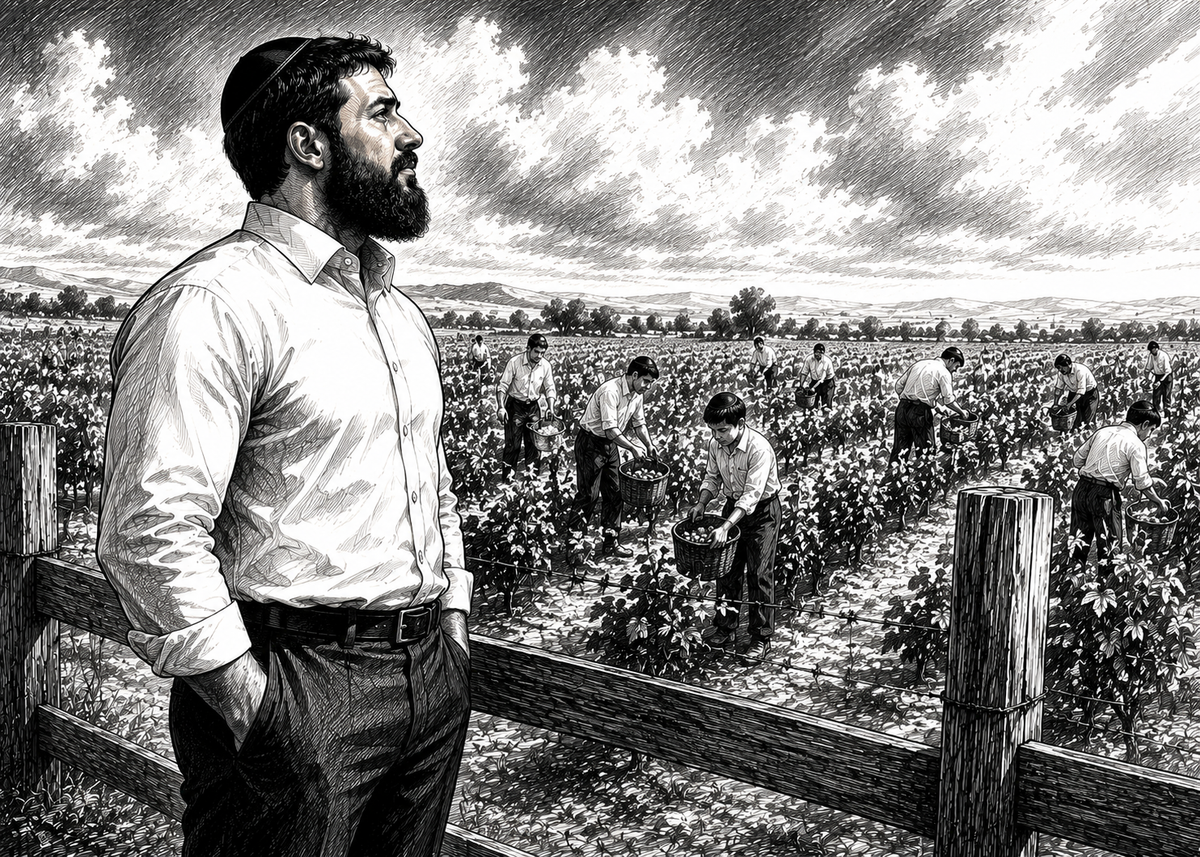
A man sees his fields and thinks, “Now I am secure.”
Another man sees time itself as something to monetize, “If I can lend, leverage, collect interest, and scale wealth slowly over years, then I’ll finally be protected from uncertainty.”
Another man trusts in people.
His workers and employees.
His ability to command and extract.
But the Torah comes at him like a hammer.
“Leave the fields!
“Release the servant!”
“Do not charge for time itself!”
Why?
Because the Torah is trying to tear slavery out of the Jewish soul before it hardens there permanently.
The Mei HaShiloach says these three mitzvos correspond to: עולם. שנה. נפש.
Space.
Time.
And the human being himself.
The things a man believes he can possess.
And one by one the Torah rips them from his clenched fist.
Shmitta says: “The land is not yours.”
For one full year the owner walks into his own field like a stranger.
The fences dissolve.
The illusion cracks.
Anyone can enter and eat.
The wealthy landowner suddenly watches poor men wander through rows he once called “mine.”
And the Torah whispers, “כי לי הארץ.”
The land belongs to Hashem.
Then comes Ribis.
The Mei HaShiloach says Ribis is the attempt to own time itself.
To profit merely because time passed.
As though the future belongs to you.
And then comes Yovel.
A man builds his identity around control over others.
Their labor. Their productivity.
The Torah says, "Release them."
And even while the servant serves, “לא תרדה בו בפרך.”
Do not crush him.
Because his body does not belong to you either.
And then the Mei HaShiloach says the line that cuts through the entire modern world.
The world, time, and people are not reliable foundations for trust.
Only Hashem is.
That sounds beautiful in a sefer.
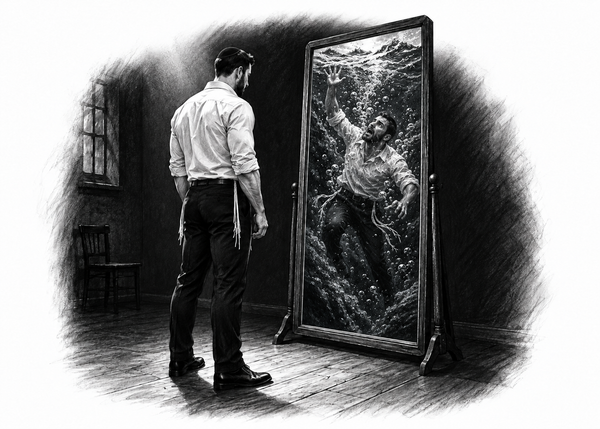
It sounds much uglier at 2:13 in the morning when your soul is wrapped around a spreadsheet like a drowning man clutching a piece of driftwood.
Because this is the real slavery.
The inability to breathe unless everything is under control.
And nothing ever is truly in your control.
You know this already, whether you are willing to admit it or not.
That is why the Mei HaShiloach connects this to Mitzrayim.
Meitzar.
Narrowness.
Constriction.
The soul crushed into a tiny space by fear.
A man can live in a beautiful house and still dwell in Mitzrayim.
A man can learn Daf Yomi and still live in Mitzrayim.
A man can wear a black hat, answer emails at midnight, obsess over networking, monitor every fluctuation in his accounts, and call it “hishtadlus” while his entire inner world runs on terror.
That is not freedom.
.
The Chovos HaLevavos writes in Shaar HaBitachon that people mistakenly transfer their trust from Hashem onto the intermediary itself.
The money becomes the source.
The employer becomes the source.
The client becomes the source.
The mechanism becomes the source.
It’s a trap!
The hand of Hashem disappears behind the tool.
If you are not careful, the tool becomes an idol.
That is why men who worship certainty never know rest.
Because certainty does not exist in this world.
Only dependence on Hashem does.
The man obsessed with controlling tomorrow will sacrifice today on its altar.
He will miss his children while trying to secure their future.
Miss his wife while trying to provide stability.
Miss his own soul while trying to protect it.
The Mei HaShiloach is not telling a Yid to stop working.
A Gibor works hard. A Gibor sweats.
A Gibor carries responsibility on his back like a pack mule carrying his load.
But he does not worship the load.
That is the difference.
The closed fist eventually becomes a prison.
And the terrifying thing is that most men lock themselves inside it voluntarily.
The Torah cries out to you and says:
Open your hand before life pries it open for you.
Because the man who worships certainty will never know rest.
The tighter you hold the world, the tighter it holds you.