Toldos: My Father’s Wells
The uneasy work of knowing what to hold on to

“I want to be free, free to be me, but what if I cannot see those who came before me, who can show me how to be?”
There are two kinds of Avos-like people. There is the Avraham-type person who forges his path anew. And then there is the Yitzchak-type person who digs his heels in and holds the line.
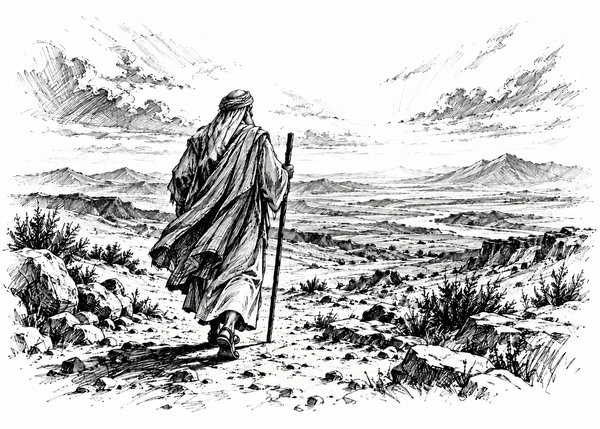
I wrote previously about the dangers of S’dom and Migdal Bavel. How they corrupt society by coercing conformity through fear. How Avraham had to leave that place without knowing his destination so he could find his place on his own.
But therein lies a danger. And Hodu LaShem Ki Tov! This criticism was brought to me by a fellow reader of the Gibor. One of the few times I got good critical feedback! Usually, it’s either crickets or a note about spelling or writing style, but this time it was real and raw. A mechanech in town approached me and respectfully pointed out the danger of forging one’s own path, a path that could lead off into the wild blue yonder with no checks and balances.
And he was right.
He did say he understood that I wasn’t encouraging a willy-nilly adventure into the land of nowhere. But he rightly showed me the danger of making such a statement.
I promised him that Toldos was where I would counter it, where I would show the flip side.
The Avos were not just real people but archetypes as well. They show us the way, the paths, towards the ultimate goal of building a relationship with Hashem. Avraham could do that by forging his own path. Yitzchak, however, could do that by preserving the path. By sticking to his guns and the guns of his father, he forged a unique avodah for himself. The avodah of mesorah.
There is a real danger here of conforming out of fear, as we had discussed, but mesorah... true mesorah gives us life.
The S’dom trap can pervert mesorah and twist it. It can make you think that the highest goal is crushing yourself to fit into pre-made containers. No, that is just a perversion of conformity. That is not the mesorah of the Avos.
But there is a real mesorah that we must hold on to with our very lives. That we must grasp and let rein us in.
So what is this mesorah that we must bind ourselves to? What do we keep, and what do we reject? What is the lifeline I must cling to?
You see, it’s easy to say it’s Torah. It’s daas Torah. That is actually true, but it is too big, too general.
I need to get down into the wells and see for myself. There are the wells that I must dig up and then there are wells that are not mine that I must leave alone.
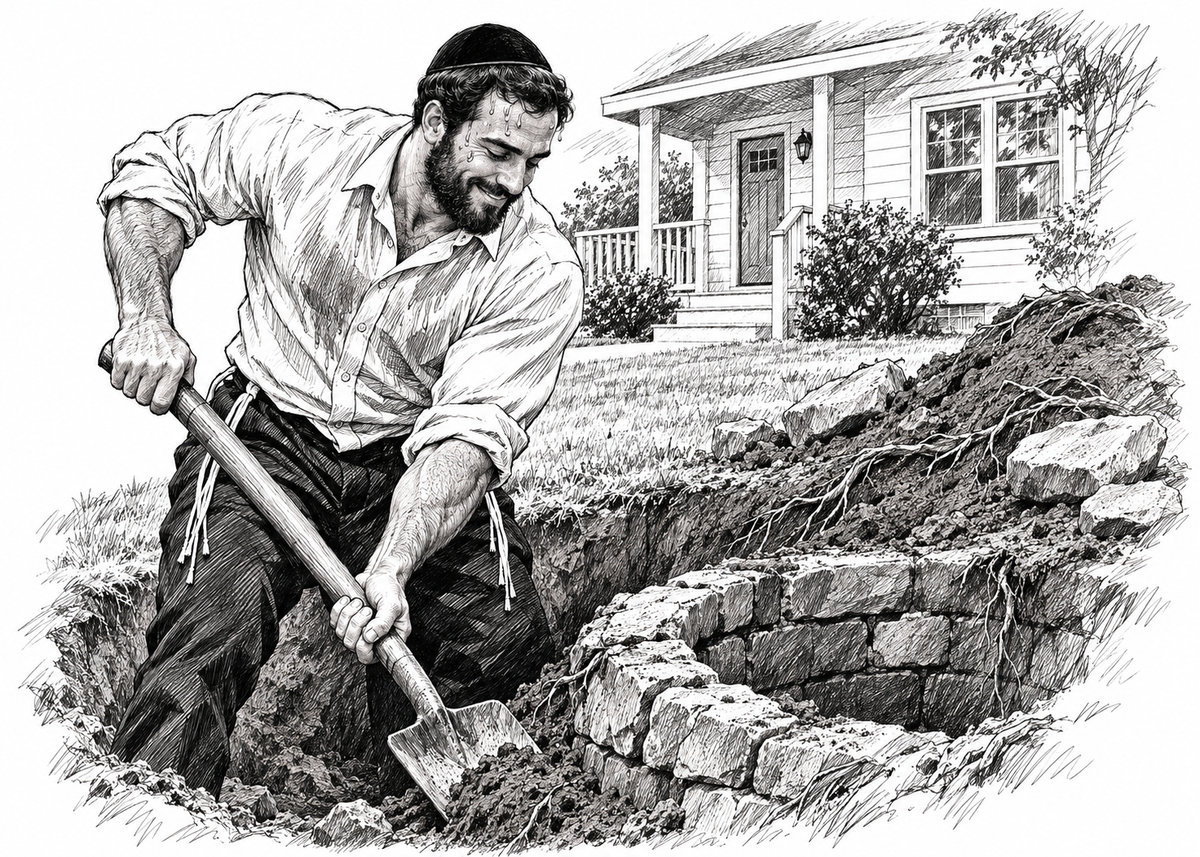
Yitzchak did three things. He returned to the wells his father Avraham dug. He redug them. And he named them the original names his father had given them.
The water was there before Yitzchak. His father had found it. The Pelishtim then filled them in, and Yitzchak could have just gone elsewhere and dug his own wells, but he didn’t. He went back. He believed there was still something there worth reaching for.
I think this is the lesson I need to learn. When faced with a choice, I need to ask myself, “Is this the right hashkafah, a mesorah for a real minhag, or a minhag shtus? Is this thing healthy for my growth, or is it just fun with Jewish window dressing?”
Then there were the names. Yitzchak kept his father’s names. Rabbeinu Bachya says he did this to honor his father. He had done the work of redigging the wells, but he didn’t put his own name on them. Can I do this? Can I uphold something I did not create myself?
And there is the digging. The Sfas Emes explains that Yitzchak had to uncover the path himself. His father’s work did not save him from the effort he needed to do himself.
This frightens me because I can follow everyone around me and never dig for myself. I can also yell from the rooftops that I am forging my own path and never dig for myself. Either way, I can spend my life avoiding the work that is mine to do. Yitzchak teaches me that I need to do the work of holding on to what Hashem gave me, but I also have to dig for it myself.
So these lessons are great. But how do I know what is real and what is not? How do I choose which wells to dig up? There are so many wells around today. In our modern world of distraction, we can dress a ‘well’ to look like something Avraham originally dug. It may look real, but it is just an ersatz version of Avraham’s avodah. I need to learn what to ask. And more than that, I need a rebbe who can help me recognize what my mesorah is.
That is the answer, I think. We... I... need a rebbe to teach me how to discern the gray areas. I know that. I cannot sort through all of this on my own with the same head that keeps looking for excuses. The hard part is I still have to choose whom to listen to.
Yitzchak could see his father. Really see and hear and understand the mission. I don’t have that clarity. And I don’t know if the rebbe I choose is the right one. My vision is so cloudy, my hearing muffled, my understanding confused.
But I choose anyway. I return to the voices I know I need to listen to. To know whether I am going with the flow because I am scared to diverge or whether I am really listening to my mesorah.
And I don’t always listen. I look for excuses to stay curled up in a ball and never dare to make waves. I often think I know better. And that’s the inner battle. To keep the balance between the chessed of Avraham that spreads out in creative ways and the gevurah of Yitzchak that knows what to hold on to.
I don’t know. But I pray that I can grasp with both hands the Borei’ach Hatichon that holds me and my whole heritage together so that I can fully be daveik to Hashem.
I still don’t have a perfect path. I am not Yitzchak, but at least he taught me how to dig.