Rosh Hashanah: The Clothes I Wore When I Met the King
Who am I really?

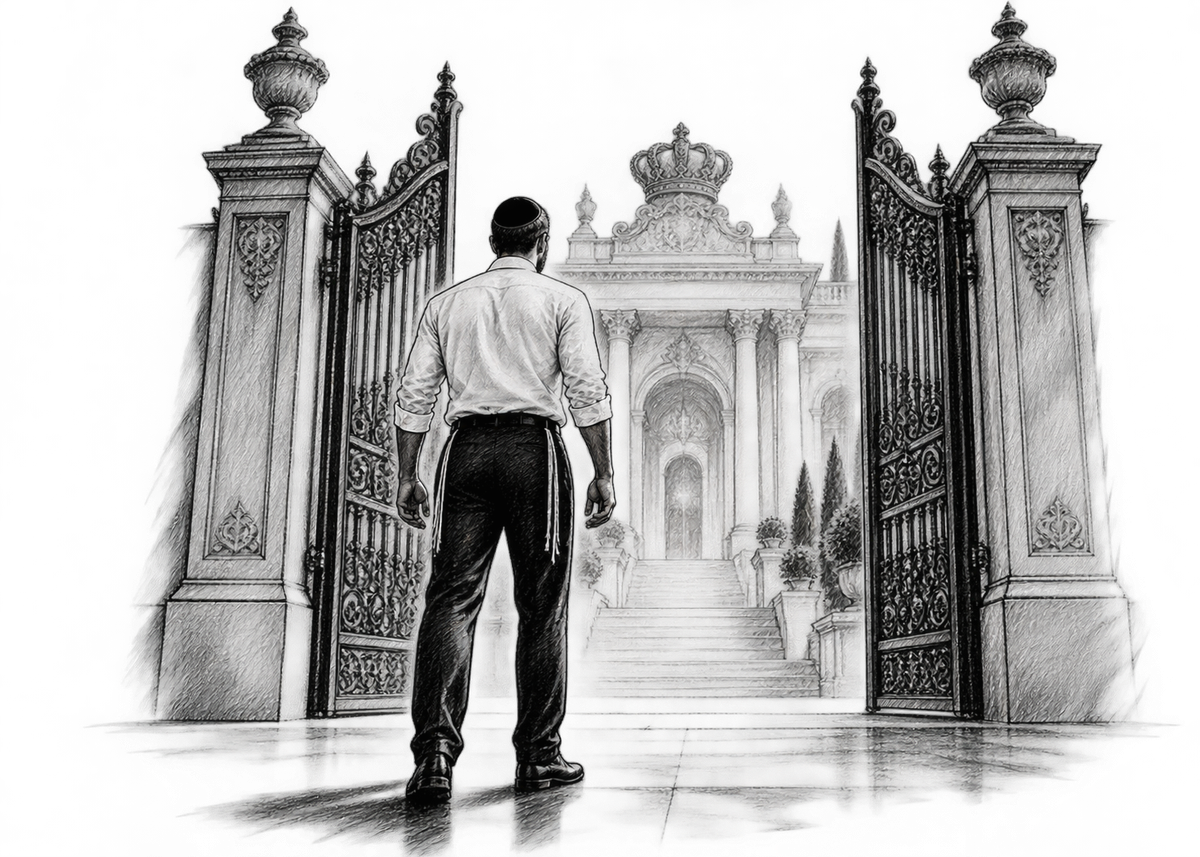
If I lost everything today. If Hashem took everything I am or ever was away. What would be left? If I stood before Hashem and had to answer for my life, and all the trappings and layers and flotsam I had gathered about me in my life were removed?
My job, titles, house, car, my role as a father and husband, the hot take I had on politics, or the way I am into bourbon.
If all that goes away, I will be scrutinized for who I am really. Not the role of a father but what I did as a father. And the Lord of Hosts looks deep into my soul, seeking the very essence of this entity that He so graciously gave life to this year. Who is that man?
The Mishnah in Rosh Hashanah taught us, בְּרֹאשׁ הַשָּׁנָה כָּל בָּאֵי הָעוֹלָם עוֹבְרִין לְפָנָיו כִּבְנֵי מָרוֹן, “On Rosh Hashanah, all who enter the world pass before Him like בני מרון.” I can hide in the flock all year. I’m part of the we. We need to do teshuvah, we need to rise above. We need to be better.
A friend who reads my weekly Divrei Torah told me I need to work on this. That I hide too much in the we sometimes. And when you hide in the we, the lesson becomes diluted. The anchors are let go, and we are swallowed up in the seas of we.
But on Rosh Hashanah, the ‘we’ goes away. As the flock passes by the penetrating eye of Hashem, we are singled out. The "we" is stripped away, and there is only "I."
On Rosh Hashanah I stand alone in front of Hashem, and the flock-like accoutrements are removed. There is only the bare naked soul, the bare naked truth of what I actually am, standing alone before my Father in Heaven.
He knows my well-trod paths, so hewn and worn down. Actions that perhaps you may say are not befitting of a ben Torah, but I got so used to them. And do I really have the gall to stand before the King of Kings to ask for another year?
What do I have to bring to the table to bargain for my life with? Truly what? Yes, there are so many good things I did, but did I do them, or was it just a feature of the flock, to get carried by the inertia of the community?
But before I slip into the dark abyss of my own lack of self-worth, the Kedushas Levi saves me. With a mashal.
There once was a king traveling alone to see his kingdom. And like the great king that he was, he dressed and acted in the way of the common man so he could attempt to see the real kingdom. And he got lost in a great forest.
Until he met a poor man in simple ragged clothes. This man took pity on the lost king and led him from the forest and back to the palace. He was rewarded handsomely and became quite wealthy. But alas, as the years went on, this now wealthy man began to stray from the laws of the kingdom and committed a grave criminal act. When the king found out about this, he called the formerly poor man to the king’s court so he would answer for his crime.
When the man was preparing to go before the king, he demanded that he be able to wear the original clothing he wore when he first encountered the king so long ago, lost in the forest. And when he stood before the king, the king saw the clothes and remembered the kindness this man had done for him, and his mercy was aroused.
Not that the man’s crime was forgotten or erased, but the true essence of the man was taken into consideration when standing before the king.
The Berditchever explained that we are like the poor man. At Har Sinai we crowned Hashem King, and so today, when we stand before Him, we come with the shofar to remind our Father about that time when we crowned Him as our King.
The shofar reminds me and Hashem of what I was before all the “things” happened in my life. He remembers what I was as I stood at Har Sinai together with my entire nation as one. That is what I am at my core when everything else is taken away. This is what the Kedushas Levi taught me.
A friend of mine recently retired. One day he was in the office, forty-plus years of work history behind him, and then the next? Quiet. Many people after forty years have identified so deeply with what they did for work that when the day comes for retirement, they are left empty.
So, how much of myself is truly me? How much is a garment I put on over the top of my essence? I have time left before I retire, but my friend taught me that while the garment may come off, what you are underneath is so much more. He showed me his daily schedule. He is busier than when he was at the office. He has more chavrusas than I had when I was in yeshiva.
Retirement is a new stage of life, but it is not an end. It was the change that he used to remind himself of what he truly is at his core.
This Rosh Hashanah there won't be a shofar, at least for the first day. This year I won't be able to stand before the King dressed in my original clothes, making the case for Him to remember our origin. Because it is Shabbos, and we do not blow shofar on Shabbos. But there is an interesting thing that happens this Rosh Hashanah.
The Nesivos Shalom brings the pasuk, תִּקְעוּ בַחֹדֶשׁ שׁוֹפָר בַּכֵּסֶה, the roshei teivos are בשב״ת. We say in Kigavna every shabbos, וְכָל שׁוּלְטָנֵי רוּגְזִין וּמָארֵי דְדִינָא כֻּלְּהוּ עָרְקִין וְאִתְעַבְּרוּ מִינָּהּ “And all rulers of wrath and masters of judgment, all of them flee and depart from her.” On Shabbos there is no דין. There is only us and Hashem. On Shabbos, Hashem doesn't even need the shofar to arouse His mercy. Shabbos itself is the אוֹת הִוא לְעֹלָם, “a sign forever." This year Rosh Hashanah is on a higher plane, a higher level than normal, because our true relationship is revealed completely.
Rosh Hashanah is the way to be mamlich Hashem, with the truth of who I am. It is easy to look at just my scars and flaws and mistakes and whatever. But I need to stand before Hashem stripped of all the externalities and remember that I once stood before a mountain and crowned Hashem my King. And while today I may have a lot to be embarrassed about, I bring the lesson of the shofar with me because I know that what I am is so much more than that. I am so much more infinitely good.
For I am the son of the King.
May you have a Kseivah V’chasima Tova.