Ki Savo: The Treasure Hidden in the Work
It always was in your hands to do it

So you are sitting in your car, and Maariv has already started. You got out of the house, you made it to shul, and you parked. And you are about to get out of your car, but you pause. You see people walking in. You know, in a minute, you’ll see people rushing in. Men in hats grasping at their brims as they shuffle-run to shul.
Kids on scooters, flying across the street, chucking them onto the grass at the front door. And a minute past that, it’ll be quiet. Davening will already be a good few minutes in.
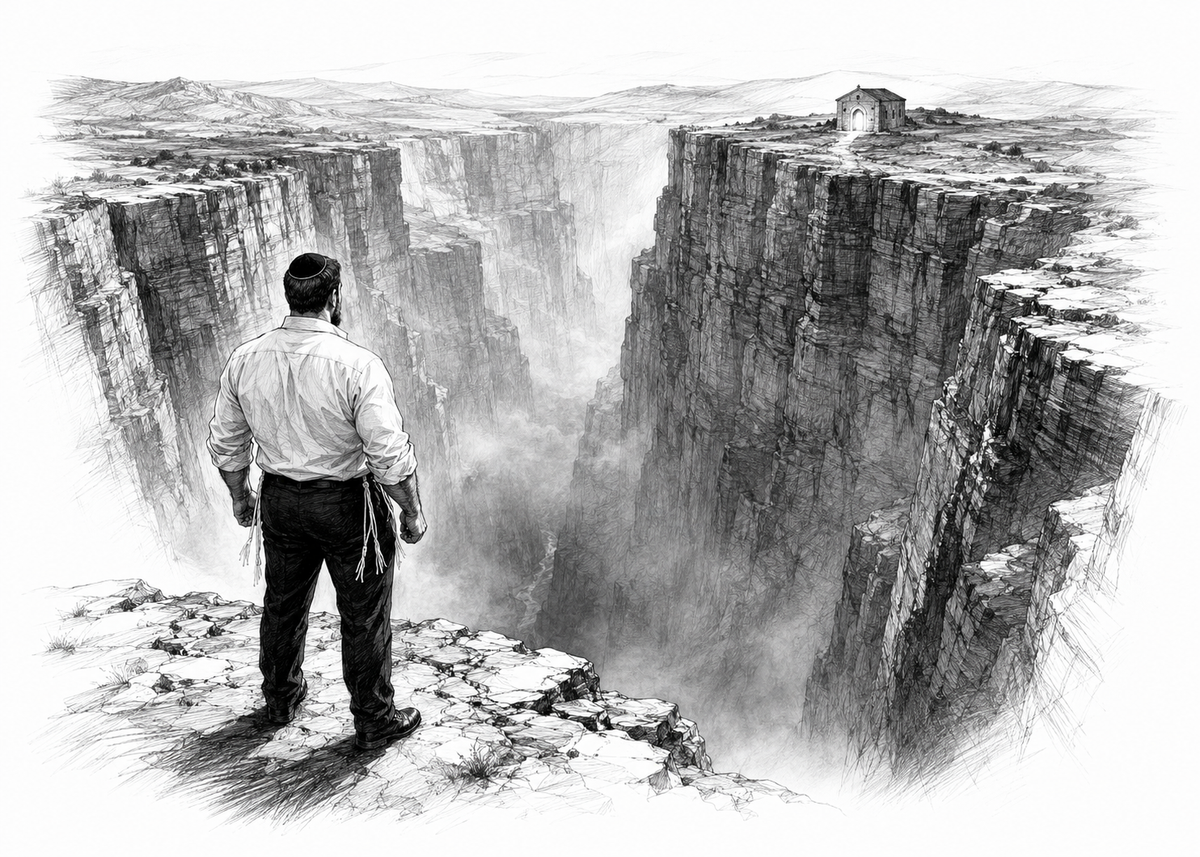
But now you are here, a minute past the start of Maariv, sitting in your car. You ask yourself, “What’s the point, really? Davening doesn’t do it for me. It just doesn’t. Maybe it used to, when I had the will to force it, but not anymore.” So you sit there on the precipice, in your car. The walk to the front doors of the shul is only a few steps from the spot you found at the curb. But there is an abyss open wide between you and those doors. Wider than the expanse of the universe.
Does this sound familiar to you? No? You never had an issue with minyan? What about night seder? What about any mitzvah you used to do with vigor, or perhaps never even did before, and now is just not the time?
Do you remember when you were trying to feel something, waiting for the davening or the learning or your relationship with Hashem to move something inside you? Waiting to see if it was worth the investment, but the words just fell flat? And you forgot why you were even bothering in the first place?
Perhaps some of you out there have never experienced this. It was always good for you. Maybe you are confused as to how a Yid could feel this way about his Yiddishkeit. Well, that’s great… for you. But it is a reality for many, whether it’s davening or a mitzvah or chessed. It’s as real and as human as anything. It’s a trajectory many feel. They put in their effort when they are young, and when it starts to fizzle and wane, the avodah feels like a burden.
And then we find the happy-clappy stuff. The cute vorts, the music videos, and the meat boards that make us feel like Yiddishkeit is fun.
We associate the burnout feeling with the old way of doing it. And the new way is warm, deep, and geshmak. It’s fun. And you get used to doing what feels good.
So you went from one end of the earth to the other. You went from thinking you needed to suffer under the cold, calculating burden of avodah, and when that didn’t work, you sought the feel-good stuff. The inspiration without effort. And that begins to feel empty as well.
The pasuk says in this week’s parsha, יִפְתַּח ה׳ לְךָ אֶת אוֹצָרוֹ הַטּוֹב אֶת הַשָּׁמַיִם “Hashem will open for you His good treasure, the heavens.”
The Kedushas Levi shines a light through this pasuk that is like a lifeline for me. He says :כִּי בַּתְּחִלָּה בָּא לָאָדָם הַיִּרְאָה, וְאַחַר הַיִּרְאָה בָּא הַתַּעֲנוּג, וְהַתַּעֲנוּג הוּא גָּנוּז בְּהַיִּרְאָה... כִּי בְּתוֹךְ הַיִּרְאָה גָּנוּז תַּעֲנוּג.
“At first, yirah comes to a person, and after the yirah comes pleasure, and that pleasure is concealed within the yirah.… For within yirah, pleasure is hidden.”
He continues and says, “And Hashem will open for you the goodness concealed within the treasure of yiras Hashem after you have served the Creator with yirah.”
If you just received the pleasure on its own, that isn’t real. Real ta’anug comes only from within yirah. So pleasure is the treasure. But you can’t find the real thing for free.
I imagine this little vort may not be landing the way it should. You might ask, “But Reb Levi Yitzchak, I got into this mess by burning myself out with yirah. I tried the yirah approach. It’s why I’m here in the first place!”
And the answer is, you're right, but there’s more to it. There is a perspective you may have missed. And not just you, but me too. I can get swept up in the feel-good vibes just as much as the next guy.
The pasuk in Yeshaya tells us, יִרְאַת ה׳ הִיא אוֹצָרוֹ “Fear of Hashem is His treasury." The famous Gemara in Berachos teaches us, הַכֹּל בִּידֵי שָׁמַיִם חוּץ מִיִּרְאַת שָׁמַיִם “Everything is in Hashem’s hands except for yiras Hashem.”
So yirah is the foundation. It is the building block of the relationship. You can’t skip this step, because if you do, you may fall into the trap of good vibes. Ta’anug without effort. Nahama d’kisufa. It isn’t filling. But the secret is still in the yirah. Not in the old yirah that broke your back with its cold, hard burden, but, as the Gemara says, the yirah that is in your hands. That is yours alone. And, as the Navi says, "Yirah is the treasury.”
Because there is a way to look at yirah as a gift. As a spring of light and life. Counterfeit yirah says, “You’re never enough.” True yirah is the choice in your hands to do what is right even when it’s hard.
So you are sitting in your car. It’s two minutes past the start time of Maariv, or whatever threshold you may be standing against. You can go in and feel bad about yourself again. Or you can stay in your car and listen to the rest of that song that feels good. And this choice feels like the only dichotomy left. But there is a third way to look at this.
You can open the door anyway, go in anyway, and allow yourself to sit in the knowledge that you got to choose this evening to go in. You may not feel the pleasure of being in shul, but the pleasure that you are truly in tune with yourself and connecting to Hashem in the effort can fill you with a glow that shines from one end of the earth to the other.
And as you cross the great chasm between you and whatever doors of avodah you may be facing, know that it is all within you. That the next step of a relationship with Hashem is in your hands.
Now, you did the thing. That is the key. The rest will come along. The joy from the hard things, and when you are on a roll, even the happy-clappy music videos can be enjoyable. They become the dessert that leaves a sweet flavor in your mouth. But the main course? You earned that. You came a bit closer to Hashem today.
Sometimes it’s just about moving. The Mesillas Yesharim teaches that external action awakens the internal. כִּי הַתְּנוּעָה הַחִיצוֹנָה מְעוֹרֶרֶת הַפְּנִימִית
You stayed in the fight. You kept moving. And perhaps this is the first taste of the hidden treasure you ever had. You discovered that you can ask something of yourself. That you can take responsibility for something hard without driving yourself back into burnout or settling for shallow ta’anug.
You used to think that work took something from you, but now I hope you can see the gift Hashem left for you within it.