Pinchas: The Spear and the Knife
The difference is not the blade. It is the man holding it.

There is a dangerous pleasure in being sharp.
You discover one day that you can hurt people with truth.
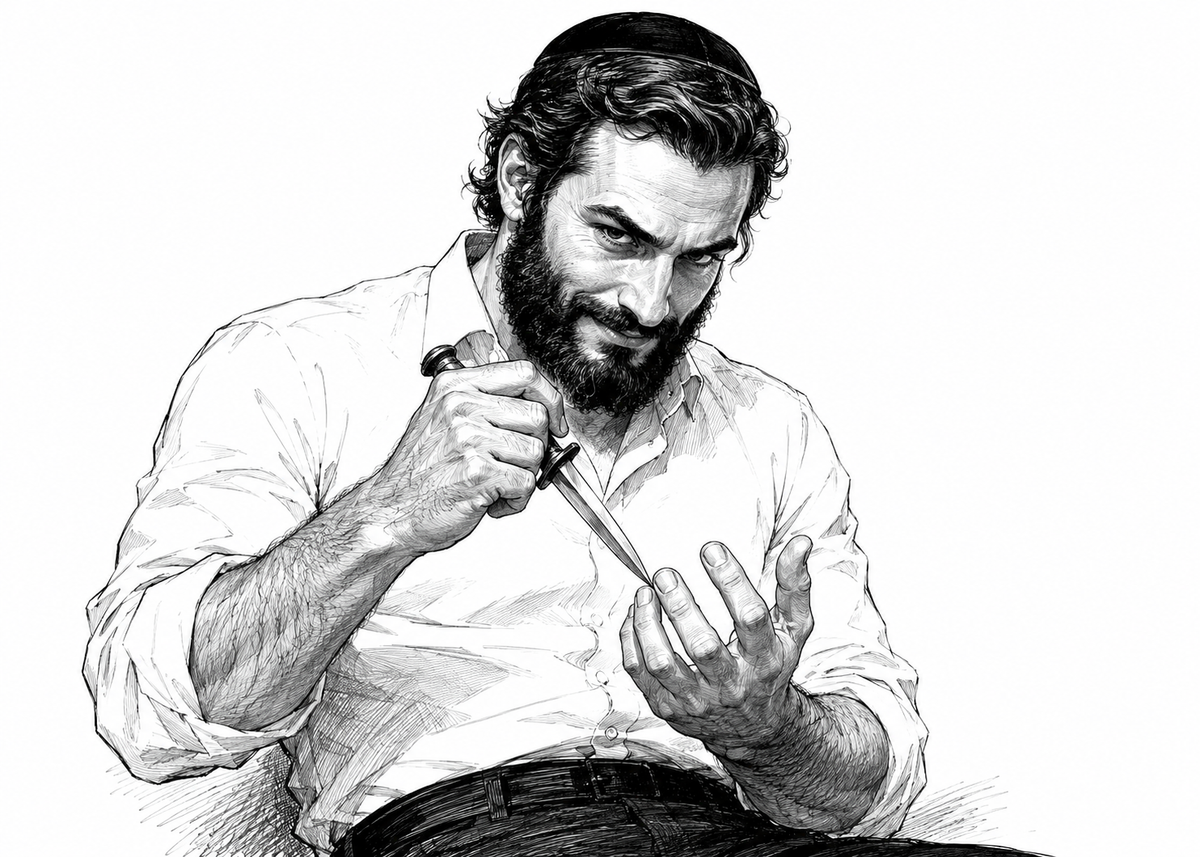
You learn how to take a clean, cold fact and drive it between the ribs like a jagged dagger or a scalpel.
Truth shaped like military ordnance.
Pinchas takes a spear.
He rises from among the people and kills Zimri and Kozbi.
The plague stops.
Hashem then gives him, “הִנְנִי נֹתֵן לוֹ אֶת בְּרִיתִי שָׁלוֹם” , a covenant of peace.
A spear.
A death.
A covenant of peace.
That combination has lit the fires of zealotry through the annals of history, hotter than the sun.
Because every angry man wants to be Pinchas.
Every man with a hot head and a good Ma’areh Makom wants to imagine that his anger is righteous.
That his cruelty is clarity.
That his need to strike is kana’us, a blazing fire for Hashem.
But Chazal does not let us get away with that Moreh Heter..
The Gemara in Sanhedrin says “הבא לימלך אין מורין לו” “if someone comes to ask whether he should do this [Be a Kana’i], we do not tell him to do it.”
Pinchas is not a template for angry men.
Chazal there continues and says that if Zimri had separated from Kozbi and Pinchas still killed him, Pinchas would be liable.
If Zimri had turned and killed Pinchas, Zimri would not be liable, because Pinchas would have been a rodef.
One breath later, the spear becomes murder.
One movement too late, and the Bris Shalom becomes bloodshed.
That is the knife-edge of Parshas Pinchas.
Not every sharp thing is holy.
The Toldos Yaakov Yosef, later in the parsha, on the korbanos of Rosh Chodesh, gives another brutal angle to this delicate way to view the world.
The Torah says that on Rosh Chodesh we bring “שְׂעִיר עִזִּים אֶחָד לְחַטָּאת”, “one goat as a sin offering.”
He explains that when the moon is renewed, when the Shechinah rises from darkness.
Darkness still gets its due…
Then he says, “הצדיק מברר הניצוצין... על ידי יסורין שנתיסר על ידי הרשע, והצדיק עולה ורשע יורד תחתיו.”
“The tzaddik clarifies sparks through the suffering endured from the rasha. The tzaddik rises, and the rasha goes down beneath him.”
A wicked man can hurt you and still unintentionally become part of your elevation.
His betrayal may burn off childish naivete, or his pressure may teach you to daven for real.
The tzaddik rises from the pain caused by the rasha.
But do not make the mistake.
The knife does not get credit for this surgery.
The rasha does not become holy because the tzaddik used the pain well.
The man who caused the wound still has to answer for becoming the kind of man through whom wounds enter the world.
Yeshayahu says this about Ashur in perek yud.
Hashem calls him “שֵׁבֶט אַפִּי,” the rod of My anger.
Ashur is being used by Heaven, and still he is judged, because “וְהוּא לֹא כֵן יְדַמֶּה”, “he does not see himself that way.”
He enjoys the destruction.
So the Navi asks, “הֲיִתְפָּאֵר הַגַּרְזֶן עַל הַחֹצֵב בּוֹ”, “does the axe glorify itself over the One who chops with it?”
The axe may be in the King’s hand.
But it is still only an axe.
The Rambam says the same about the Mitzriyim in Hilchos Teshuvah.
Even though exile was decreed, Egypt was punished, because “שלא גזר על איש ידוע”, “Hashem did not decree that this specific man become the oppressor.
“אילו לא רצה להרע להם הרשות בידו”, “if he did not want to harm them, the choice was in his hand. History has a decree. You still choose what kind of man you become inside it.”
History has a decree. The yidden needed the Kur Habarzel.
But you still get to choose what kind of man you become.
I can't run from this.
With all the words I write that seem to lash out, I cannot run from this…
I can be useful to Hashem’s plan and still be ugly inside.
Pharaoh was useful. Ashur was useful.
A fever, a bad boss, a cruel rebbi, a betrayal, the voice in your head that tells you you’re nothing.
All of it can be used.
But usefulness is not holiness.
Hashem can use anything.
And you.
You can use anything too.
He gave you every moment of pleasure and pain in your life for you to use.
To become a tzadik.
But beware, brother.
If you find yourself wielding the blade, know how you stand.
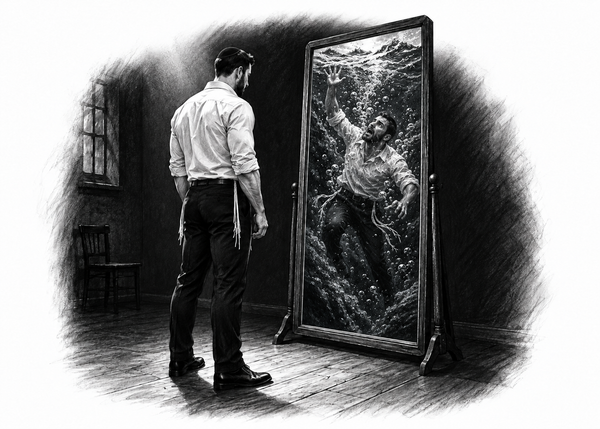
Look at your heart.
Do you bring with yourself the Bris Shalom?
Or is there a taivah for fervent, righteous fury that drives all your moves?
There are times to speak. Times to confront. Times to protect. Times to rebuke. Times to stand up while the plague spreads.
Pinchas did not write a thoughtful post.
He stood up.
Lakol zman Va’eis
But before you let yourself become sharp like a spear or an axe, you must ask yourself the dark question.
Do not ask, “Am I right to go to war for this, to be loichem likvod shamayim?”
That question is too cheap.
Ask this, “Do I want this to hurt?”
If the truth gives you the private pleasure of watching another man shrink, stop.
That is not Pinchas.
That is Ashur with a hechsher.
The spear must be held by a man who has erased his ego before Hashem.
The knife can only be held by a man who doesn't enjoy being necessary but is daveik Bashem, with a Bris Shalom.
And that is the whole avodah of the Gibor.
To become strong without becoming cruel.
To become clearheaded without becoming cold.
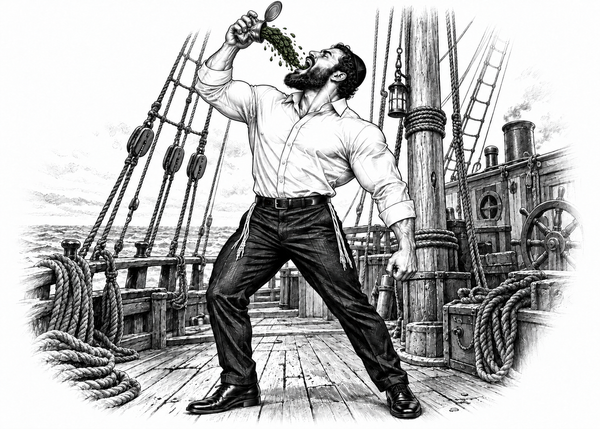
To learn how to be brave without getting drunk on the sound of your own self-righteous spear.
Pinchas gets a bris shalom.
The axe?
It gets thrown away.