Korach: We Are All Korach
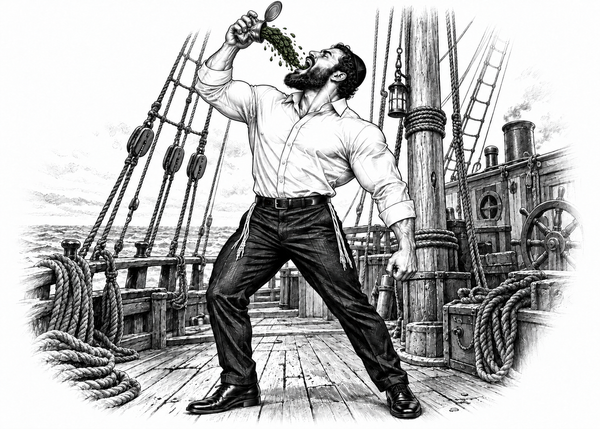
When good men have an ego l’shem Shamayim

He worked his whole life to achieve what he had.
Every day. Day in, day out, was a grind.
He worked on himself. Perfected his middos. Perfected his learning. He taught others and led large groups.
What more could they ask of him?
Yet he was still overlooked.
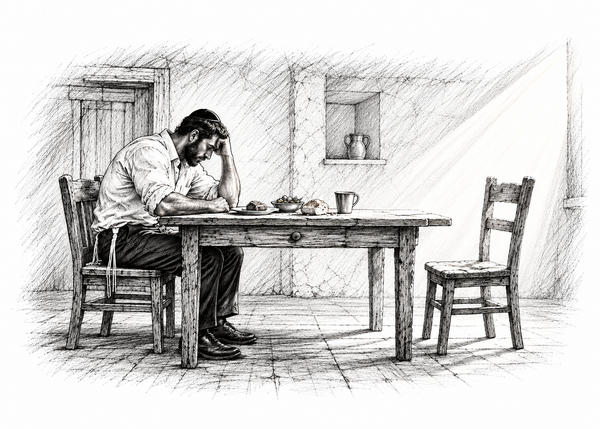
That hurt. That was painful.
“I have more to offer. I am more charismatic. I am more, I tell you. I am MORE than he will ever be,” he thought to himself.
“No one cares.”
“No one appreciates what I have done,” he muttered to himself.
Can you honestly say you’ve never felt this way in your life?
Have you never been passed over for a promotion or done something that got no accolades?
Is it wrong to think this way?
I mean, it’s not as bad as eating treif, right?
It’s bad, but we all do it.
You do it. I saw you do it that time in shul when you were telling me about that guy.
I do it too. Yeah, that time I vented about work.
You were mistreated. He was wrong. You’re not supposed to be a doormat, right?
He is the problem.
You need to stand up for yourself.
You learn. You daven. You went to the best yeshivos. You’re a good guy, and he was a bad guy.
Forget that guy.
He is the problem.
Does that sound familiar? That exchange? Righteous indignation. And you might even be right. You might even be kadosh. And those who agree with you might even be kadosh.
“כי כל העדה כולם קדושים.”
And Korach took himself. Rashi explains, “לקח את עצמו לצד אחד.”
So he could position himself opposite Moshe. He set himself aside.
He fabricated an opposition where there was none previously.
Out of thin air, a tzaddik of the generation manufactured machlokes.
Rashi continues and adds that he spent time speaking sweet nothings into the ears of the Sanhedrin to convince them to join his side.
A man we thought to be a tzaddik hador at the time, who was slighted and passed over for promotion, did this.
The fall into machlokes is complete. No matter how big the person is.
Korach was the tallest. And his fall was absolute.
Pirkei Avos teaches in the fifth perek: “וְשֶׁאֵינָהּ לְשֵׁם שָׁמַיִם? זוֹ מַחֲלֹקֶת קֹרַח וְכָל עֲדָתוֹ.”
When Pirkei Avos describes a righteous machlokes, it highlights Hillel and Shammai. But when it calls out the machlokes that is not for the sake of Heaven, it doesn’t mention Korach and his opponents. It just mentions Korach and his own crew.
Why?
Because the wrong kind of machlokes isn’t real. It’s fabricated. It’s not against a legitimate opponent. It exists just to foment disconnection between brothers.
It is a pernicious evil that lurks and twists and chokes the hearts of even the best of us.
It cordons off a piece of the whole and lets it fester in its own resentment.
True evil, it has been said, is the result of resentment. Not rage or anger, or even the initial feeling of being slighted. It is the slow drip of manufactured machlokes.
And it is as natural as anything.
The Sfas Emes brings a very cryptic Zohar. The Zohar says that Korach made his rift between Shalom and Shabbos.
Shabbos is the name of Hashem, and Shalom is the name of Hashem.
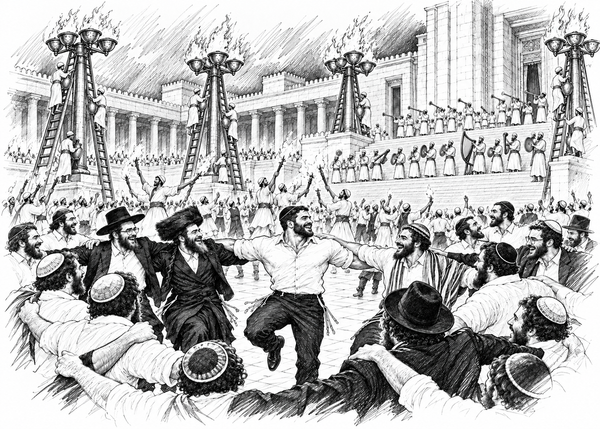
Hashem does not sit on His throne unless the world is pulled back into oneness, and this is on Shabbos. This is why we bring Shabbos into the week. It is our avodah that helps create that oneness in existence.
Shalom is the essence of Hashem, who is One and whole, and the avodah of Klal Yisroel is the bitul of self to become one. To return to the oneness of Hashem.
But Korach rent Shabbos and Shalom in half. He shook the foundations of existence, the very names of Hashem Himself, in his puny effort of assuaging his own ego.
The Sfas Emes explains that holiness is an inherent state and only exists when we are mivatel ourselves.
Korach believed that holiness was something we build on our own.
A meritocracy.
A project of self-development.
Nu, chevreh?
Do you see yourself?
Do you see yourself trying to work on yourself so much, and then someone else tries a different way and you scoff?
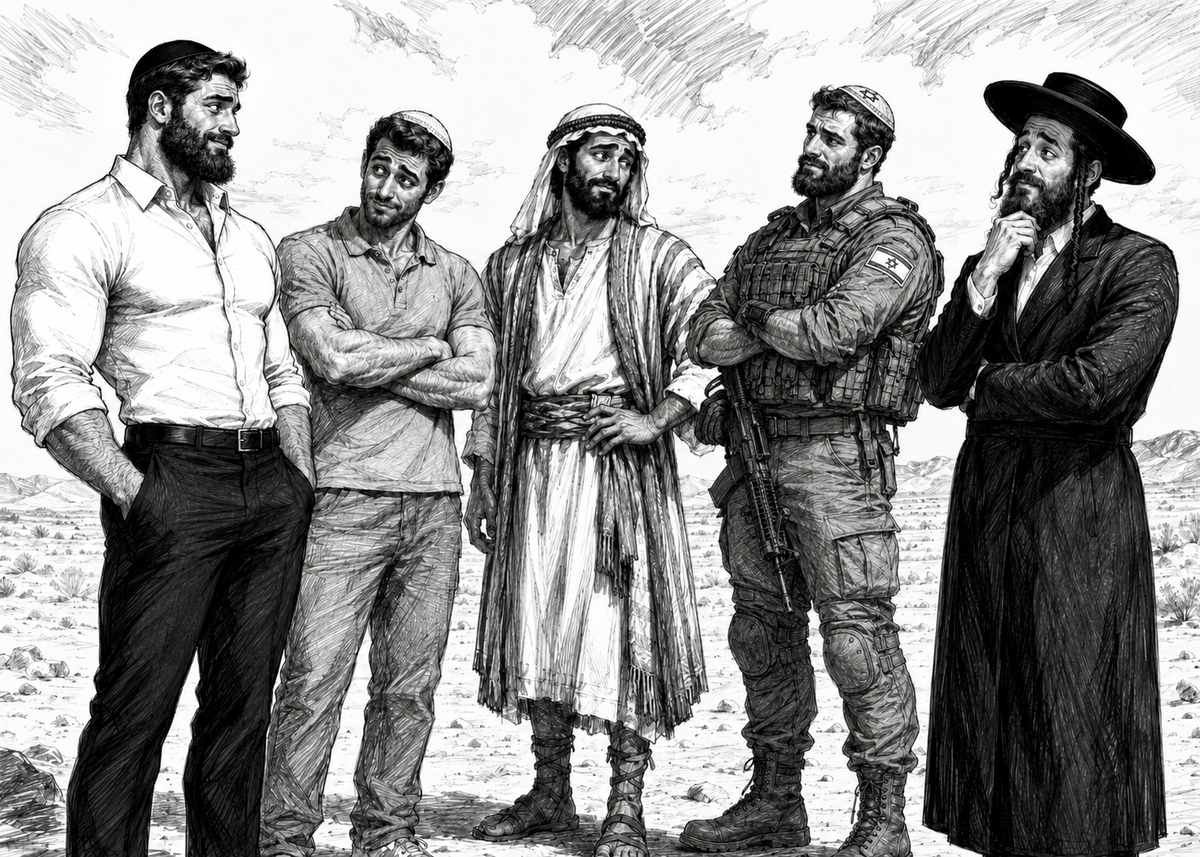
The yeshiva man looks at the chasid. The chasid looks at the Modern Orthodox guy. The Modern Orthodox guy looks at the Sefardi guy. The Sefardi guy looks at the Dati Leumi. The Dati Leumi looks at the yeshiva man, and around and around we go.
Everyone looking at everyone else. Looking down their noses.
Everyone thinking that the goal is to build yourself.
You and me, we’re tearing at Shabbos. We’re tearing at Shalom.
We’re breaking Hashem’s ratzon for us.
Of course there is space for healthy, holy machlokes.
But we know when it’s real.
We know, when we pay attention to the inner thermometer of our hearts, if it is beating to the drum of righteous rage.
You know.
If there is true bitul, it doesn’t mean you agree with everyone, but your ears won’t ring and you won’t go making up Torah to prove a point.
No one is above this.
Not even the tzaddik of the generation.
Korach broke us in the midbar.
Yes, we sinned before, but he broke us.
And we do this to ourselves every day.
We are all Korach.