We’re All Living In Shushan
Stop Kissing the Ring

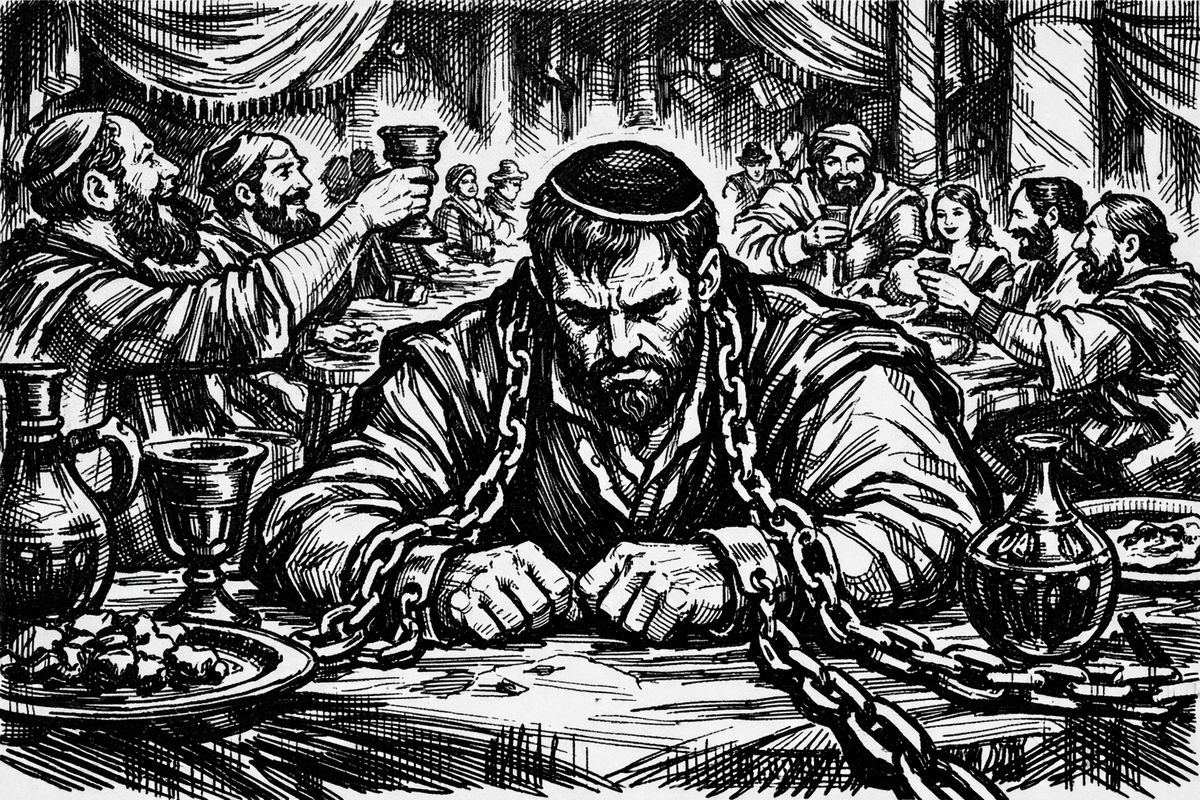
We’re all living in Shushan.
Everyone.
You, me.
You’re just not ready to admit it yet.
The torches are lit.
Silk hangs from carved pillars.
The goblets are gold, each one different, looted from a Beis HaMikdash most of us barely remember.
The wine is poured without measure.
Purple cushions.
Marble floors.
Music rising into the Persian night.
You’re laughing.
I’m laughing.
We tell ourselves it’s harmless.
We tell ourselves it’s strategy.
Networking. Survival. Hishtadlus.
The Gemara says in. Megillah 12a: מפני שנהנו מסעודתו של אותו רשע.
The decree came because we enjoyed the feast of that wicked man.
Not because we were forced to attend.
We enjoyed it.
It wasn’t chains. It was delight.
And now?
You were going from table to table tasting every vintage in Achashverosh’s palace.
Marveling at the keilim of the Mikdash being used as décor.
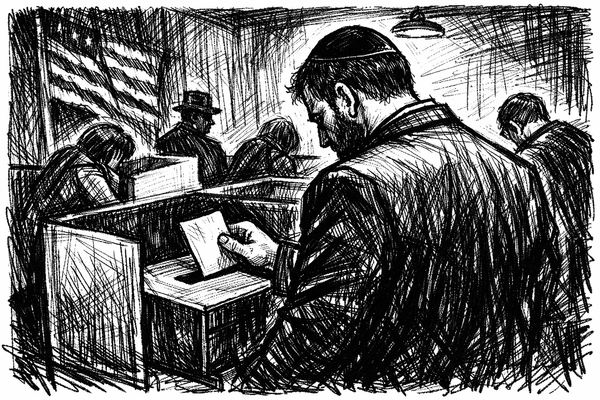
And today you’re at Kiddush arguing why it’s crucial to vote, why we must mobilize, why this candidate is different, why college is the only realistic path, why we must support our Christian friends, why “Judeo-Christian values” are our salvation.
You’re explaining geopolitics between kugel and cholent like you’re sitting in the שער המלך.
But Mordechai sits at the gate.
And you rage at him.
“Don’t be extreme.”
“You’re putting us at risk.”
“You don’t understand how the world works.”
“Hishtadlus!”
Hahsem have mercy on me, if I have to hear someone spout this so often misunderstood part of Bitachon.
Midrash in Esther Rabbah describes the bowing to Haman as more than politics.
It was spiritual compromise dressed as civic obedience.
It was survival logic turned into reverence.
And we bow today too.
Not just physically.
The literal perpetual bow pose over our phones.
That ubiquitous hunched back of a strangling soul giving his life force to the great screen gods.
We also bow with anxiety.
With obsession.
With endless hock about polls and policies and which rasha is slightly less dangerous than the other rasha.
Lesser of two evils? Please.
Say you gave up on geulah without saying you gave up on geulah.
Haman is running through our streets demanding us bow.
The Mishnah in Avos says אל תתודע לרשות.
Don’t ingratiate yourself with the ruling power.
Appreciate peace.
Yes.
Say thank you for the roads and the safety and the lack of pogroms.
But don’t entwine your heart with them.
Don’t mistake the red tie for redemption.
Ramban says on תמים תהיה עם ה׳ אלוקיך.
We are commanded to walk with simplicity, not to run after calculations and omens and political manipulations as if outcomes bend to them.
Do you think Temimus is going with the flow?
No, it’s loyalty.
The Chazon Ish in Emunah u’Bitachon demolishes the fantasy that bitachon is confidence in a favorable outcome.
Bitachon is clarity that nothing operates independent of Hashem.
No senator. No court. No executive order.
Nefesh HaChaim writes that the nations possess no autonomous force whatsoever.
Remove the will of Hashem and they collapse like puppets without strings.
Yet we speak about them as if they are Mashiach.
The Beis HaLevi explains that hishtadlus is an obligation on the person, not a cause of the result.
It refines you. It tests you.
It keeps you from spiritual stagnation.
It does not produce salvation.
When you believe it does, you have crossed the line from obedience into reliance on what is Zulas Hashem.
That’s when bowing begins.
We have become intoxicated.
With Politics.
With Lavish living.
Endless upgrades.
Kavod as the new avodah.
Communities siloed into status brackets.
Schools more concerned with branding than with yiras Shamayim.
An endumbification that feels almost engineered.
If I didn’t know better, I’d think it was a conspiracy to keep us docile.
But it’s older than conspiracy.
It’s Shushan.
Fat at the feast.
Convinced bowing is a mitzvah.
“Dina d’malchusa dina,” they say.
Yes. We obey the law. We pay taxes.
But that never meant emotional investment.
It never meant we should make it our god.
It never meant baptizing reshaim in holy language because they flatter us for votes.
You can have hakaras hatov for America.
You should.
But don’t confuse yourself.
Look at our history.
Spain.
Germany.
Poland.
France.
Every palace felt stable… until it wasn’t.
“This country will never turn,” we whisper.
Brother. That’s what we always said.
You argue over personalities like they’re kings in Megillas Esther, forgetting that Achashverosh himself was just a pawn in the story.
We have Torah.
We have Hashem.
That is all we need.
Rabbeinu Bachya taught us that Hishtadlus exists for two reasons only.
One: to test us. Will we act with integrity in this world
Two: so we don’t grow bored. You know idle hands and all that.
It does not control outcomes.
It never did.
When you start believing it does, you’re already bowing.
We need more Mordechais.
Men who can sit at the gate and refuse the choreography of fear.
Men who understand that bitachon is not being passive.
Baruch Hashem, some are waking up.
Quietly.
You can feel it in conversations that trail off.
In the discomfort when someone says, “Maybe we’ve gone too far.”
We are in Shushan.
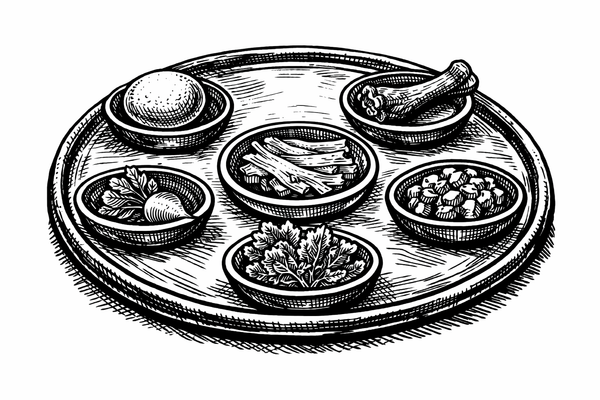
Recognize it. Feel it. Taste it like the marror.
Remember that it is supposed to be bitter, but our spiritual nerve endings have been fried in the cesspool of galus.
Brother, I’m with you. I am you. I am partaking in the feast too.
And the feast is loud.
The wine is sweet.
The arguments feel important.
But the hidden King is still running the script.
Wake up.
Anchor yourself in bitachon before the music stops.
Wake up brother.
Wake up.
(P.S. If you searched and found a rebbe who is a Mordichai and you know he is a Mordichai because your bones tell you he is and he holds you accountable, and he then tells you to vote or engage with whatever, then do it.
Then it’s Hishtadlus.
Then it’s Mordichai telling Esther to go B’ratzon.
Even if it seems wrong.
But this only works if you have found your Mordichai.
P.P.S. If you are offended by this, you are the problem.
If you are not, even if you don’t agree, you are still holding.
There are many Mordechais and yeshivas and shuls that build Mordechais out there.
Perhaps not enough, but you can easily tell who is a Mordichai.
Just give them this essay to read, and you’ll see very quickly.
P.P.P.S.: Read this if you want to do something about the above.
Subscribe to comment.
You know you want to.