Vayikra: You Haven’t Brought a Korban in Years
And Hashem Knows It

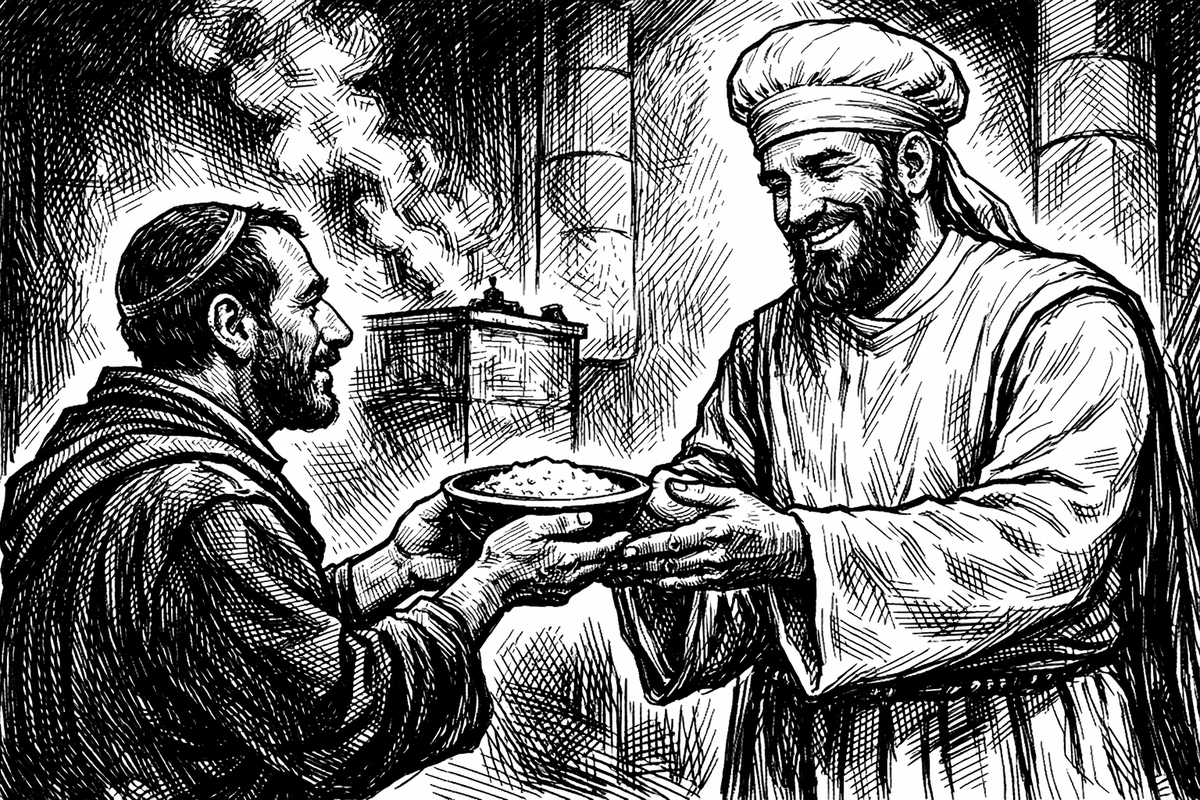
The Kohen noticed it immediately.
A scene he witnessed before.
The man.
He stood there too long before stepping forward.
His hands didn’t move right away.
They tightened. Loosened. Tightened again.
Earlier that morning, a rich man arrived with a whole procession.
Servants, animals, noise.
He brought twenty bulls, maybe it was more.
A whole team of Kohanim was needed to handle the crowd.
He barely stepped inside.
Didn’t even look at him.
Didn’t look at anyone.
Instructions were given.
The avodah details were dictated by a concierge.
Efficient. Clean. Impressive.
And empty.
Now this one.
A simple man.
Clothes worn thin.
He held the mincha like it weighed more than all the bulls combined.
Because it did.
The Kohen stepped closer to receive it.
For a moment, the man hesitated.
He thought it was from confusion, maybe the man was new here.
New to the big city and all.
But then it hit him.
It was just hard to actually give.
This wasn’t just extra flour.
This was food.
Maybe his.
Maybe his children’s.
And then he gave it.
The Torah uses a strange word when describing the Korban for a mincha.
וְנֶפֶשׁ כִּי־תַקְרִיב קָרְבַּן מִנְחָה לַה'
“When a soul brings a meal offering…”
Nowhere does the Torah use the word "soul" when discussing Korbanos except here.
Rashi, brings the Gemara in Menachos,
מי דרכו להביא מנחה? עני.
אמר הקדוש ברוך הוא: מעלה אני עליו כאילו הקריב נפשו.
“Who brings a mincha? A poor man. Hashem says, "I consider it as if he brought his soul."
As if he brought himself.
This is where most people misunderstand everything.
It’s not about poor versus rich.
It’s about real versus not real.
A rich man can give a fortune and remain unmoved.
A poor man gives a handful of flour and feels it tear through him.
So what does Hashem receive when you bring an offering?
The thing you brought?
No.
The contact.
The Ramban writes that a person should see every korban as if what is happening to the animal should have happened to him.
But most people never get there.
Because nothing is actually happening to them.
You can live an entire religious life like this.
You daven.
You learn.
You give tzedakah.
You show up.
And none of it touches you.
A life of offerings that cost nothing.
A life where nothing was ever really given.
David HaMelech said,
זִבְחֵי אֱלֹקִים רוּחַ נִשְׁבָּרָה
“The offerings of Hashem are a broken spirit."
Because only when something breaks can you reveal what’s inside.
The Ropshitzer Rebbe said that a korban isn’t what you bring, it's what you break.
לרצונכם תזבחוהו
“Slaughter your רצון.”
Kill the part of you that doesn’t want to give
בטל רצונך מפני רצונו
He says taavah lives in “רתיחות הדם”
In the heat, in the surge.
That’s why the avodah has the spraying of blood.
But the mincha is even more pared down than a regular korban.
There is no animal.
No blood to throw.
Just flour.
Just a man.
So where does the korban happen?
In his will.
When he gives what he cannot afford to give.
That’s why it’s called נפש.
Because if your רצון walked away untouched, you didn’t bring a mincha.
You just brought some flour.
We live in a wealthy generation.
Even the struggling among us live with a level of ease that was unimaginable just a few years ago.
Tzedakah is easier.
Learning is easier.
Davening is easy today.
We’ve built a system where everything is accessible.
And in doing so, we’ve built a system where nothing costs us.
The law of diminishing returns has already kicked in.
The ease that once brought you closer to living a Torah life… now keeps you comfortable.
And comfort is the enemy of closeness.
You can see it everywhere.
A man gives generously but never feels it.
He learns but never strains.
Davens, but never fights for even just one word of pure tefillah.
A father comes home, but he’s spent his essence on other people all day; all he has left for his family are his leftovers.
Everything looks right.
But nothing is real.
The Midrash gives us a mashal for why there were five ways to prepare the mincha.
A king asks his poor friend to prepare a meal.
He knows the man has almost nothing.
So he tells him, "Prepare it in five different ways so I have more ways to enjoy it.”
Why? It's the same ingredients, just made differently!
Because he wants the man’s effort.
His thought. His stretch. His giving.
The king isn’t eating the food.
He’s receiving the man.
That’s the whole story.
Hashem is not collecting actions.
He is receiving you.
Or not.
So what is a korban?
What it cost you.
What part of you went with it.
You can go years without bringing one.
Years.
While doing everything right.
Wake up, brother…
When was the last time you brought a korban that was real?
And do I dare to stare at my face in the mirror and ask the same of myself?
So, how does one start?
Well… start small.
Bring a mincha.
One thing a day that actually costs you something.
Hold your tongue when it burns.
Give when it pinches.
Daven one tefillah like your life depends on it.
Not everything.
Just one thing.
One small mincha.
But it's got to be something real.
.רחמנא ליבא בעי
Hashem wants your heart, not the act, or the form, or the performance.
The question is simply, did your heart come with the korban… or did it stay behind, safe and untouched?
You can stand in Shemoneh Esrei, say every word, bow in all the right places, and your mind is somewhere else entirely.
The tefillah is said, the obligation is checked off.
But where were you?
And the times when you catch yourself mid-bracha.
You stop.
Fight to come back.
Force yourself to mean one line.
That's huge.
That's real.
It’s uncomfortable.
It’s slow.
But it costs you something.
Same siddur.
Same words.
Only one of those familiar scenarios brought your heart.
And that’s the only one Hashem wants.
Bring something that hurts a little when you give it.
Bring something that’s yours.
Or don’t call it a korban.
If you enjoyed the above please consider supporting The Gibor.
You can subscribe for free and get access to some weekly essays.
You can upgrade to a paid tier which gives you access to all content in this site.
You can also leave a tip if a particular essay resonated with you.
Thank you for your support. It helps me to continue working on this site and providing you with more Torah.