Va’eschanan—From the Ashes of Your Own Mind
The idols we build in our minds become the altars from which we cry out to Hashem
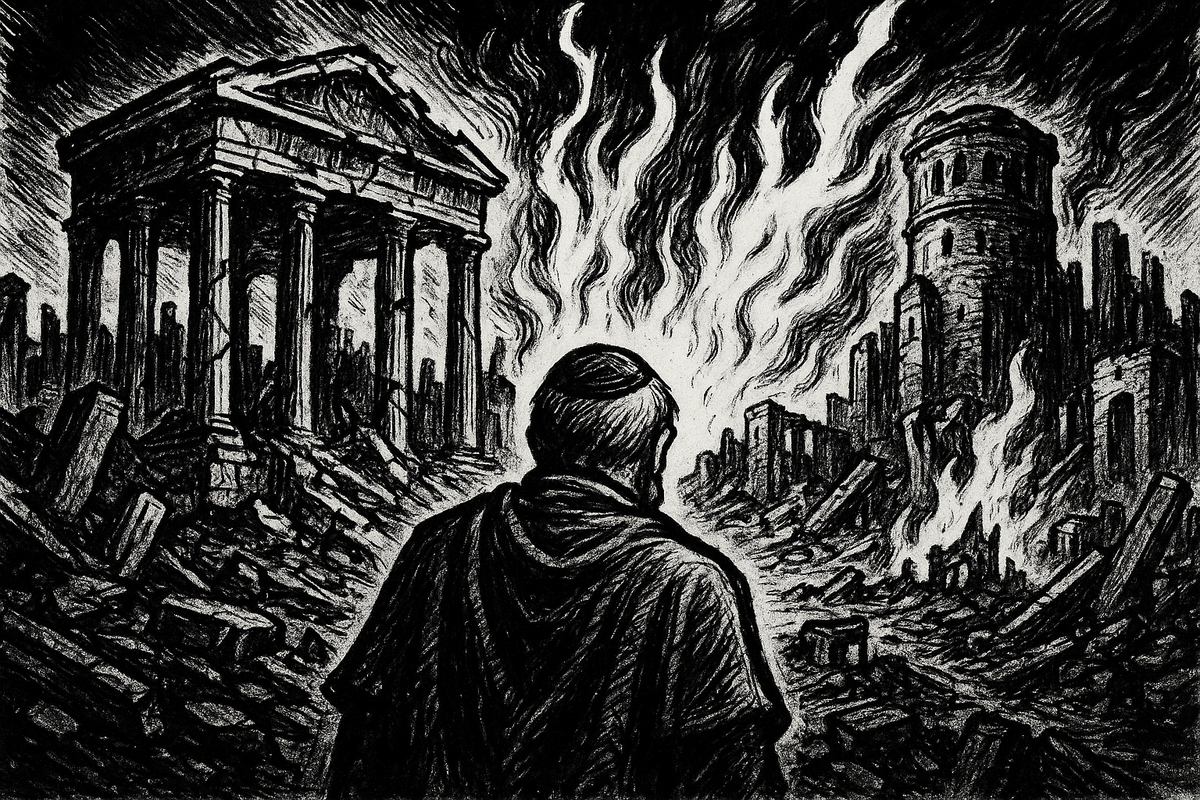
There is a certain clarity that comes after a fall.
In the heart of the shame that rises.
When you look upon your family, see the faces of your wife and children, and know you messed up.
It is the heat of a thousand suns burning.
And the center of that heat is clarity.
Its Name
The shame you feel. That is kelipah.
It’s a shell; it’s not you.
It fuels your actions. But it isn’t you.
We spoke about this shame already. This shame is beyond simple guardrails.
It is the idol behind your eyes.
For some it takes the form of fetid sin.
For some it is fear of being singled out. Of having “novel thoughts.”
It is the cycle that spins over and over and over again, cutting its way through your life and everyone on your periphery.
Many have dressed it up in black hats and jackets, trying to paint a veneer of righteousness.
The myriad masses who’ve learned shas on the back of this avodah zarah.
Their learning becomes like the offerings to Baal Peor.
Many more learn true. This is not to parody all who learn.
Truly, I am jealous of those who see Hashem with no filter, no screaming void behind the eyes.
One day I’ll go deeper into the Baal Peor-shame connection.
For now know that when you stare the shame down, when you look it in the eye, at first you will see the abyss.
But behind that horrible curtain is you… hiding from yourself.
And when we fall, and it feels as though we are going to be consumed by it all, that’s when the clarity hits like a bright light, a solar flare right between the eyes.
There
וּבִקַּשְׁתֶּם מִשָּׁם אֶת ה' אֱלֹקֶיךָ וּמָצָאתָ כִּי תִדְרְשֶׁנּוּ בְּכָל לְבָבְךָ וּבְכָל נַפְשֶׁךָ
"And from there you will seek Hashem your God, and you will find Him, if you search for Him with all your heart and all your soul." (Devarim 4:29)
Empires rise and fall. We rise and fall.
Falling is inevitable, but if you search for Him in your fall, there you will find Him.
“Misham.” There.
The Malbim teaches us that He is found there, in the pain and abyss.
He is found, even when you must hide it in your heart and in your soul.
And when the masses sway as one to the beat of a foreign drum, but dressed in the Shemonah Begadim, know that you will find Him there in your heart and soul.
And as the next pasuk teaches, it is there in the distress that will surely come that you find yourself.
Avodah Zara
We don’t have external Avodah Zara today.
No, it lives inside us like a parasite, sacrificing the now for a false dream of the future.
The call for filtering and censoring and sheltering echoes like a klaxon going off on repeat.
Yet it is just the last thrashing of a dying empire.
The Spiral
History does not repeat itself, as many love to say.
It’s an easy line to say it does. It's convenient to lob accusations across the aisle, to condemn the others.
It's false, though. If it were true, it would be easy to tell when it happened.
In truth it rhymes. And since it doesn't quite mirror the past, it’s often hard to see it coming before it’s too late.
The twentieth century is awash with ideologies that promised utopia and redemption if only we would.
All.
Get.
In.
Line.
But movements and utopias are destined to fall.
The Torah tells us that it is inevitable.
It's impossible to not get caught in the bloat and self-aggrandizement of one's own image.
Mamesh is the root of Avodah Zarah.
But the Torah teaches us, as individuals, how to use the fall.
Shoshanim
The clarity born within is the classroom we need to pull ourselves out.
If Chazal were in school today, they would surely be kicked out and working in nursing homes or real estate by now.
They sought the kernel. The diamond hidden in the coal.
We are told today to dismiss it. Coal is bad; it is assur, it is bitul. And so it is lost
But in the fall, when the coal breaks open. It is there where the glint of your Chelek Elokah Mimaal is found.
Klal Yisroel is called Shoshanim, roses.
Our true fragrance is only released when we are crushed.
History.
And so it goes.
on to infinity…
The Gibor
The Gibor is Kovesh, his Yitzro.
He cares not about the empire, complacent and on the edge of imminent collapse.
He seeks only to conquer his own Yetzer. To free himself of idols hidden from plain sight, dressed in clothes meant for holier things.
You can smash idols before the ruin comes, or you can find yourself in the void it leaves behind.
“From there we will seek Him.”
The very ashes of our idols become kindling for the fire of return.
נַחֲמוּ נַחֲמוּ עַמִּי, יֹאמַר אֱלֹהֵיכֶם
Your God.
No one else’s