The Strongest Kingdom Is a Hut
On Sukkos, a man learns that faith is the only wall that holds.
I have spent too much of my life building walls.
Savings, routines, titles, reputations, crafting my own private fortresses.
Each year I convince myself the mortar will hold this time.
Then the wind comes.
And Hashem whispers, “Go outside.”
So I leave the house.
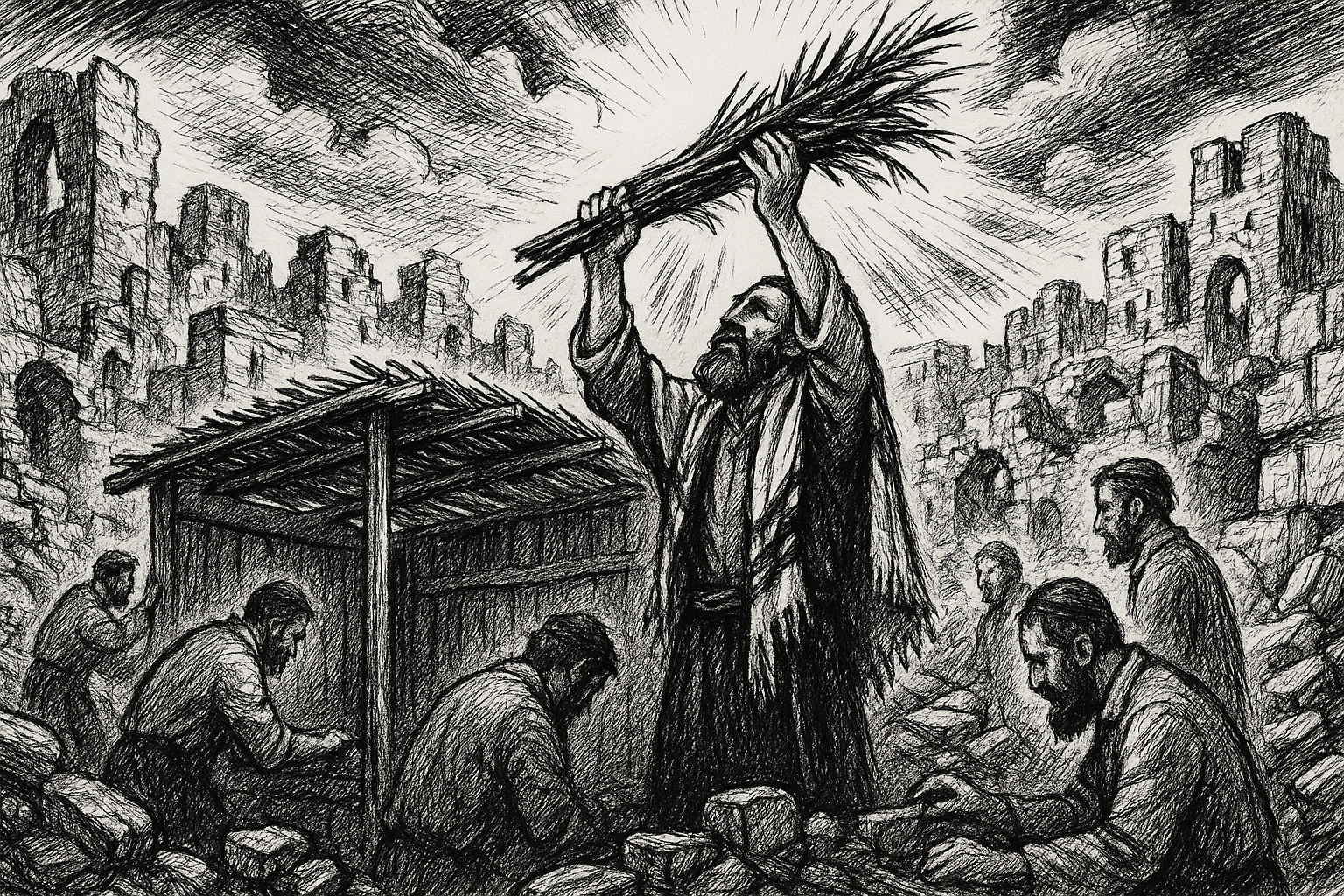
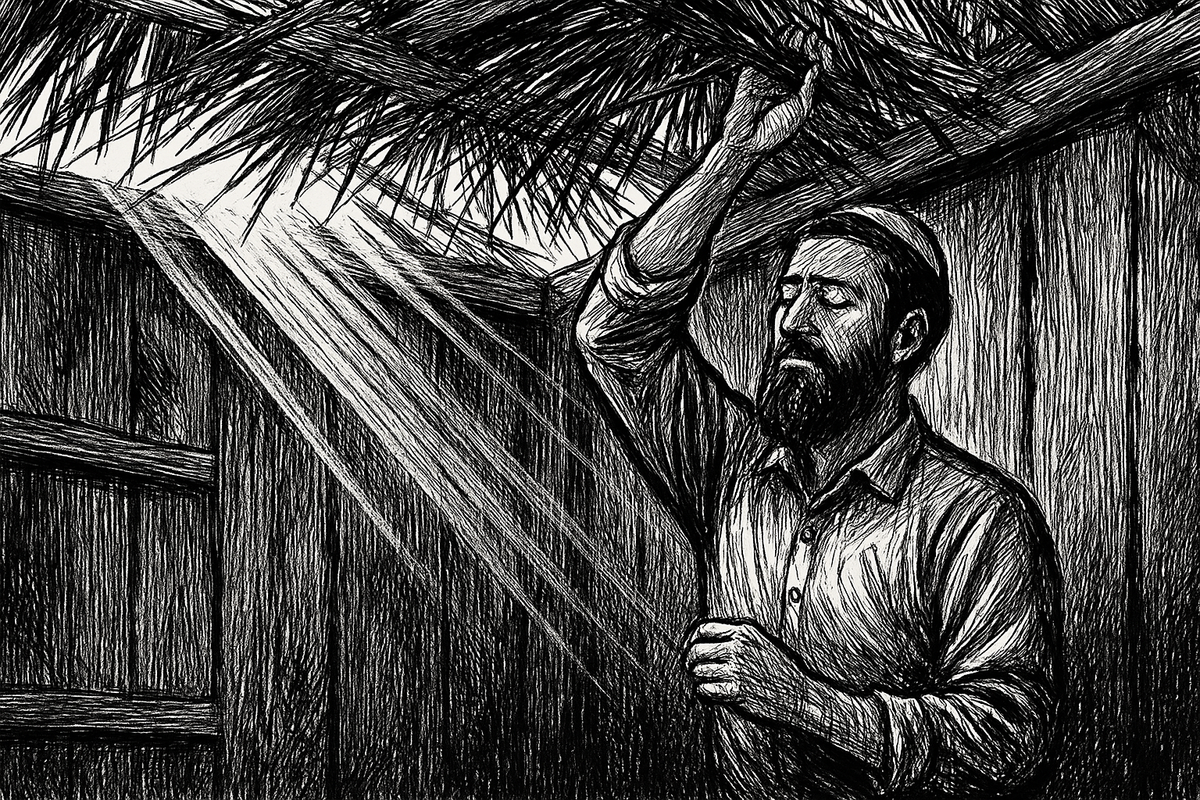
I step into the Sukkah, under a roof that leaks light and a wind that knows my name.
There, among the reeds and shadows, the pretense falls away.
It is impossible to pretend inside a Sukkah.
Every gust is a reminder that control is an illusion.
And that illusion more than fear, is the great exile of man.
Shade of Faith
The Zohar calls the Sukkah tzail d’mehemenusa, the shade of faith.
Inside that shade, the soul learns to breathe again.
It realizes that the strongest thing in creation is not a wall but the One who stands beyond it.
A diras arai, a temporary dwelling, becomes the only structure that can touch eternity.
Rav Tzadok taught that the Sukkah is the single building where heaven and earth truly meet.
Every other home hides its fracture behind paint and brick.
The Sukkah confesses what the universe already knows.
Existence stands only because the Ratzon Hashem wills it to stand.
When we sit beneath the Schach, we dwell in the seam between worlds.
The boards are wood, the air is divine.
We eat bread, and the Avos and the Shechinah eat with us.
Vayavo Yaakov Shalem
Yaakov Avinu became whole.
The Tikkunei Zohar says his limp healed when he reached Sukkos.
When he built his house and his Sukkah together.
The wound in his thigh, that fragile joint of faith and flesh, was set back into place.
He called the place Sukkos because there the Shem Havaya and the Shem Adnus joined.
26 + 65 = 91.
91 = Sukkah
The equation of wholeness.
There Yaakov stopped wrestling.
There he rested in the shade.
That is the secret the world refuses to hear.
Modern Man
Modernity screams, “build higher, harder, richer,” as if power were insulation against fear.
But the Gibor knows the truth.
A man who trusts in Hashem does not become weak; he becomes unbreakable.
The body of the world may collapse around him, yet the soul inside the Sukkah does not flinch.
Halachah calls the Sukkah a diras arai, a temporary dwelling.
Yet the command is to live in it as if it were your home.
Eat, drink, speak, sleep, and make it your castle of impermanence.
It is the highest level of Bitachon to know that a leaf-roofed hut with flimsy walls is safer than a stone fortress, because Hashem Himself is the roof, and the walls, and the dirt floor in your backyard.
Sukkas Dovid
“Harachaman Hu yakim lanu es Sukkas Dovid hanofeles.”
We ask for the rebuilding of Dovid’s fallen Sukkah.
Not the Malchus Beis David, his palace, or his walls, but his Sukkah.
Because the truest kingdom is not founded on stone towers or marble halls but on the trembling faith that holds it all together.
A fortress protects by exclusion.
A Sukkah protects by presence.
When the Malchus fell, it was not the battlements that cracked but the collective Bitachon of the people.
When it rises again, it will be through men who know that Emunah and Bitachon are the only foundations of redemption.
Each beam we lift in Emunah adds a rib to that eternal structure.
The future is being framed right now, one act of trust at a time.
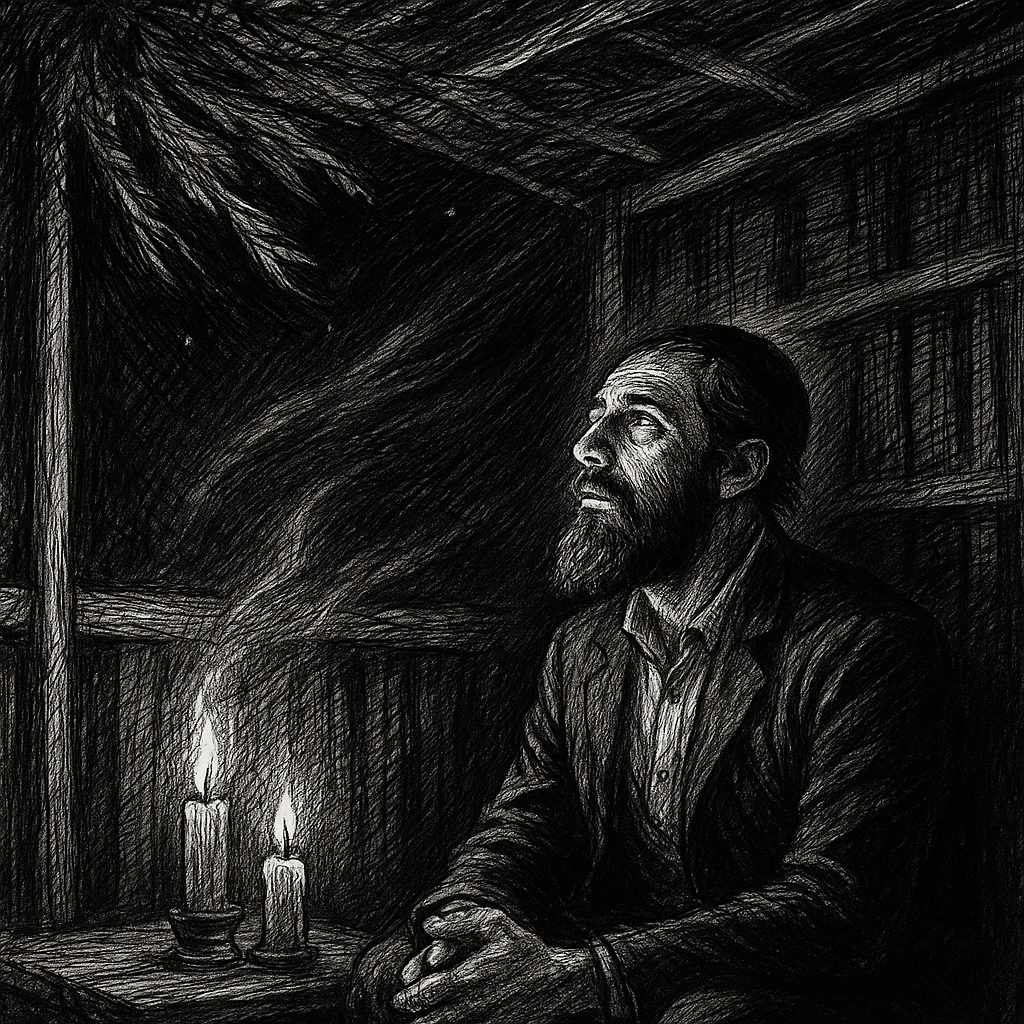
So I plan to sit here tonight beneath branches and stars, listening to the night move through the schach.
My children will laugh inside; my wife will hum the niggunim of Yom Tov.
And the candles will tremble but never die.
This is what it means to dwell in safety.
A fortress is fragile.
Emunah and Bitachon are the only walls that cannot fall.