Smash the Idol in Your Skull
“Sacred defiance against fear-dressed-as-piety.”
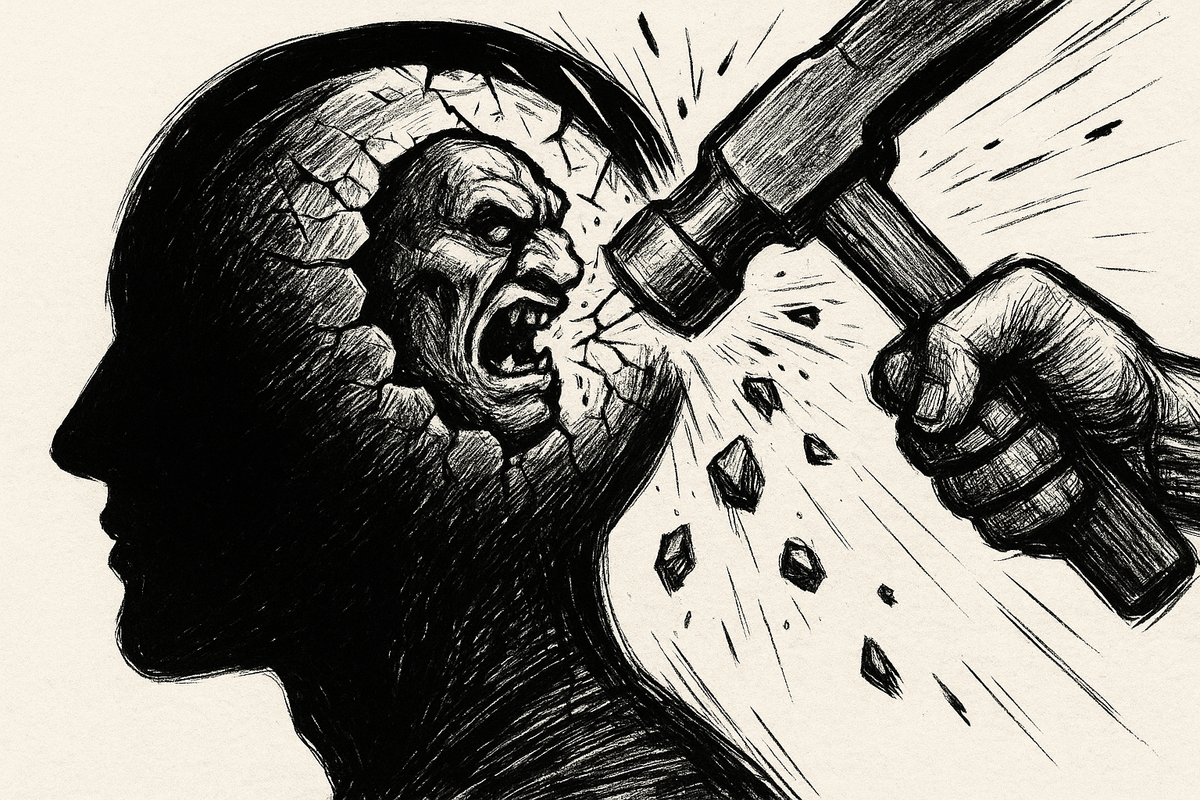
Avraham was alone in Terach’s idol shop when the hammer found his fist.
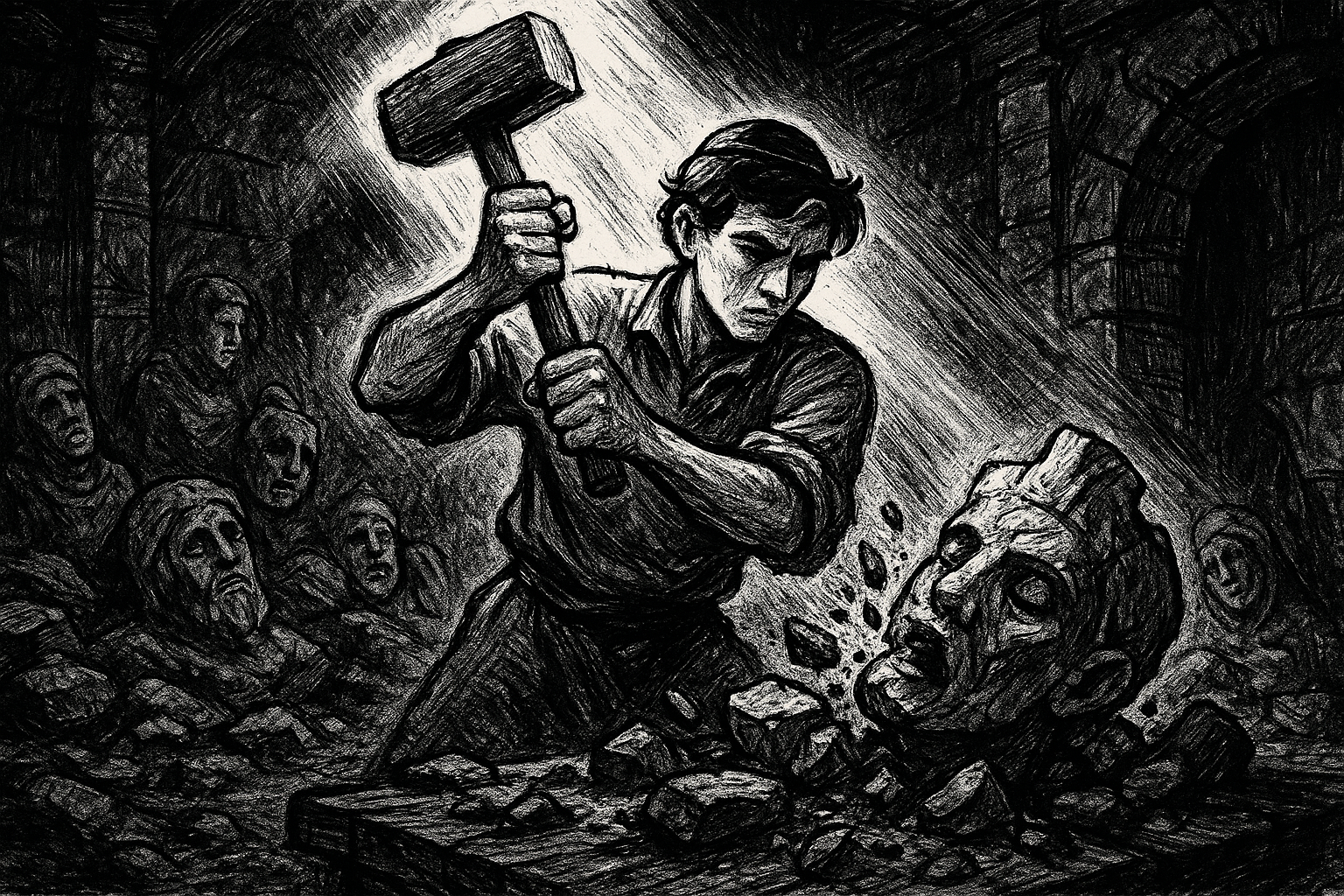
One statue splintered, then another.
Stone dust in the air, the echo of divinity in the smash.
By the time his father returned, every false face was rubble, and the boy who would become the father of a nation shrugged.
“The big one did it.”
This is something I have been thinking about for some time.
I am terrified to share this. But perhaps that is the idol speaking.
I never swung that hammer in a Mesopotamian showroom, but I have been staring at my own shelf of silent idols for two decades.
I’ve always wanted to write. to speak truth.
Twenty years of unwritten pages.
Twenty years of a voice that hissed, “Be normal. Don’t stand out. No one will accept you.”
Twenty years of kneeling to a god of smallness I carved myself.
The God I Built
I called him “Humility.”
I called him “yeshivish geshmak.”
I called him “bitachon.”
I thought that if I stayed inside the lines, blessing would drip down on schedule.
He was convenient.
He demanded no authentic courage, only conformity.
His commandments were negative space.
He taught, “Do not risk. Do not dream too loud. Do not admit you burn.”
He looked like Hashem because fear wears holy costumes.
He quoted Chazal out of context, wagged an ethereal finger,
and I listened.
I handed him my pen and watched the ink dry out.
Avraham’s Whisper
The Midrash says Avraham stared at the heavens, at the sun and moon and stars, and asked, “Is this the master?”
They set and rose and set again, proving themselves mortal.
So he dug deeper until the One beyond cycles answered.
That’s when he marched into Terach’s shop and raised the hammer.
He needed to know before he could act.
The idol first dies in the skull. Only then does the hand have permission to swing.
Rebbe Nachman’s Thunder
Rebbe Nachman once told the atheists he spent time with, “The god you don’t believe in… I don’t believe in either.”
That line is not just a wink or a witty line; it is a war cry for the soul.
He was saying, “Kill the counterfeit. Until you do, you cannot meet the real Ribbono Shel Olam.”
If you don’t do this you will forever mistake the cage for the King.
Why the Pen Stayed Sheathed
I was not lazy.
I was loyal to a false god.
I trained my bitachon muscles to trust that idol.
Every time inspiration struck, the voice growled, “Who do you think you are? This isn’t Torah. Real talmidei chachamim don’t write like that.”
I would nod, close the notebook, and recite Tehillim for help finding more normal ways to serve.
Bitachon and emunah are not neutral energies; they are allegiance.
When you take trust away from hashem, you are automatically placing your trust in somethign that is other.
When pledged to the wrong throne, they become spiritual steroids for the shadow.
And shadows grow strong on borrowed holiness.
So Hashem, in His kindness, let me fail.
Projects stalled, confidence eroded, and parnassah twisted.
I prayed harder, but still to the idol.
Only when the ruin felt unbearable did I hear the faintest echo of Avraham’s hammer, a whisper that sounded like a dare, “Smash it, and write.”
The Ritual of Ruin
Here is the practice I have begun and invite you to try:
- Name the Idol. Write every sentence it speaks. Don’t sanitize. Let the poison ink the page.
- Hold the hammer. Out loud, read the first of the Aseres Hadibros “Anochi Hashem Elokecha…” and realize that this verse is still spoken in the second person. The real God addresses you.
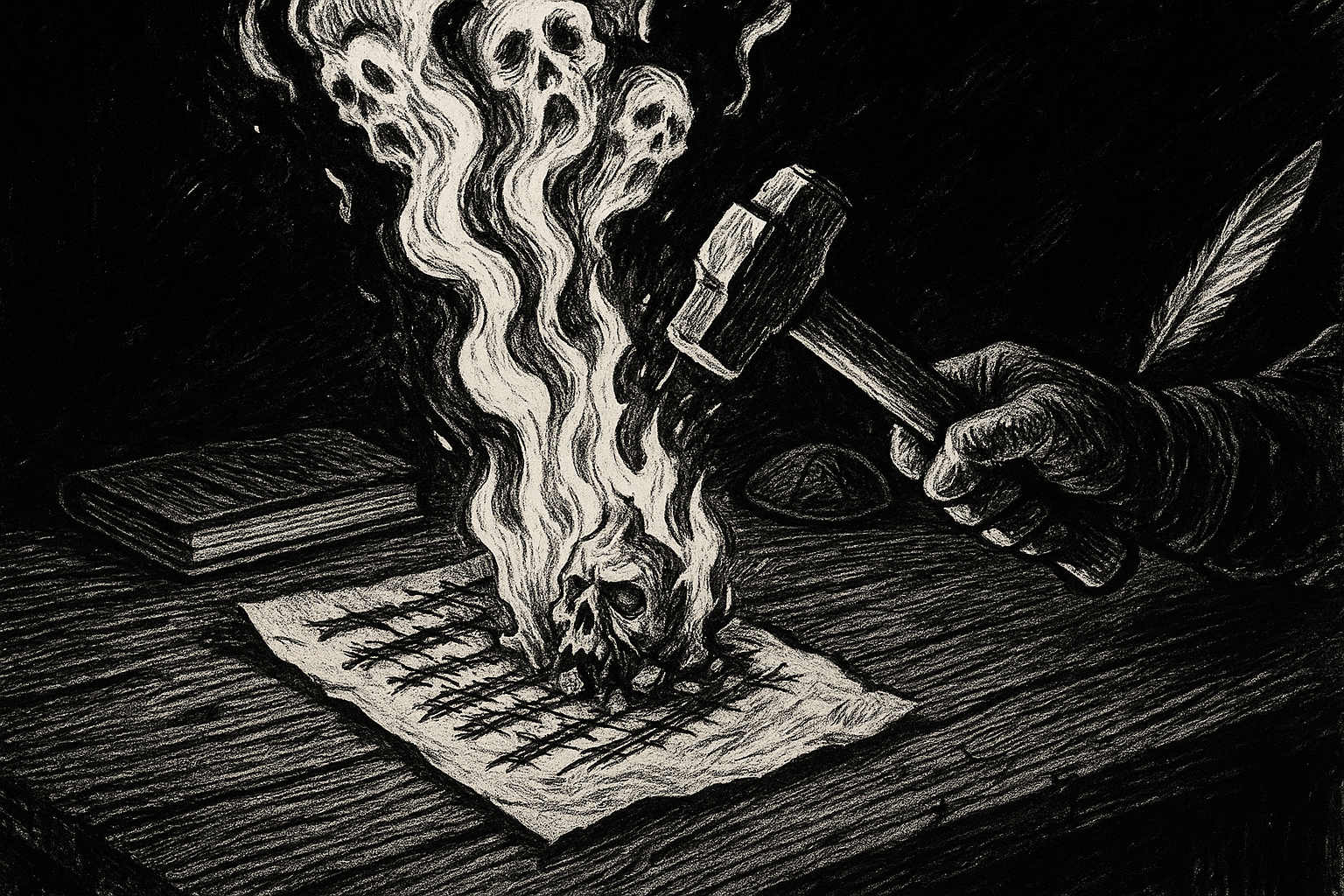
- Strike Through. Physically draw a brutal line through each false decree. Feel the graphite crunch.
- Burn the debris. Light your page of idol worship on fire; the better the writing, the more real it is the more cathartic it will be. Watch the smoke rise like a korban of ego.
- Write the First Free Line. No editing, no apology. One sentence of the thing you were born to say.
I didn't do all five yet.
To be honest, I am scared, and the voice of my false god is telling me it’s silly and a waste of time.
I did write down what the false idol whispers to me.
For me it was writing; for you it may be something else.
Something that keeps you in a box.
A gilded cage of your own design, like those invisible dog fences.
We placed the collar around our necks and trained ourselves that if we step outside the bounds, we’d get a shock.
This is Shame.
A poison that lies at the foundation of our own self-made prison.
It is not yetzer hara, this idol we worship.
This is more subtle than that.
It's not doing an aveirah; it's slow self-strangulation.
You never even knew what you were doing to yourself.
I started to break out.
The first time I wrote this, my hand trembled.
I wrote, “I am forging a path for Jewish men to conquer their nature.”
The room did not collapse.
The heavens did not issue a cease-and-desist.
Instead, I felt a stillness—like a cleared floor in Terach’s shop at dawn.
But the Pavlovian shock that courses through me is intense, like withstanding a taser, only I am the one that is tasing myself.
Sacred Defiance
Killing the idol is not rebellion against Hashem; it is allegiance to Him.
Torah is allergic to small boxes.
Avraham was commanded “Lech-Lecha,” go for yourself.
The journey begins by leaving the miniature you that false gods protect.
Real humility is vast; it bows only to truth, never to fear.
So yes, this essay defies the status quo.
It flies in the face of the tidy, frightened religiosity that measures middos by how well we camouflage greatness.
But defiance, when holy, is a kiddush hashem.
We begin to refuse to desecrate the divine image within by cramming it into shapes Terach could sell in the market.
Hope in the Rubble
When the statues are gone, space yawns wide.
The fear-voice may snarl on autopilot, but it’s no longer on the throne.
And in the silence that follows, another Voice surfaces.
It is ancient, intimate, and unthreatened by your fire.
It says things like:
“Lift your eyes and count the stars.”
“I have placed My words in your mouth.”
“Be strong and of good courage.”
These are not slogans; they are marching orders.
They do not guarantee painless success.
They guarantee purpose.
They guarantee partnership with the Creator Who birthed galaxies and still wants your single sentence on the page.
My Oath—And Yours
I lost twenty years.
I will not lose twenty-one.
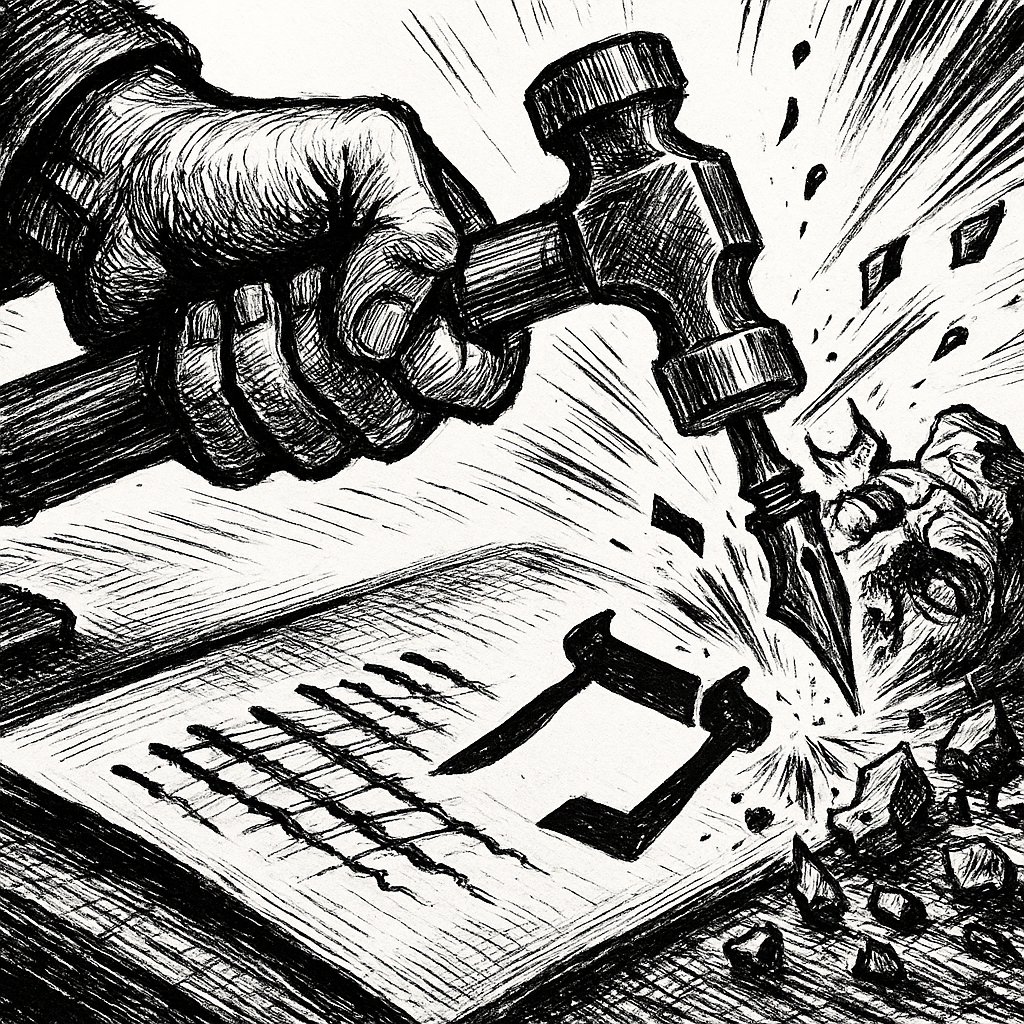
My pen is now an Avraham’s hammer.
With every strike, every word written, another shard of the false god falls.
I cannot promise bestseller lists or universal applause.
I can promise blood-honest words and allegiance to the real King.
Which single sentence from your false god still chains your craft or calling?
Write it.
Strike it.
Replace it with your essence, your purpose, your true Avodas Hashem that sets you free and ties you to the only One.