Re’eh—Worth What You Give
A man’s worth is not in his wealth, but in the muscle he spends on his brother.
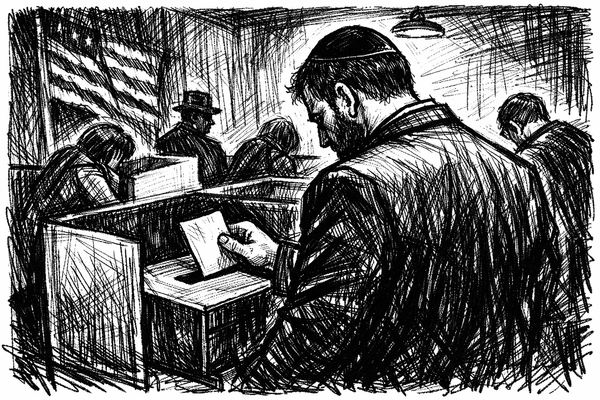
We clap for the wealthy man whose name is etched on the wall of the shul.
The donor’s plaque gleams.
The kiddush is lavish.
The speeches sing his praise.
But the Torah doesn’t clap for plaques.
“You shall not harden your heart nor shut your hand from your needy brother. You shall surely open your hand to him and lend him sufficient for his need, in that which he lacks” (Devarim 15:7–8).
What is Tzedakah?
You know it feels good when you can give it and hurts when you can’t.
Moshe doesn’t frame Tzedakah as pity.
He doesn’t call it noblesse oblige.
So what is it?
Simply put, a man who hardens his heart is weak.
A man who opens his hand when it’s hard is strong.
Victory in the Pocket
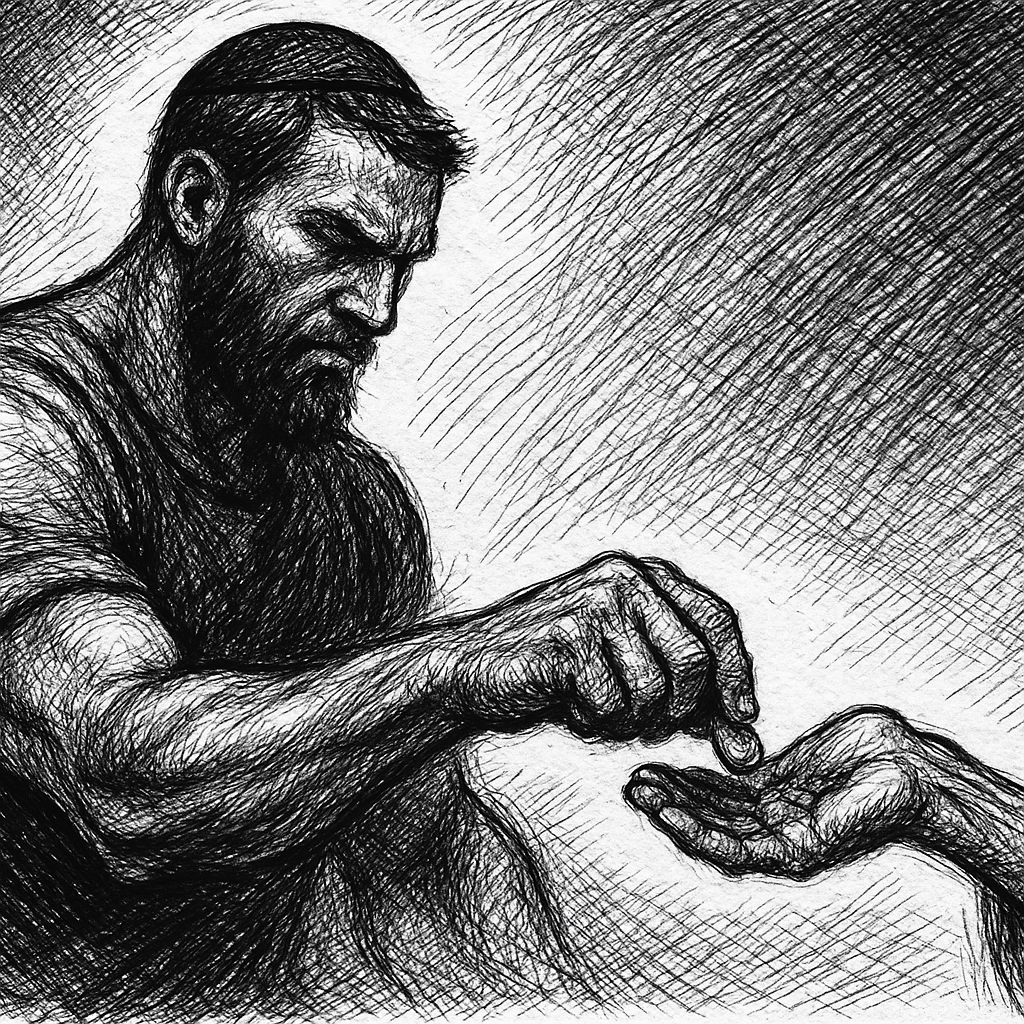
There once was a chassid with a strange habit.
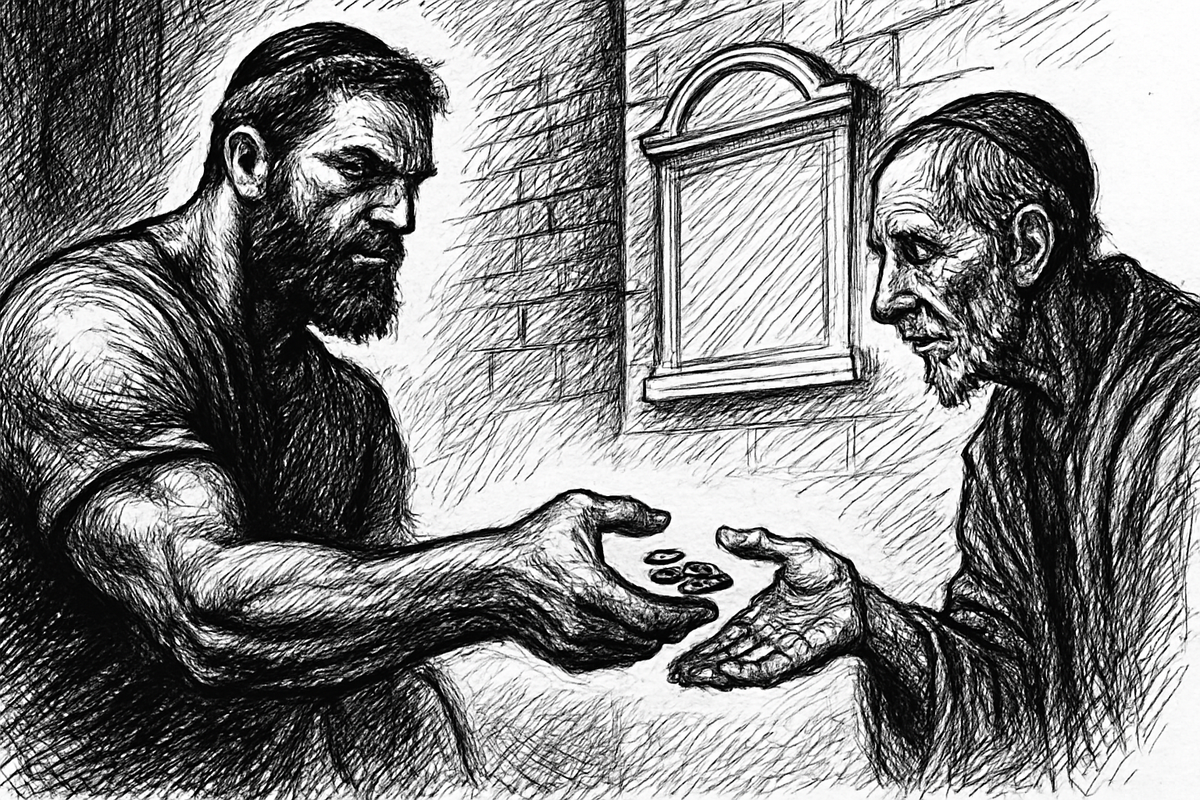
Whenever someone asked him for tzedakah, he would first pull out a few coins and give it.
Then, after a pause, he’d reach into his pocket again and give more.
One day a friend asked him, “Why give twice? Why not just give the whole sum at once?”
The chassid smiled.
“Every act of charity is a victory over my selfish nature. Why would I pass up a chance to win twice?”
To him, Tzedakah was combat.
Every coin is a strike against the yetzer that whispers, "Hold back, hoard, protect yourself.”
He fought his nature coin by coin.
That’s the battlefield the Torah calls us to.
The Stretch is the Strength
Tzedakah is measured in stretch.
The poor man who parts with his last ten dollars may have given more on Hashem’s scales than the man who signs a six-figure check.
Why?
Because his heart burned when he opened his hand.
“Give generously, and your heart shall not be grieved when you give” (Devarim 15:10).
Hashem commands us to give.
To give until it costs.
To give until we feel the burn of the tzedakah muscle.
That’s the paradox.
The weak man hoards, terrified of scarcity.
The Gibor overflows because he knows Hashem provides.
True strength in giving is in what you dare to part with.
And BTW, Tzedakah doesn't always have to be in coin.
It can be whatever you are able to give.
The Trap of Wealth
There's a danger, a trap waiting for the rich man.
The more wealth a man has, the less connected he may be to this mitzvah.
When his writing of a check becomes painless.
Easy. A flick of the wrist. No burn.
No sweat.
The wealthy Gibor has a hard task.
He needs to find what stretches him.
Maybe it’s not money at all.
Maybe it’s his time, his dignity, his presence, or his ear.
Maybe it’s opening his home to people he’d rather not host.
Maybe it’s giving his energy when he wants to disappear.
If your tzedakah doesn’t stretch you, it’s just spare change.
Worth What You Give
Sir Moses Montefiore, one of the great Jewish leaders of Victorian England, was once asked by a colleague, “Sir Moses, what are you worth?”
Montefiore thought a moment, then gave a number in the hundreds of thousands of pounds.
The colleague scoffed, “Come on, you’re worth millions.”
Montefiore shook his head.
“You asked what I am worth. I told you the sum I have given away to tzedakah this year. I am not worth what I own; I am only worth what I am willing to give.”
That truth hits like a hammer.
Our plaques will tarnish.
Our accounts will vanish.
Our worth is what we give away.
The Gibor’s Hand
So what does this mean for us?
It means you don’t measure yourself against the man whose name is on the building.
You measure yourself against the last time you stretched.
For the man of small means, five dollars given with courage may shake Heaven more than a million given with ease.
For the man of wealth, the challenge is heavier.
You need to find the gift that makes you sweat.
Either way, the Torah calls us to open the hand.
To fight our nature.
To win the battle against selfishness with every coin, every moment.
That is the Gibor’s hand.
Open.
Overflowing.
A Gibor gives until it burns…
And then he gives again.