Pinchas—You Will Not Erase Me
The Daughters of Tzelafchad and the War Against Smallness
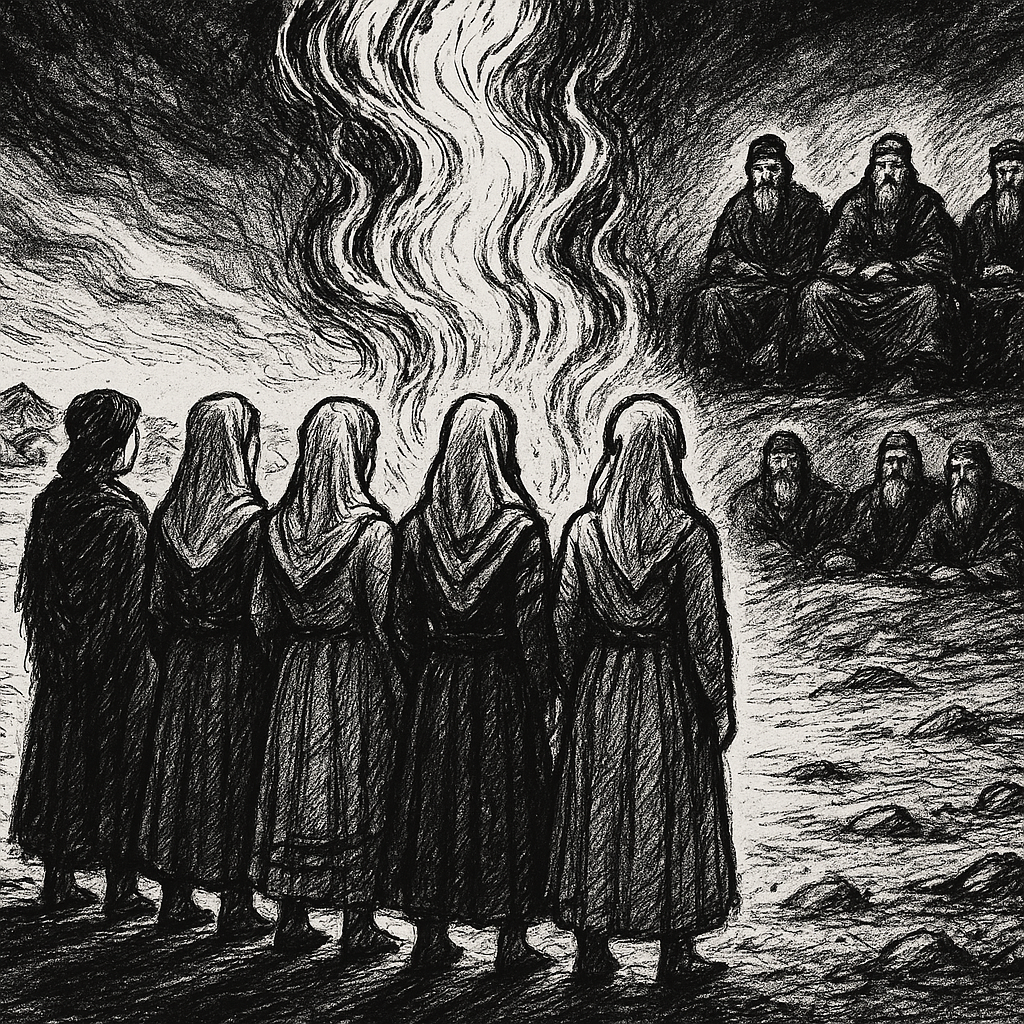
The camp is quiet.
It is always quiet before something holy dares to challenge what’s been accepted for too long.
Five women—Machlah, Noa, Choglah, Milkah, and Tirtzah—stand before Moshe Rabbeinu, Elazar the Kohen Gadol, the Nesi’im, and the entire Jewish people.
They are alone.
Their father is dead.
Their shevet, Menashe, has no precedent for what they’re about to do.
And yet they speak.
With a fire that reaches beyond the physical realm.
“לָמָּה יִגָּרַע שֵׁם אָבִינוּ” “Why should our father’s name be erased?”
They didn’t want land for comfort. They wanted land for covenant.
If their father’s name disappeared from the Yerusha, it’s as if he never walked out of Mitzrayim.
Never stood at Sinai.
Never journeyed through the desert.
They refused erasure.
They declared war on oblivion.
And through that refusal, they changed Torah forever.
What They Knew
These were not simple women grabbing for property.
Rashi tells us, “This teaches their praise. All of them were wise.” (Rashi on Bamidbar 27:4)
Chazal go further:
“They were wise, expounders, and righteous.” (Bava Basra 119b)
Their halachic argument was airtight.
They cited the laws of yibum (levirate marriage). They tracked the inheritance chain.
This was not feminist rebellion.
This was Torah confidence.
This was what my rebbe, Rav Berkovits, would call the greatest spiritual directive of all:
“You need to be big.”
A Burden and a Calling
Carl Jung wrote:
“The greatest burden a child must bear is the unlived life of the parent.”
These daughters carried that burden.
Their father, Tzelafchad, had died in the wilderness.
Midrashim suggest he may have been the one gathering sticks on Shabbos.
He died with a stain. With a silence. With no son to carry his name.
No portion. No future. No voice.
But his daughters did not run from that.
They did not whitewash it, and they did not wallow in it.
Instead, they brought that silence to the center of the camp and gave it a voice.
This is not some modern therapeutic concept. This is Torah. This is Yichus.
They looked at the void left by their father and walked straight into it.
They chose to redeem what he left undone, not ignore it.
They do not curse the system. They step into its core and awaken it.
They didn’t inherit shame.
They transformed it into halacha.
Rock the Boat
This is the spiritual war most of us men avoid.
We inherit not just the hopes of our fathers, but their ghosts.
The Torah dreams they never lived.
The boundaries they never challenged.
The righteous battles they postponed for “a more appropriate time.”
And we feel the pressure, especially in our generation, to be perfect, compliant, and silent.
We are told that if Moshiach hasn’t come, it’s because of us.
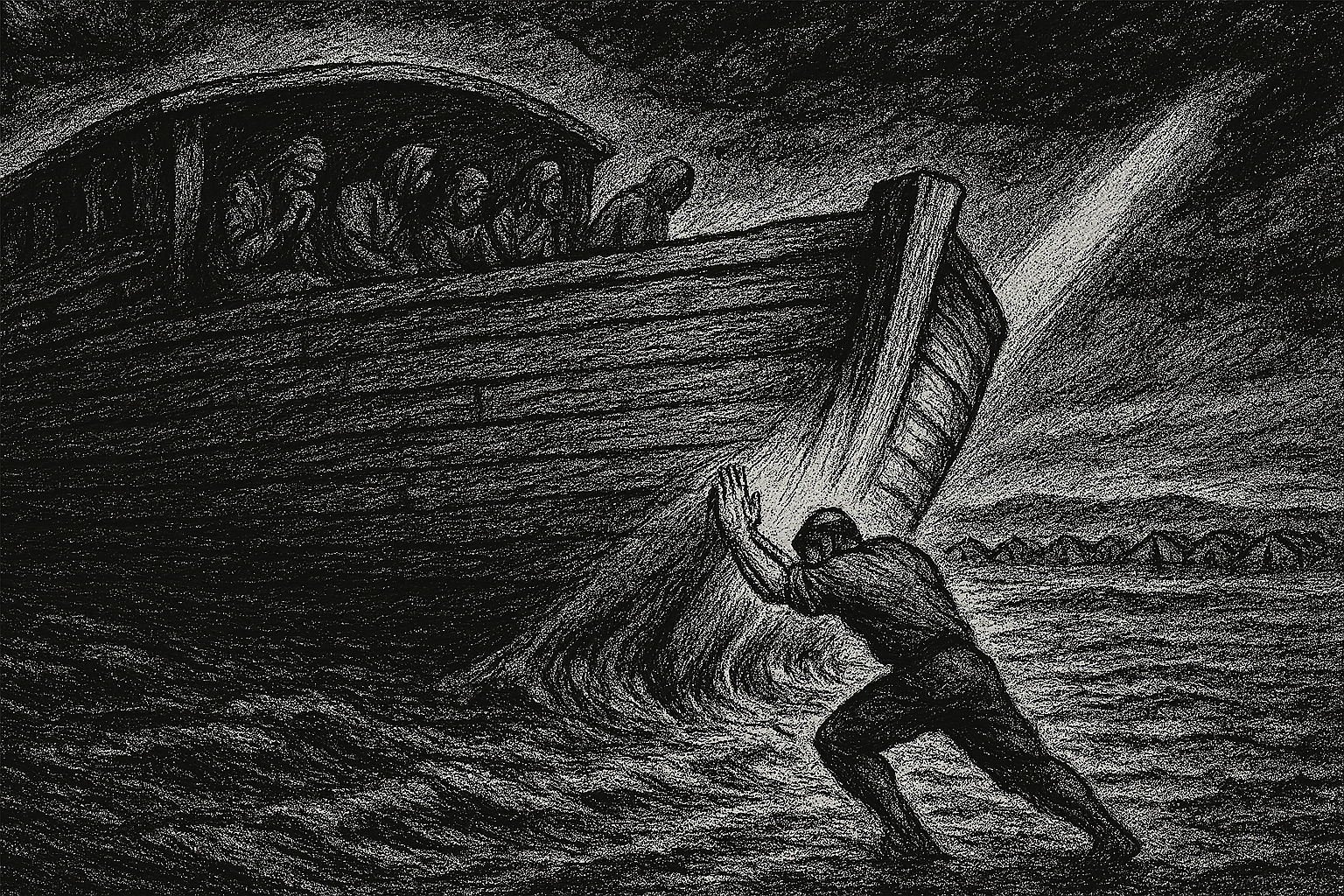
And so we fear rocking the boat.
Because what if we’re the problem?
What if speaking up is the sin that delays the redemption?
And so, every misstep becomes cosmic.
Every question, a risk.
Every voice that trembles off-script is seen as a threat to the vessel.
In such an atmosphere, the greatest sin is not sin, it’s courage.
“Don’t make waves.” “Don’t draw attention.” “Don’t think you know better.”
So we shrink.
We conform.
We trade sacred courage for spiritual etiquette.
We strive with religious fervor to be… ‘normal.’
We mistake smallness for righteousness.
Like the famous joke, “Look who thinks he’s a nothing.”
And in the name of caution, an entire generation sits down when they were meant to rise.
That’s what makes the act of the daughters of Tzelafchad so necessary.
They entered the arena. With fear. With reverence. With the Torah in their bones.
And Hashem confirmed their truth.
“כן בנות צלפחד דברת” “Yes. The daughters of Tzelafchad speak rightly.” (Bamidbar 27:7)
They showed us that Torah is not afraid of holy defiance.
The Gibor Within
The path of the Gibor is not rebellion.
It is not shouting into the void, sharing your rage like a hurt child.
It is standing inside the camp and reminding yourself,
“This story will not move forward without me.”
“I will not disappear.”
“I will not inherit my father’s silence. I will finish his mission.”
My rebbe, Rabbi Barry Klein, would always say, “You have two choices in life. You can be an active participant or the innocent bystander. And we all know what happens to innocent bystanders.”
Hashem didn’t merely approve of their claim.
He changed Torah in response.
Can you imagine that?
Five women forcing a change in Torah transmission.
Because they stood in the fire with emunah.
Because they refused to vanish.
That is not ego. That is legacy.
Of course there are rules to this. This is a dangerous path. You can't just go around and make stuff up.
But the Torah gave us the tools. There is a way to learn up the sugya and own it.
We have a mehalech in this.
Unfortunately, learning this way is not taught to most of us in yeshiva.
Maybe it is too inconvenient to let people figure life out for themselves.
But look around. It's not working. And the people are restless.
If you are still here, still reading, you are of the few who refuse to let yourself be erased.
I ask you to take the words below seriously. Think about them.
Rewrite them to fit your personal story, but don't let your fire fade.
Affirmations
“I will not vanish in the name of conformity.
I will not erase myself to make others comfortable.
I will take what was unfinished and make it Torah.”
Final Words
Many of us walk through life trying to avoid being “the reason Moshiach didn’t come.”
But maybe that’s not the problem.
Maybe Moshiach is waiting for the man who says,
“This fear ends with me.
This silence ends with me.
This generation will not be erased.
And neither will I.”