Mikeitz: Those Who Know How to Dream
Bitachon Is Not Sitting Still
Pharaoh wakes up afraid.
In a cold sweat, shivering, shaking.
The most powerful man in the world, ruling the most ordered civilization of its time, is undone by dreams that don’t behave.
Cows that eat cows. Grain that swallows grain.
A world that refuses to stay in its lanes.
That’s what dreams do.
They disrupt.
They take you on a wild ride.
The Torah doesn’t treat dreams as fantasy.
It treats them as a crack in the surface of reality.
It is Hashem’s language when the waking world starts lying to us about how fixed things are.
Yosef understands this instinctively.
That’s why he isn’t broken by the pit, the temptation, or the prison.
Is it because he is so clever? So insightful?
Maybe, but I think it’s a bit deeper than that.
He interprets dreams because he knows that reality isn’t bound by what is currently happening.
“Biladai,” he says.
Hashem will answer.
That line is often read as anivus, humility.
But it’s more than that.
It’s an orientation.
Yosef refuses to confuse circumstances with truth.
He doesn’t collapse into cynicism, which often leads to a fall into temptation.
He doesn’t outsource his inner life to the prison walls around him.
That, more than anything, is his mesiras nefesh.
A man who stops dreaming stops trusting.
Trusting is a relationship.
That’s all it ever was.
Pure relationship with Hashem.
Bitachon without a relationship turns into a pose.
Interestingly enough, the Torah tells us earlier that he would take care of his looks and pirouette.
The brothers didn’t like this and this led partly to the the whole selling fiasco.
Perhaps Yoself learned from his ordeal that putting on a facade gets you nowhere.
He learned to rise above it and enter reality.
Calm on the surface. Hollow underneath.
And here’s the uncomfortable part.
Our problem is that many of us never stop believing in Hashem.
We stop dreaming.
Our dreams are prepackaged now.
Manufactured.
Sanitized.
Approved.
By culture.
By community.
And a man who borrows his dreams will eventually borrow his bitachon too.
Safe dreams don’t ask much of us.
They don’t pull us into risk, or yearning, or embarrassment.
They don’t require us to search longer than feels reasonable.
Which brings us to Chanukah.
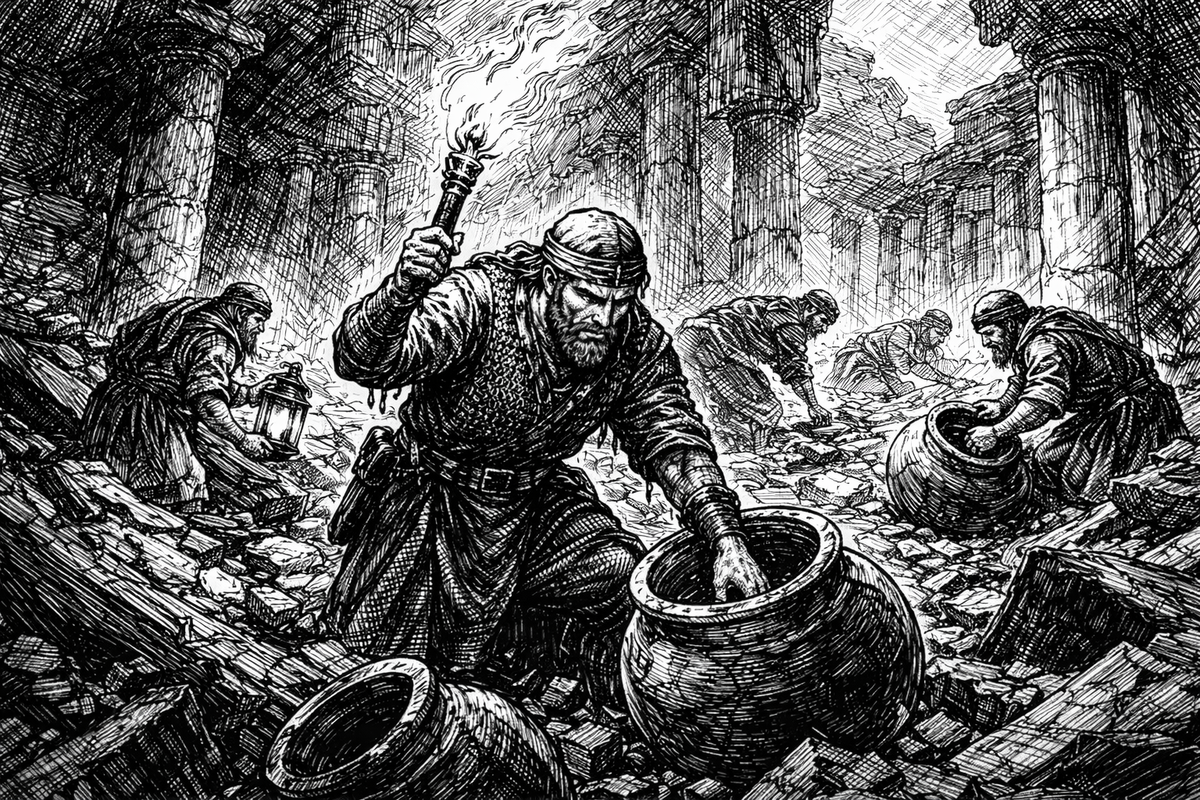
The Chashmonaim enter a war they cannot win.
Then they walk into a Beis Hamikdash they cannot fix.
The odds are not mysterious.
They’re obvious.
Nothing about the situation suggests success.
And still, they search.
They tear through the place.
Every corner.
Every stone.
The entire Mikdash campus.
Looking for oil that, statistically speaking, shouldn’t exist anymore.
So, you may ask, “Where was their Bitachon? They should have sat around and waited for the oil to show itself.
No, it’s the opposite.
This is dveikus.
This is a desire for closeness to Hashem that will not sit still and wait.
There is a place for quiet and patient trust.
But there is a fine line.
And if we are honest, we know exactly where it is.
It shows up in the moment things don’t go the way we hoped.
When the calm evaporates.
When the “I know Hashem will take care of it” suddenly has no legs.
When the bottom falls out.
That’s when we learn whether our bitachon was relational or just inertia dressed up in holy language.
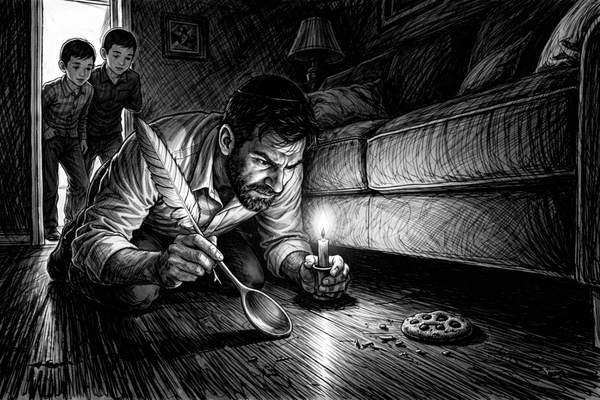
I think about the times I have to go looking for my son’s yarmulke.
One place. Then another. I don’t find it immediately, and something in me shuts off.
A crisis of faith after looking for just five minutes.
I need to take stock of myself.
The Chashmonaim searched the entire Beis Hamikdash.
Everywhere. In all the nooks and crannies.
I barely checked a table.
What does that say about how I dream?
About how quickly I give up the search when the first place doesn’t deliver?
Yosef could live in a world where good and bad, delay and arrival, and pit and palace all belong to the same story.
Because he was a dreamer. He could go with the flow. Hashem’s flow.
The Chashmonaim moved in a world where effort wasn’t guaranteed to work but still mattered infinitely.
Because there was a trust relationship, they could yearn for a reality that should not exist and shape it.
That world is oneness.
The true dreamscape.
Everything is in Hashem’s hands, including failure. Including waiting. Including oil found, impossible found.
You can’t live there unless you know how to dream.
And we don’t dream to escape. We don’t dream other people’s dreams.
We don’t ask others to dream a little dream of me.
We dream the kind of dream that says, “I don’t know how this ends, but I’m going anyway.”
I don’t want a faith that sits.
I want one that searches.