Korach - Moshe vs. the Mob
How a Shepherd Silences Demagogues
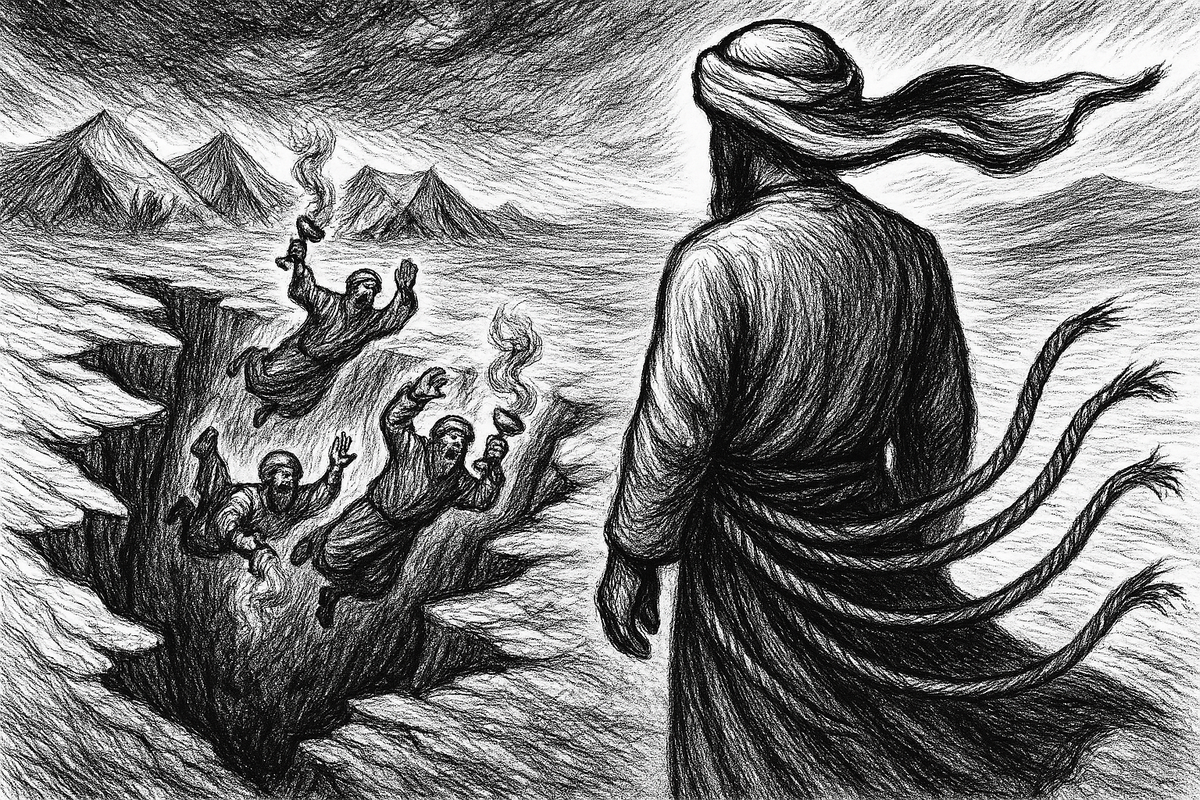
The sand had not finished falling when the voices vanished.
A breath ago Korach’s “princes of the congregation” were pounding copper fire pans, chanting slogans of holiness and equality like a wild “Occupy the Mishkan” protest.
Then the ground yawned, swallowed their stage, and slammed shut.
Moshe stood quietly where the tents of Korach and his group once stood, dust clinging to his eyelashes; he did not even blink.
The only sound left in the desert was his silent prayer.
Fear Yesterday, Ego Today, Gone Tomorrow
Last week twelve spies melted before giants, and their panic curdled into lashon hara.
This week the toxin mutates.
Fear to anger, to rage, to ego.
Korach’s campaign begins with swagger and ends in seismic humiliation because ego, unmastered, cannot survive gravity.
Where Korach’s Brain Snaps
The Midrash records the “questions” Korach lobs at Moshe.
Holding aloft a cloak woven entirely of techeiles, he smirks, “If the whole garment is blue, does it still need techeiles?”
He gestures toward a wagon stacked floor-to-ceiling with Torah scrolls: “If a room is full of Sifrei Torah, why fix a mezuzah to the door?”
Rashi says that Korach knew the halachah; the performance was the point.
Strip the riddles of theater, and the inane questions fall apart.
Tzitzis is not a dye test, and mezuzah is not a literacy badge.
It is sophistry akin to saying, “If dieting means eating less, a starving man needs no health plan.”
The Torah is neither loophole lottery nor prop comedy.
Mesilas Yesharim warns that gaavah blinds the intellect—kavod warps logic until absurdity feels incisive.
Korach’s cleverness is merely ego looking for applause.
The Five-Strand Test
Moshe answers with life, not spin.
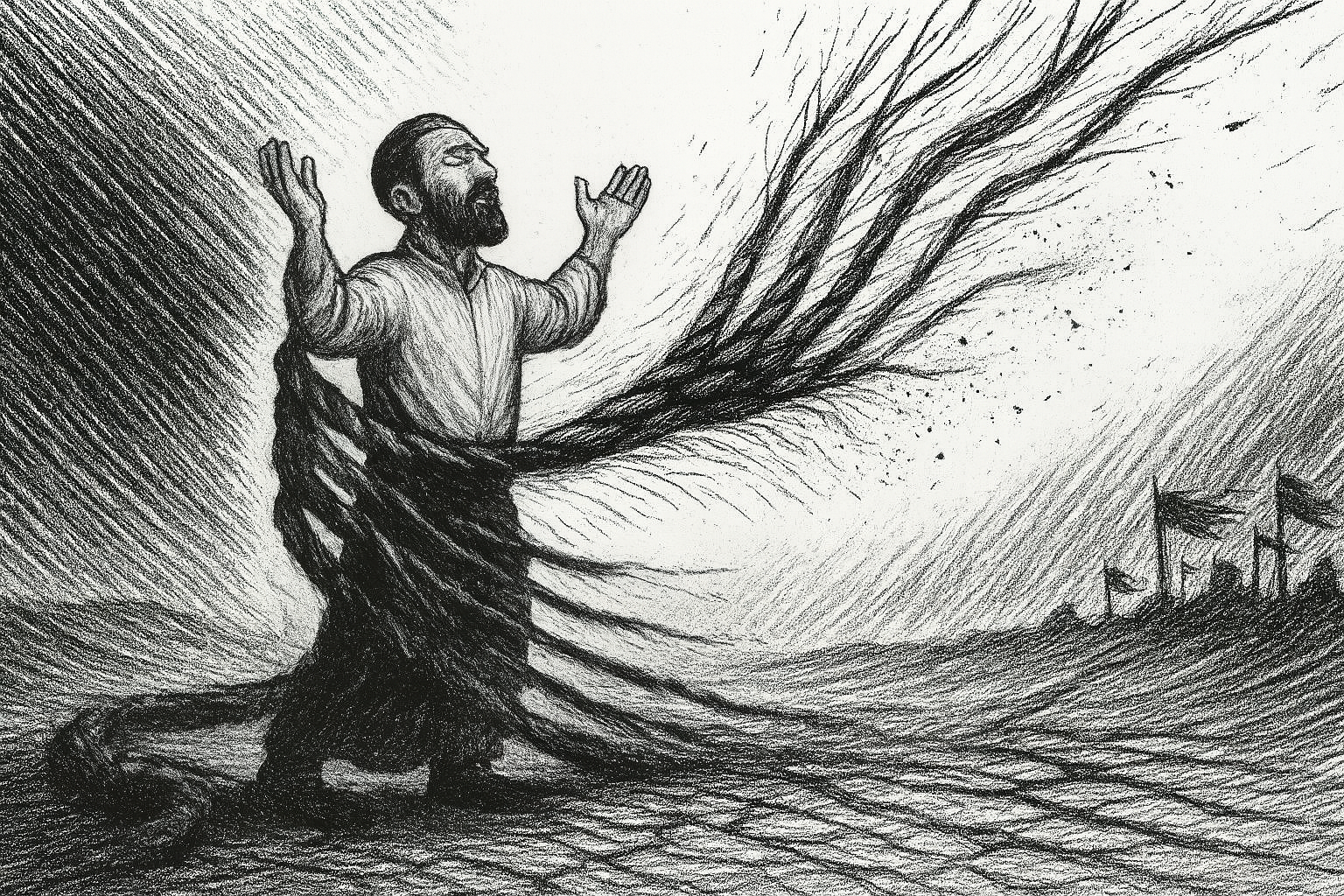
Humility, Bitachon, compassion, integrity, and legacy.
Five strands. Snap one, and the cord unravels.
First comes dust-level humility. “Moshe heard and fell on his face” (Bamidbar 16:4).
Then transparent reliance on Heaven.
“In the morning Hashem will make known the one He chooses.”
He asks twice that the people be spared from punishment, even after their mutiny.
When anger finally sparks, it is harnessed into a measurable boundary.
“I have not taken so much as a single donkey from them”.
His financial ledgers were public; no one could point to a hidden coin.
He includes his leaders because even in crisis he is already thinking of succession.
Humility moving before words, compassion for attackers, bitachon under pressure, provable integrity, and commitment to succession.
These are five strands braided so tight that removing one unravels them all.
Green Lights, Red Flares
The Gibor hunting for a rebbe needs those traits embedded in his soul.
You need to seek green flags. Softness when he is corrected.
The unhurried kindness of tying a child’s shoelace between aliyos, treating the child the same way he would treat a gvir.
speech that calms storms rather than monetizes them. Money and cyberspace are handled in daylight. Delight when his talmidim grow independent.
Red flags glare just as clearly.
Upward-punching jokes.
fund-raising fog.
crises milked for clicks,
Talmidim and Mispalelim who shrink instead of expand.
Torah reduced to props in a personality show.
A leader who has not conquered his own nature will soon try to conquer yours.
I once watched a visiting maggid pause his derashah, step off the bimah, and give a child who was playing with the Peroches, a candy and a smile.
And others who lace their rhetoric with invective and slurs. We already explained these people last week.
Korach, A Post-Mortem
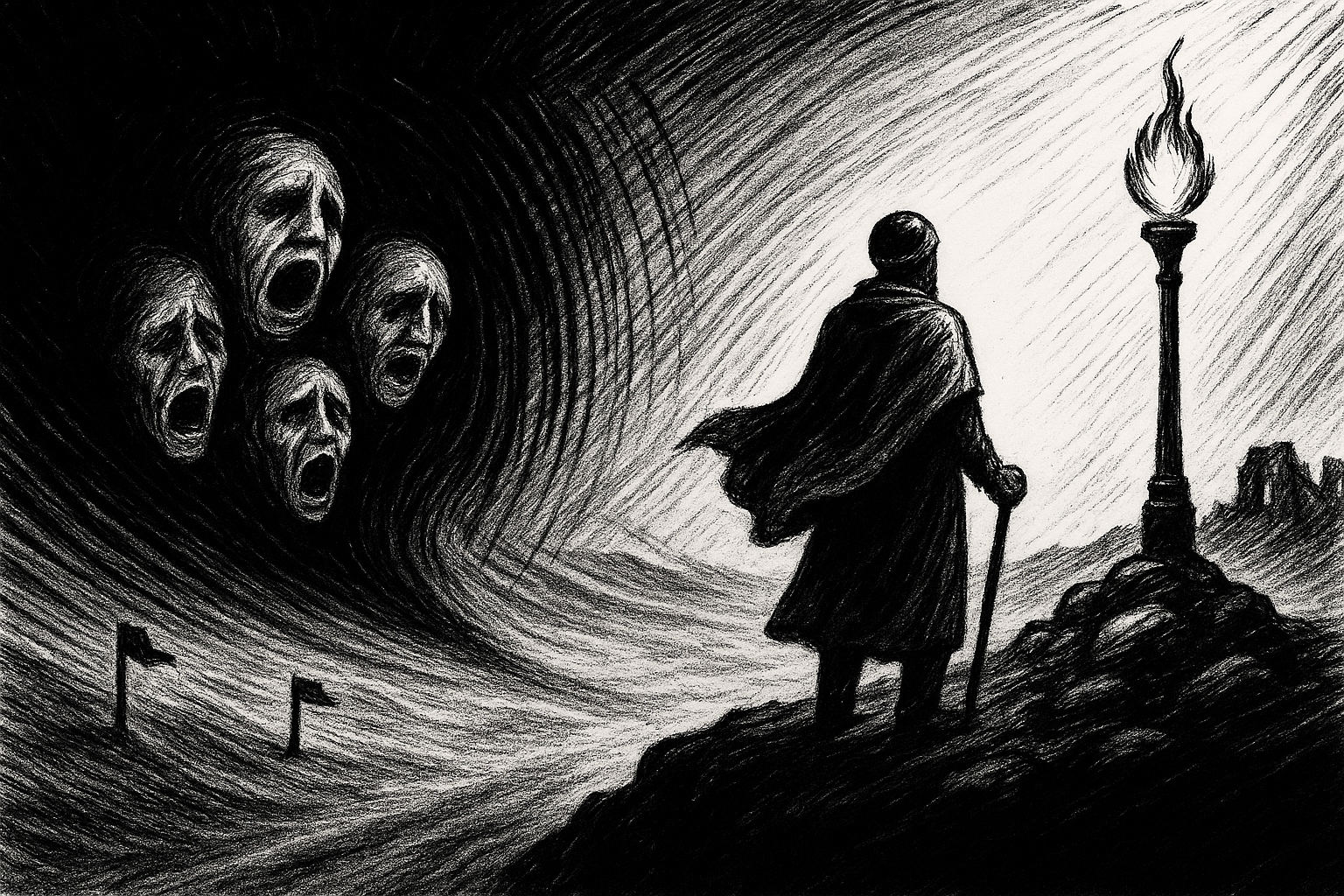
After the earth closed over the two hundred and fifty people, the Torah says that “all Israel fled at their voice” (16:34).
Even in death the scream lingered.
Empty rhetoric always leaves residue.
Cynicism, distrust, and the weary assumption that every authority masks ambition. It infected Klal Yisroel so greatly. Hashem had to do the test with Aharon's staff.
The remedy is not leaderless living; it is deliberate leader-hunting, armed with Moshe’s metric.
Your Pilgrimage Begins
So, it is time for you to get going.
Pack a bag.
Fly, drive, walk, or crawl to a rebbe you have only heard about.
If you are single, leave tonight.
If you are married, map the journey together with your wife and let your children see you seek greatness.
Stand in corridors; listen for humility in the air between Ma’ariv and the door.
Ask. Listen.
Does his voice leave you less afraid, more faithful? Stay.
Dazzled but hollow? Run.
Can’t travel this week? Begin at home.
Choose a Shabbos and try a shul you have never entered. Listen. Observe.
Good rebbeim are usually also very busy. It is the result of being a good rebbe, but reach out anyway.
Schedule a few minutes with that Rav or even the rav of your current shul.
Ask him this question. “What should I look for when looking for a rebbe?”
I promise you his answer to that will tell you everything you need to know.
The journey starts whenever comfort ends.
Whose voice makes you less fearful and more faithful?
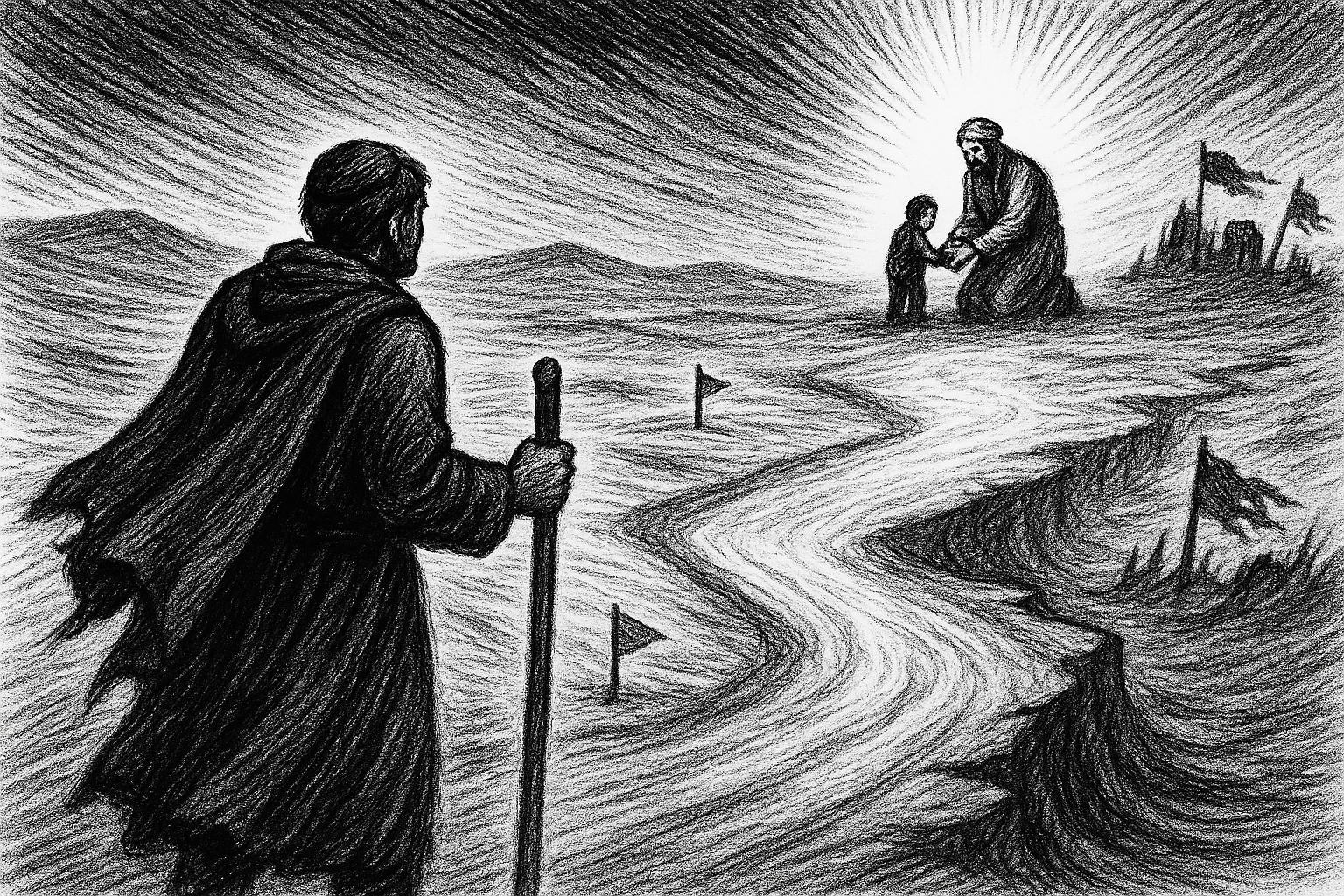
A lighthouse does not chase ships; it stands, burns, and dares sailors to align.
Follow the still flame.
The scream is history. The hush endures.
Walk toward the hush and learn how to conquer giants—and, harder still, how to conquer yourself.
Who do you know that has mastered the hush?