Bo: After the Apology
On Hardened Hearts, Ego, and the Loss of Choice
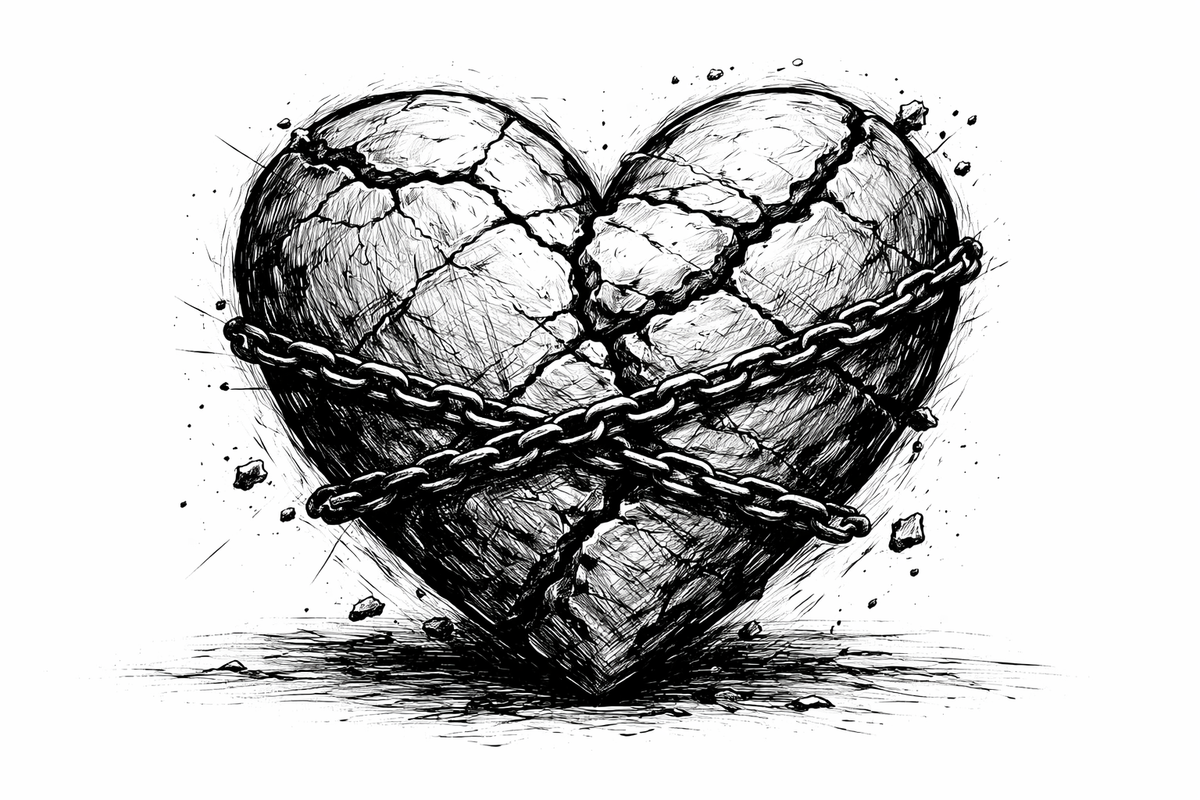
“Bo el Paro,” Hashem says. Go to Pharaoh, for I have hardened his heart and the heart of his servants.
The Chizkuni points out something unsettling.
This lashon doesn’t appear earlier.
Not after the blood. Not after frogs. Not after lice or wild beasts or plague.
Pharaoh resisted before.
He played games with Moshe about leaving and coming back.
And the Torah never spoke this way.
It only says it now.
After Pharaoh admitted he was wrong.
Pharaoh confesses and says Hashem is righteous.
And then… he takes it back?
Klal Yisrael isn’t released.
The work continues.
His servants, the people of Mitzrayim who have a say, support him.
This retraction is mind-boggling and also the core issue.
Retreat after clarity is what changes.
Chassidus teaches that Mitzrayim isn’t just a place. It’s a state of mind.
“Meitzarim,” narrowness.
It is the inability to move once the heart decides it is under attack.
Pharaoh isn’t just some tyrant in a story.
He’s a pattern that repeats inside you across a lifetime.
Especially after the apology.
Hardening of the heart doesn’t only happen when we’re wrong.
Sometimes it happens when we’re right.
Sometimes it happens when we’re cornered.
Sometimes it happens when we reluctantly say, “Fine,” and a part of us dies.
And sometimes, most dangerously, our heart hardens after a moment of real clarity, when something true breaks through and demands a cost we don’t want to pay.
Men are particularly vulnerable here.
Not because women are immune to hard hearts but because men are wired to care deeply about respect and validation.
And any kind of pushback threatens that.
The sense that someone else isn’t fully on board can feel like a challenge to identity itself.
Particularly someone you are close with, like your wife or child.
For men with high ego and fragile self-worth, that threat is intolerable.
So we double down.
It looks like strength.
But it’s panic masquerading as conviction.
This is not to say a man shouldn’t stand firm.
There are moments when holding firm is real strength.
Yosef HaTzaddik doesn’t deviate from the path.
Pharaoh’s firmness is different.
It’s reactive.
His heart doesn’t harden alone.
The pesukim tells us his servants’ hearts were hardened too.
The Chizkuni explains that they supported him in the retraction.
This is important because we don’t re-harden in a vacuum.
There’s always a chorus.
Whether it’s social pressure, old narratives we keep playing in our head, or past failures whispering, “They are right. Don’t risk it. You are a failure.”
These evil servants remind you of what happened last time you softened.
Or they represent your environment that rewards you for staying exactly the same.
A whole history lining up to scream in the silence of your mind, “GO BACK!!!!”
Each retraction, each rehardening of your softness, of your heart of flesh, narrows the future.
It doesn’t happen all at once in dramatic flair.
Rather, it’s more like cement that was meant to be poured and shaped but was left untouched for too long.
Or it’s like scar tissue.
Your body heals because it has to protect itself.
But the new skin doesn’t move the way it used to.
You may not notice the stiffness right away.
Only later, when you try to stretch and find that something no longer gives.
Your heart hardens like that.
Pharaoh didn’t wake up one morning without free will.
He trained himself into a corner.
And all of a sudden, Hashem declares he has no choice.
That’s the lesson of Parshas Bo.
It’s not that a heart can harden. It’s that it can harden after it already knew better.
I’m not here to tell you how to stay soft or how to break the cycle once it starts.
Maybe I don’t know how to break the cycle, and maybe I follow the same obstinate patterns.
But I do think you need to stop and notice.
To name the turn.
The turn comes after the apology.
After the moment of clarity.
After the pressure lifts.
That’s the moment to watch.
Pharaoh does it again after the Yidden leave, and his servants, or advisors, or his ego, whatever, demand he bring the slaves back.
You must watch for that
The tightening in the chest.
The reflex to harden just a little so nothing more can be taken.
That’s where Pharaoh lives.
Will you notice when it happens?
Before the scar thickens?
Do you even know how to notice?
…before your heart forgets that it ever knew how to open at all?