Bitachon Part 2 - The Minimum Standard of Reasonable Effort

“If you really trusted Hashem, you wouldn’t need to do anything.”
That’s a new lie.
And it’s killing your marriage, your business, and your spiritual life.
It sounds holy while it rots you from within.
We left The Myth of Control knowing this truth: you are not in charge of outcomes.
We learned that trying to do it yourself ends worse than going to SBF for crypto advice.
But if you stopped there, you don’t fall into Bitachon.
You fall into apathy.
And Torah doesn’t reward apathy.
The Dangerous Pendulum
Here’s the pattern.
You burn out trying to control everything like a used car salesman who didn't meet his quota.
You finally surrender.
But now you don’t know what to do.
So you do… nothing.
You say things like
“Hashem will take care of it.”
“I’m doing my hishtadlus by not doing too much hishtadlus.”
“I’m just waiting for clarity.”
No, brother. You’re hiding.
Because true Bitachon doesn’t mean kicking your feet back.
It is motion without obsession. Effort without ego.
And to walk that line, you need a new frame.
Something better than “try hard” or “do your best.”

Introducing: The Minimum Standard of Reasonable Effort
This is not a cute slogan. This is a derech. A path.
Hishtadlus is not simply effort. It’s a calibrated act of avodah.
Stop thinking MSRP, and start thinking MSRE.
Every business, every effort to acquire resources for your livelihood, has a set structure for it to work.
Sitting back and thinking the check will come doesn't work.
Hishtadlus is not just any effort; it is focused effort.
Like a heat-seeking missile.
Rabbeinu Bachya says it must be in line with your physical build, your nature, and your stage of life.
Don't pick something because someone once told you, you can make a killing.
The responsibilities and the structure of the job need to be clear, consistent, and traceable by someone from the outside.
No miracles. (yet.)
And finally, of course, the job you choose must be aligned with what Hashem expects from you, not your neighbor.
Doing less than the MSRE? You’re lazy.
Doing more than the MSRE? You’re trying to be Hashem.
Find your balance as if your life depends on it.
It does.
The Real Torah of Work
Let’s get something straight.
Bitachon is a mitzvah. Lack of Bitachon is an aveirah.
You don’t get to ignore the spiritual consequences of pretending Hashem doesn’t run the world.
But you also don’t get to sit back, relax, and call it Bitachon.
Why?
Because Hashem commanded us to work.
Not because He needs our help.
But because He designed the world so we’d stay busy, humble, and aligned.
“You were born to toil. The only question is, will it be Torah or worldly toil?”
Hishtadlus is not a lever that produces income, like a kid at the gumball machine.
It’s the fence around your soul.
Done right, it keeps you focused, grounded, and in flow with your tafkid.
Done wrong, it makes you a slave to fantasy or fear.
The Minimum Standard, Applied
Hishtadlus is putting in the minimum that would be considered appropriate to get a job done.
Lets see how this works.
A startup guy making two cold calls a day isn’t relying on Hashem.
Let's assume one would believe that is a reasonable amount of effort.
He’s avoiding reality.
A bochur who says, “I’m waiting for the right shidduch” but doesn’t work on his middos, posture, or people skills?
That’s not Bitachon. That’s fantasy with a plumba.
A married man who wants parnassah but won’t take the scary leap to get trained in something practical?
That’s not hishtadlus.
That’s fear dressed as frumkeit.
Shaar Habitachon shows you how the Minimum Standard of Reasonable Effort works.
You first review where you’re at.
Ask yourself, “If someone looked at my effort, would they see a derech or a delusion?”
Then figure out what the reasonable levels of effort are.
And finally, commit to what’s reasonable.
Not heroic, not reckless. Not more than is reasonable.
Through all this, you let go of the outcome. Completely.
Because the result never belonged to you.

The Way of Work
Work because it’s right, not because it “works.”
Work because Hashem told you to do your part, not because you think you’re the one moving the needle.
Imagine this.
You win the lottery. You never need to work again.
What kind of job would you do?
You are going to go crazy with nothing to do.
So what will you do?
Choose a job that fits your nature.
That's all there really is.
Don't pick a job because you think you can make a lot of money.
Every job can make a lot of money if you know how to scale it.
Just do the absolute best you know how to do. In the thing that brings Hashem the most into the world, according to how you were built.
Do it right. Make everyone around you question the meaning of the phrase ‘work ethic’.
Work so hard people start pulling you over asking if everything is ok.
If you are doing what truly lights you on fire and it fits who you are, who gives a darn what others think!
And then leave the rest to the only One who runs this show.
When you do this, you create a massive kiddush Hashem.
Your work becomes Nitzotzos of Kedusha.
Your habits become holy.
And your results are irrelevant.
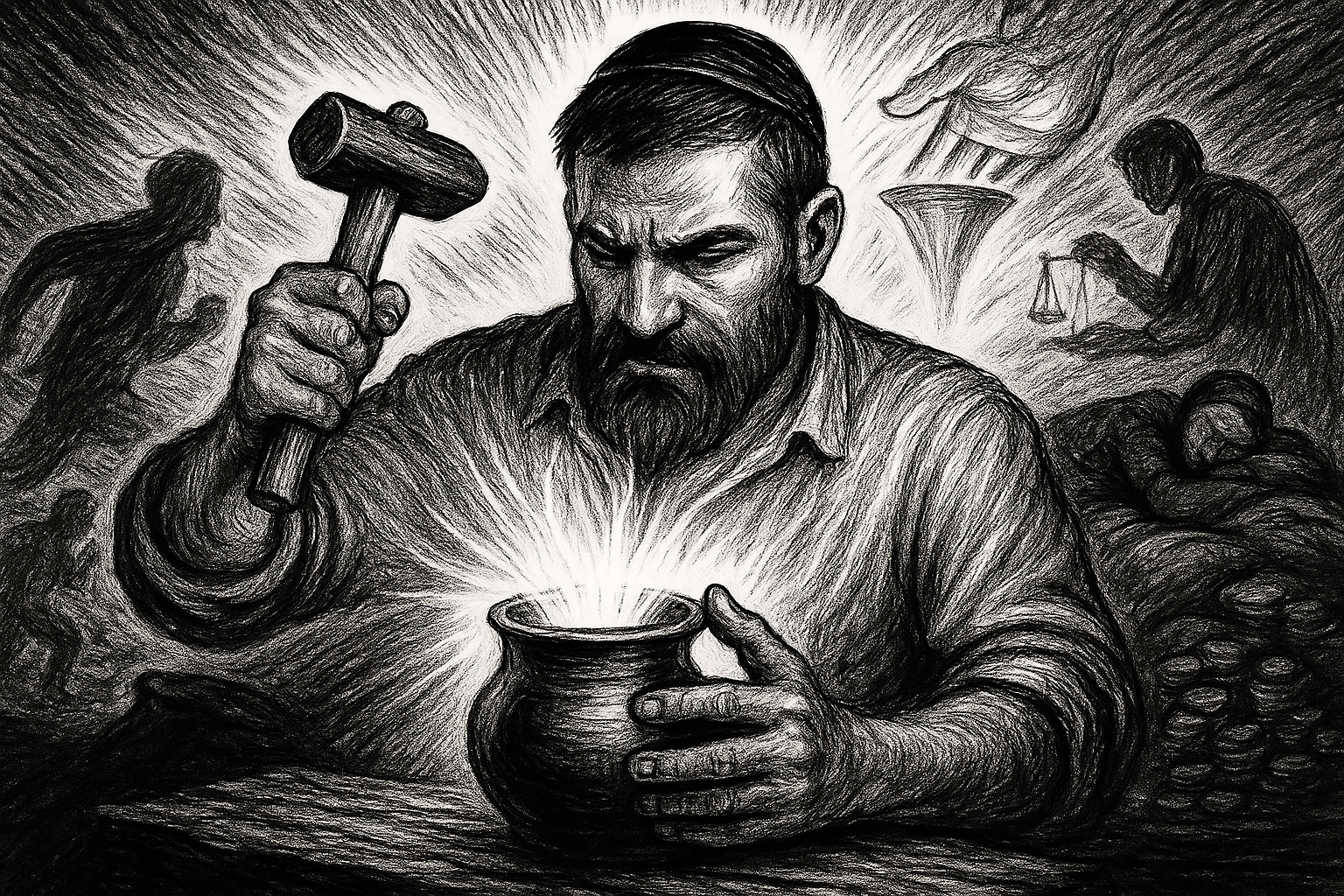
Your job is to build the Kli. Hashem’s is to fill it.
A Gibor works like it’s his duty but sleeps like it’s not his burden.
Next Steps
If you made here to the end, you are a better person than most.
But I implore you.
Don't just walk away from this with nothing but a few new ideas from this guy ranting and raving.
Take a few minutes and think about where your Bitachon and Hishtadlus are holding.
Ask yourself:
Where in my life am I calling fear “Bitachon”?
Is my current effort aligned with a reasonable, structured plan—or a fantasy?
If someone shadowed my daily actions, would they say I’m living with Bitachon or paralysis?
What’s one area I need to increase effort in and one I need to pull back from?
One More Thing
Everything we just discussed in this little essay is one hundred percent accurate and according to the Torah.
Except for a tiny caveat.
A Tzadik doesn't need to worry about this at all. He can rely on pure miracles.
You can too.
Wherever you fall on the spectrum between no Bitachon and perfect Bitachon, that is the degree to which you can rely on supernatural means.
Questions? Yes, I get it; you have some.
We’ll get to it.
A different time.
What’s Next
In the next part of this series, we tackle shame.
Form those self-destructive lines. “If I failed, it must mean I did something wrong.”
You’ll see how Torah destroys the idol of outcome-based self-worth and teaches a man how to build confidence from clarity, not success.
You honor me with getting to the end. Now get to work!!!