Bitachon Part 1 - The Myth of Control
Surrender Isn’t Weakness. It’s Your First Act of Strength.
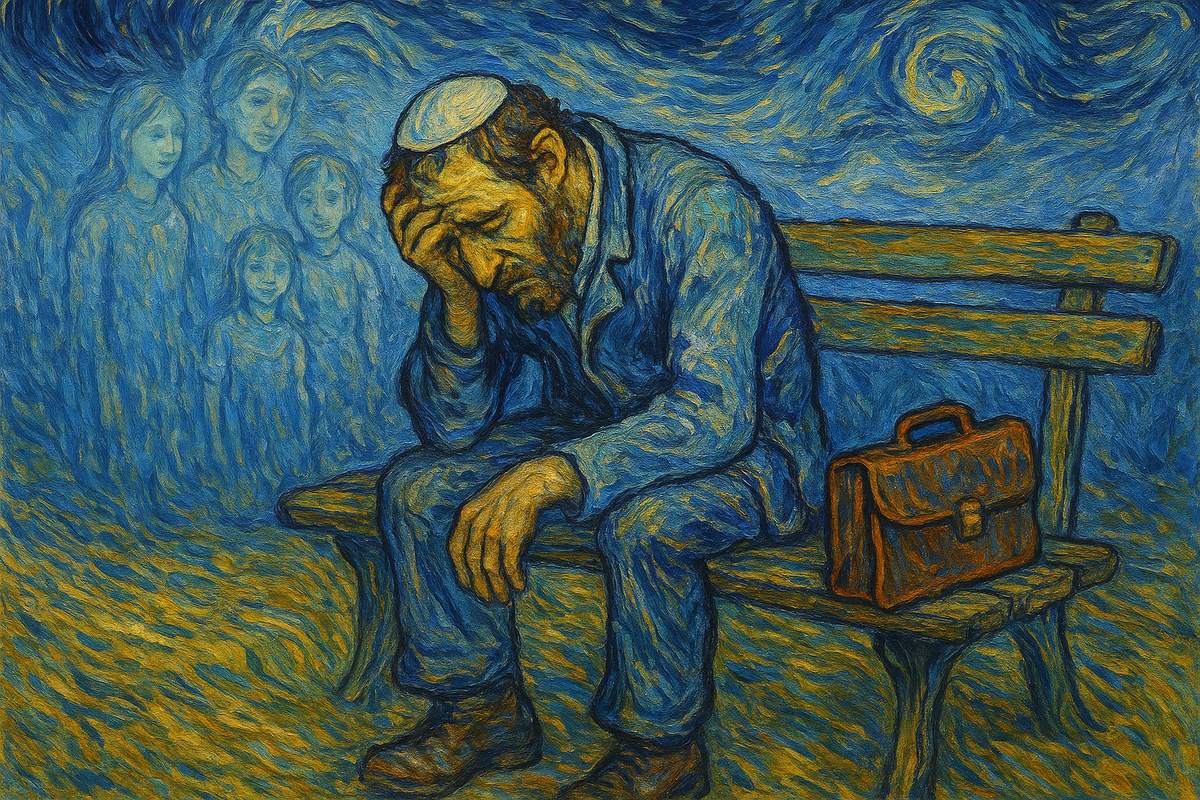
“If I don’t hold it all together myself, everything will fall apart.”
That’s the lie.
And if you're a man—especially a father, a husband, someone people rely on—you’ve likely believed it.
Maybe you still do.
It sounds noble. Responsible. Even righteous.
But this belief, repeated silently in the mind of a man trying to “hold it down,” is a poison disguised as a virtue.
The Quiet Collapse
You did everything “right.”
You got married. Got a job. Maybe even learn a little Torah when you can squeeze it in.
You tried to be a provider, a protector, and a decent human being.
So why does everything still feel like it’s slipping?
Why is your marriage strained?
Why is your relationship with your kids not where it could be?
Why do you feel like you’re always sprinting through wet cement—exhausted, anxious, alone?
It’s not because you’re weak.
It’s not because you’re lazy.
It’s not because you’re bad.
It’s because no one ever taught you the one thing that could make you unbreakable.
Bitachon.
The Forgotten Foundation
If you went through yeshiva, or even if you’re a baal teshuvah trying to piece it together now, you probably never had a single class on Bitachon.
Not real Bitachon.
Maybe a quote here or there.
Maybe someone said, “We trust Hashem,” like it was obvious.
But no one taught you how to actually build it, live it, or internalize it.
The truth is if you are a Baal Teshuvah, you probably got more than if you are an FFB.
We learned halacha. Gemara. Mussar. We’re even getting into Chassidus these days; we’ll talk about that in a different essay.
We were warned about Bitul Torah.
We were handed Shmoozen and expectations.
But no one taught us how to trust when life doesn’t go as planned.
That kind of Bitachon isn’t trending.
Not yet.
But it’s coming.
A grassroots rebirth.
Quietly, slowly, in the back corners of WhatsApp chats and late-night chaburahs.
Men are discovering the power of Bitachon.
Rediscovering the wisdom of Shaar HaBitachon, the fire of the Beis HaLevi, and the clarity of the Alter of Novardok.
And what they’re finding is this:
You were never in control to begin with.
The Day I Cracked
It wasn’t an explosion.
It was worse.
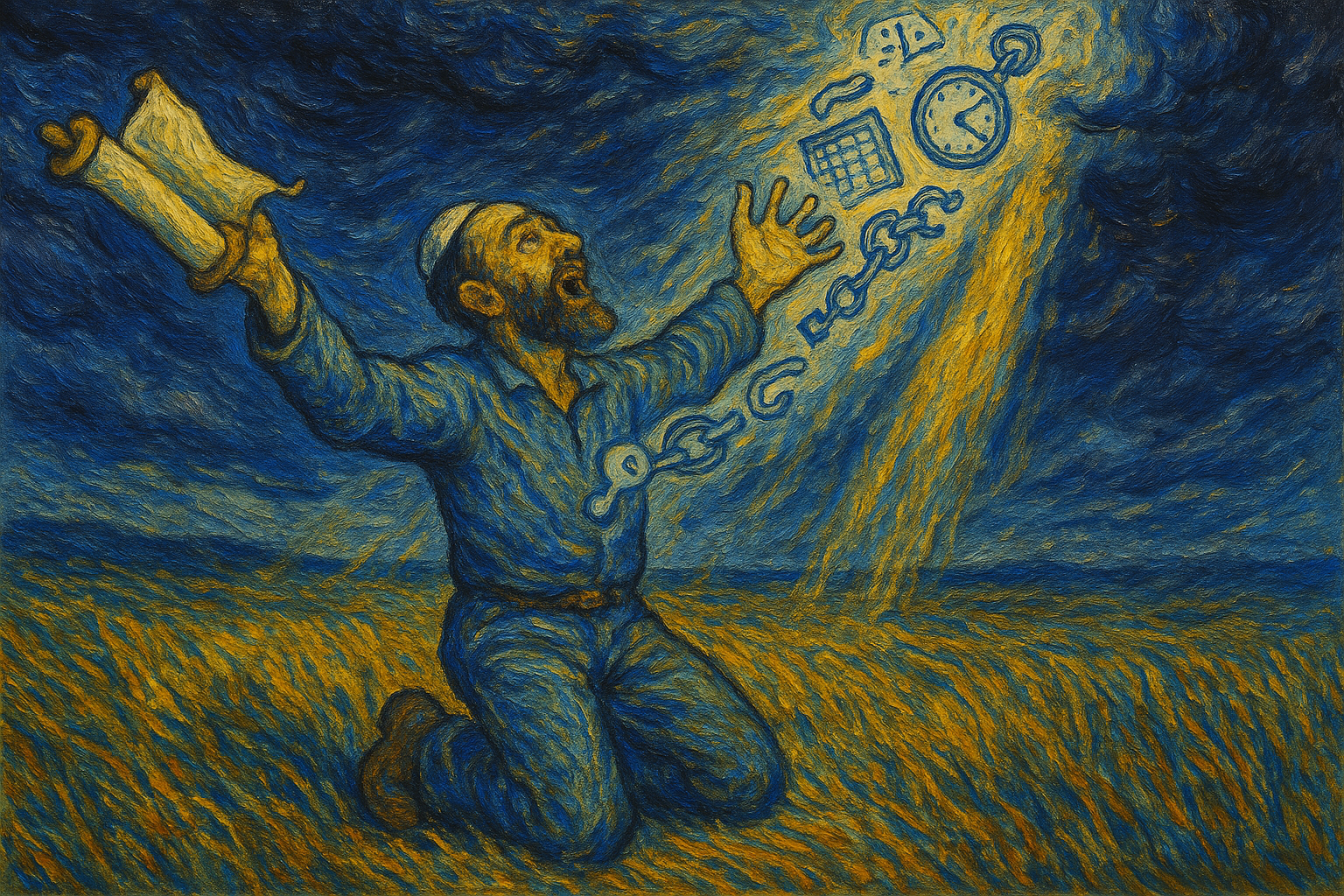
It was the slow leak of a man whose soul was ground down by stress and shame.
It was the dream that the way out was ease and comfort if i just did A, B, and C.
I was running a facility, doing everything I could to keep it afloat.
Staff walked out.
My inbox bled red.
The budget was a disaster.
At home, I was snapping at my kids over nothing.
Too tired to listen.
Too wound up to play.
Too ashamed to admit I had nothing left in the tank.
My wife looked at me one night—not with anger, but with distance.
Like she was staring at someone who had checked out of life.
Dead before I was buried.
I spent time escaping. Not for entertainment, just to feel less.
But the worst part wasn’t the bad habits of drinking too much and scrolling the web (on a tagged phone, of cours. The same amount of time wasted on tagged phones as on unfiltered ones.)
It was the voice in my head.
“You’re a man. You’re supposed to carry this. Why can’t you fix it?”
Then Hashem sent me a guide.
A friend. Someone in the industry.
He sat me down and shared a slice of his story.
I won’t share; it’s not my story to tell.
But if you heard what he went through and saw him still standing, you’d weep in shame for all the little things you complain about in your own life.
He looked me in the eye and said,
“I learn Shaar HaBitachon, over and over again.
That’s how I’m still here.
There’s nothing you can do to control how things play out.
There’s only one thing: Trust Hashem.”
I’d love to tell you that line saved me.
But that would be a lie.
Change doesn’t come from a powerful line.
It comes from habit. From quiet repetition. From failing and refocusing.
From building the inner muscle every day.
Bitachon is not an idea. It’s a discipline.
But he did set something off in me, a spark that wouldn’t fizzle out.
At the time, I was in a weekly shiur.
We were learning Shaar HaBitachon.
But there was one thing the guy giving the chabura kept harping on.
“You can’t just read the book. You have to live it.
You need hisbonenus—deep internal reflection.
Bitachon must be worked into your middos, your reflexes, and your heart.”
So I started to ask more. I started to dig. To really listen to the chevra’s Bitachon stories.
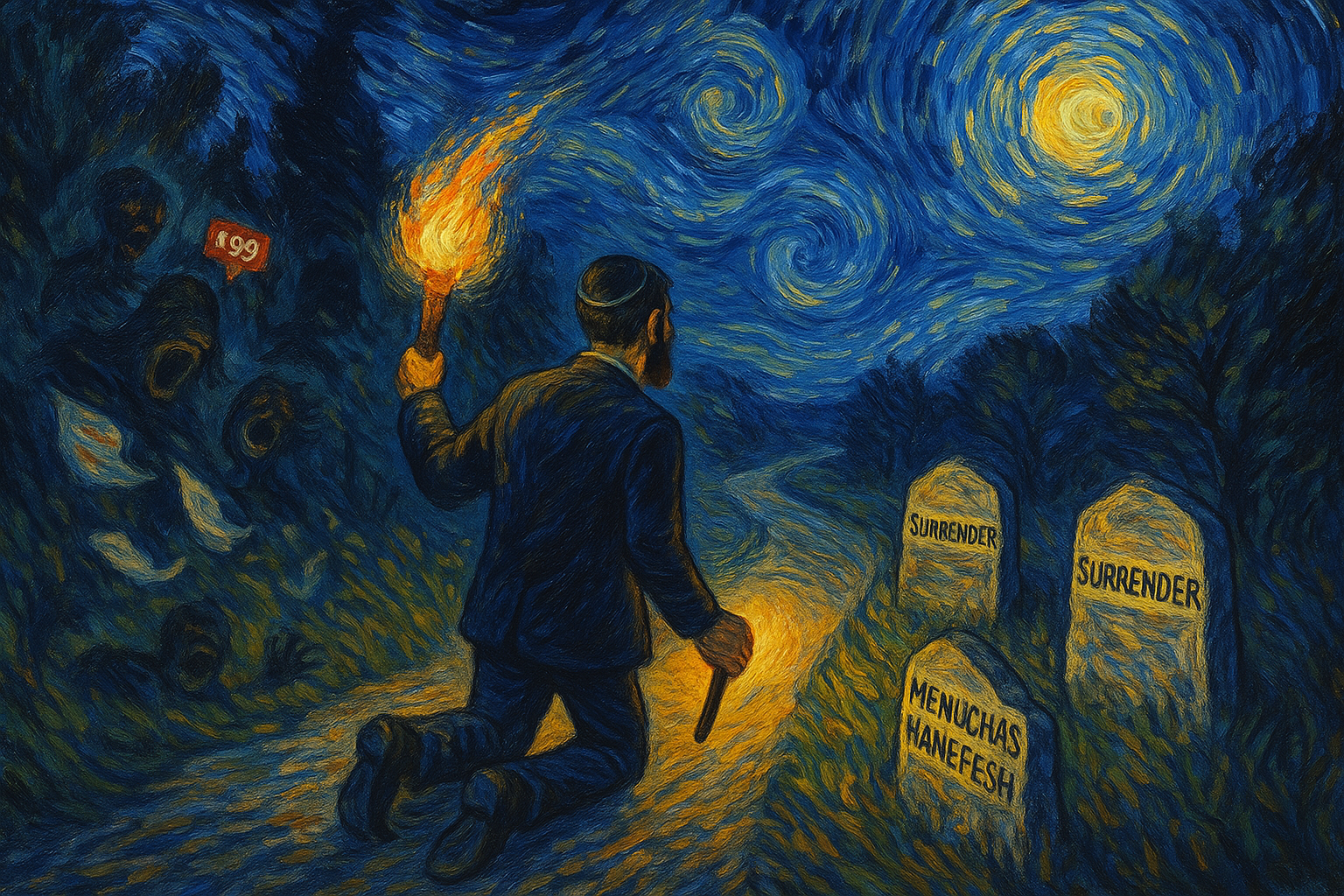
I started seeing how Rabbeinu Bachya used Torah to define trust.
How the Beis HaLevi warned us that worry is not hishtadlus.
How the Alter of Novardok demanded surrender, not softness, but spiritual fire.
It wasn’t overnight. It still isn’t.
But something began to shift.
I started catching my thoughts.
I started questioning the voice that told me I needed to do this my way or not even bother.
I started whispering in a new voice.
“This isn’t mine to carry.”
There was one pasuk that hits me where I need it
הַשְׁלֵ֤ךְ עַל־הֹ’ ׀ יְהָבְךָ֮ וְהוּא יְכַ֫לְכְּלֶ֥ךָ׃
“Cast your burden on Hashem, and He will sustain you.” (Tehillim 55:23)
And I started saying it out loud.
“Ribono Shel Olam, I can’t carry this anymore. You take it.”
It wasn’t weakness.
It was strength I didn’t know I had.
It was the first time I stopped pretending I’m God and started acting like a Gibor.
The Gibor Truth
We were taught to hustle. In Yiddishkeit and in Gashmius.
That there are only a few things that matter in our community, but Hashem ain’t one of them.
To calculate, strategize, and panic in the name of “responsibility.”
We weren’t taught that Bitachon is the root of peace.
That without it, even Torah becomes fear-based survival.
That without it, a man slowly dies inside.
Bitachon isn’t giving up. It’s giving over.
A Gibor fights, but only after surrendering to the king.
‘מִֽי־כָמֹ֤כָה בָּֽאֵלִם֙ הֹ
If you want to find peace in this world, you can't give up the effort, but you can change where you place that effort.
Let Hashem take on the outcomes.
And you work on the inside.

Ask yourself. Daily or not; it doesn't matter. Write it or not, it doesn't matter.
What am I still trying to control that clearly isn’t mine?
What would it look like if I trusted Hashem instead of strained?
What would change in my marriage, parenting, or work if I stopped trying to be the master of outcomes?
What’s Next
In the next essay on Bitachon we’ll dismantle another deadly myth:
“Bitachon means do nothing.”
We’ll walk into the battlefield between Bitachon and Hishtadlus—one of the most misunderstood areas in all of Avodas Hashem.
You’ll learn why “doing everything you can” might be a sin, not a virtue.
And what true spiritual effort looks like when a man walks with Hashem—not ahead of Him.
For now, know that Menuchas Hanefesh only comes from one place.
Let Him take care of it.
You made it to the end of part 1, thank you! Part 2 is going to burn like a bad whiskey. Share with a friend so at least you’ll have a shoulder to cry on.